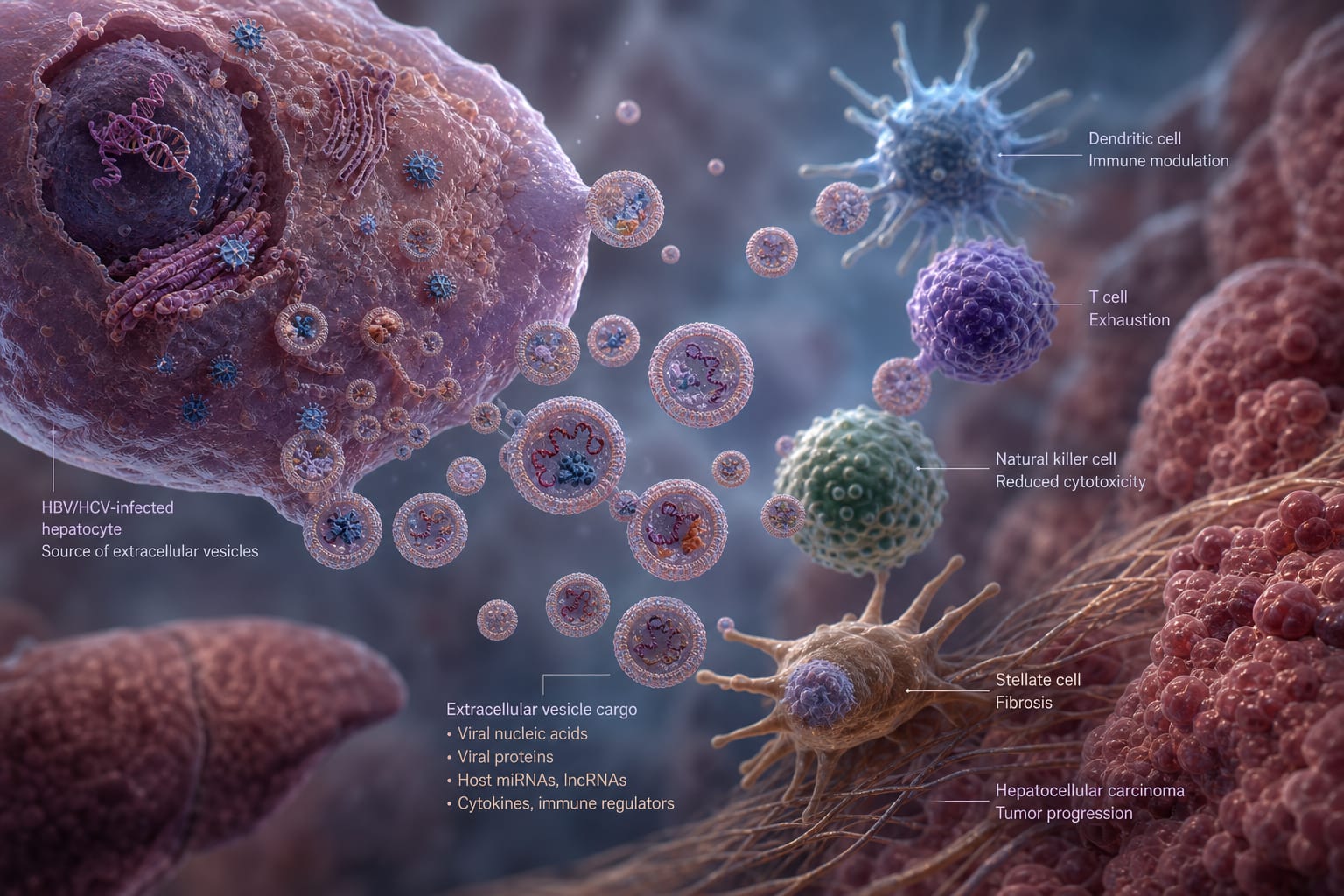
To summarize the roles of extracellular vesicles (EVs) in hepatitis B virus (HBV) and hepatitis C virus (HCV) infections, focusing on immune regulation, viral persistence, disease progression, and potential therapeutic applications.
Approach:
Key Findings:
EVs transport viral nucleic acids, proteins, and regulatory RNAs that can modulate immune responses and influence disease progression.
EVs may facilitate viral persistence and immune evasion, while some populations can enhance innate antiviral responses.
EVs are implicated in liver fibrosis and cancer through their regulation of hepatic stellate cell activation and inflammatory signaling pathways.
EVs have potential as noninvasive biomarkers and therapeutic targets in the context of HBV and HCV infections.
Interpretation:
EVs have complex roles in HBV and HCV infections, affecting both viral dissemination and immune responses, highlighting their dual functions in these processes.
Limitations:
The heterogeneity of EVs complicates their study and characterization, making it difficult to draw definitive conclusions.
The co-isolation of EVs with viral particles presents challenges in distinguishing their specific roles in infection.
Conclusion:
A comprehensive understanding of the diverse roles of EVs in hepatitis B and C is essential for the development of innovative therapeutic strategies.
The goal of this clinical trial is to find out if giving extra adaptive radiation therapy after standard chemoradiation treatment is safe and helpful for people with rectal cancer.