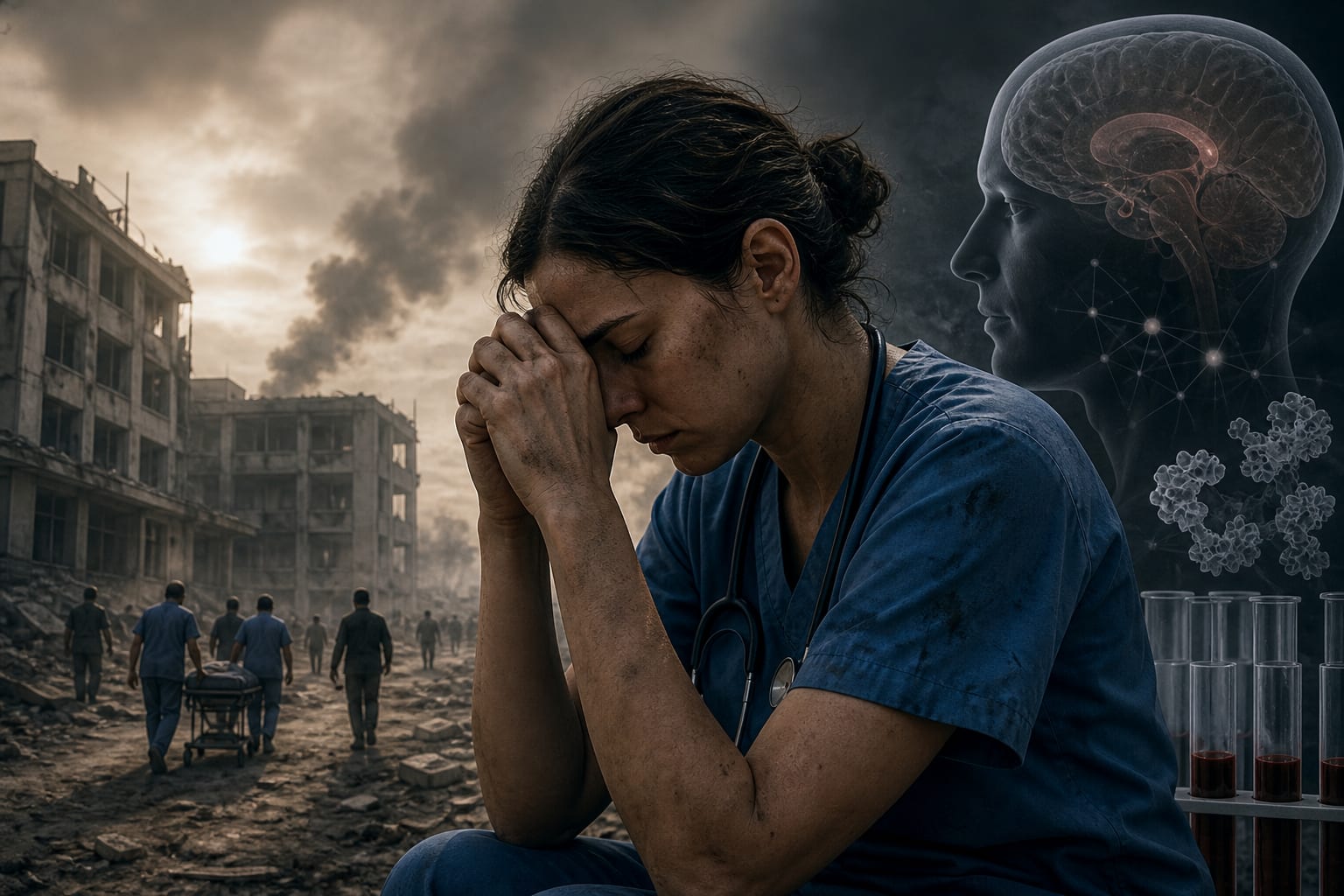
The article examines psychological and biological effects of conflict exposure on healthcare workers, including findings from a prospective cohort of healthcare professionals in central Israel during the October 2023 missile attacks.
Approach:
Background: The article describes psychological distress and stress-related biological changes among healthcare workers exposed to conflict.
Cohort: Investigators prospectively evaluated 90 healthy healthcare professionals working in central Israel during missile attacks in October 2023.
Key Findings:
The article describes elevated anxiety, depression, PTSD, and burnout among healthcare workers in conflict zones compared with civilians and personnel in conventional emergency settings.
Among 90 healthy healthcare professionals prospectively evaluated in central Israel during missile attacks in October 2023, reported stress severity was associated with higher IL-6 and TNF-α levels.
The article describes sustained inflammation as being linked to cardiovascular and metabolic risks; long-term outcomes were not reported for the Israeli cohort.
Interpretation:
The article presents conflict exposure as a source of concurrent psychological and biological effects in healthcare workers and describes integrated psychological and biomarker assessment as a potential means of identifying vulnerability.
Limitations:
The supplied context does not provide detailed methods, measurement instruments, comparison groups, or statistical estimates for the 90-person cohort.
Long-term outcomes and intervention effects are not reported in the supplied context.
Conclusion:
The article calls for protection, psychosocial support, occupational monitoring, recovery-oriented staffing, and longitudinal research for healthcare workers exposed to conflict.