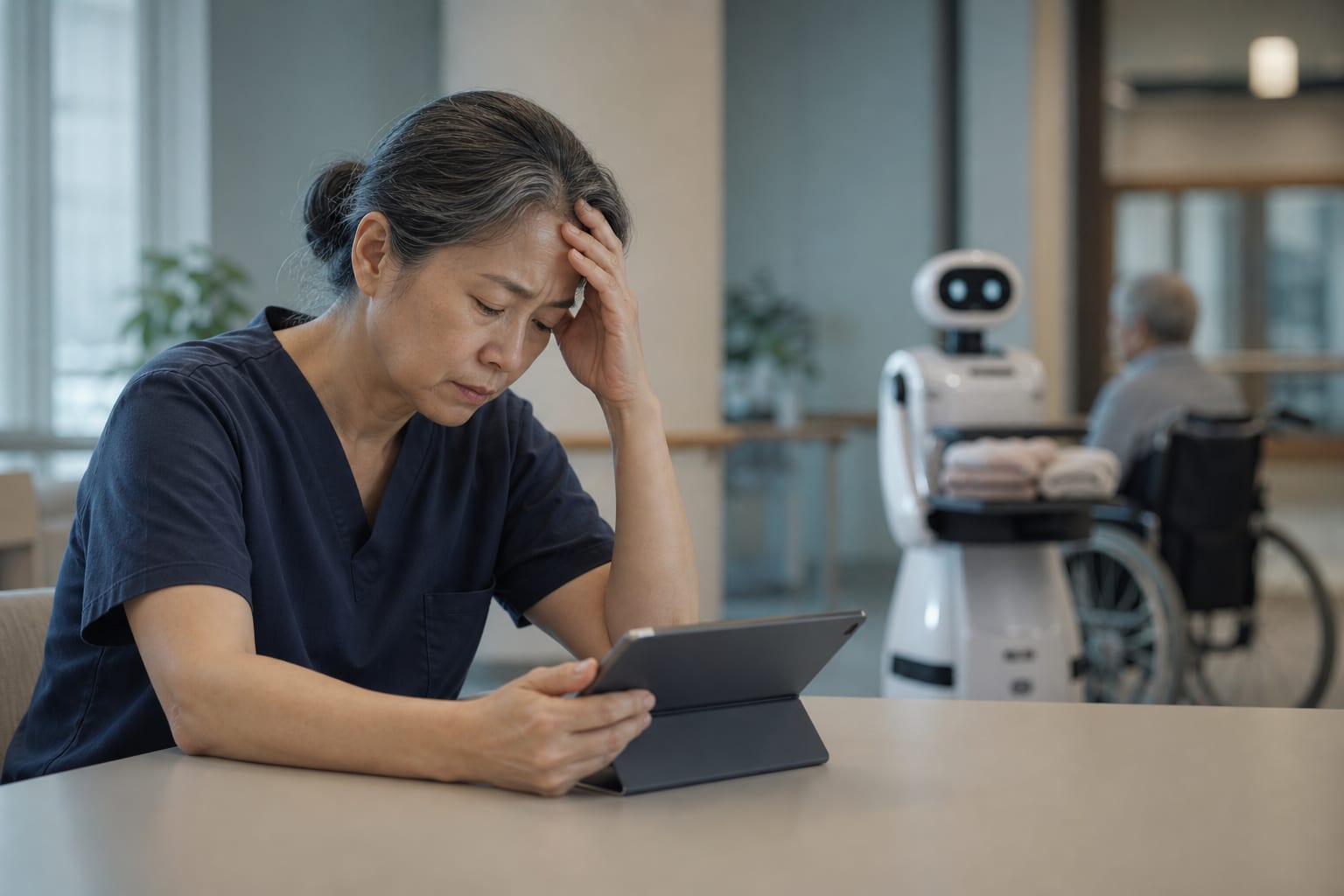
To explore the impact of technostress on the acceptance of care robots among senior healthcare professionals, emphasizing its significance in the context of an aging workforce.
Key Findings:
The aging workforce in South Korea necessitates innovative solutions like care robots to maintain care quality, with a focus on addressing technostress.
Technostress significantly affects the acceptance of technology among healthcare workers, with techno-uncertainty being the most pronounced contributor, impacting their willingness to adopt new technologies.
Different professional roles within healthcare lead to varied responses to technology, indicating the need for tailored approaches to address specific concerns related to technostress.
Interpretation:
The findings suggest that addressing technostress is crucial for enhancing the acceptance of care robots among senior healthcare professionals, potentially through targeted training and support.
Limitations:
The study primarily focuses on the South Korean context, which may limit generalizability to other regions, especially considering cultural differences in technology adoption.
Variability in individual responses to technology may not be fully captured due to the complexity of the healthcare environment.
Conclusion:
Understanding and mitigating technostress can facilitate better integration of care robots in healthcare settings, particularly for older professionals, through strategies such as training and support systems.