Understanding cardiac toxicity and immune responses to thoracic radiation therapy in non-small cell lung cancer – implications for future research - Summary - MDSpire
Advertisement
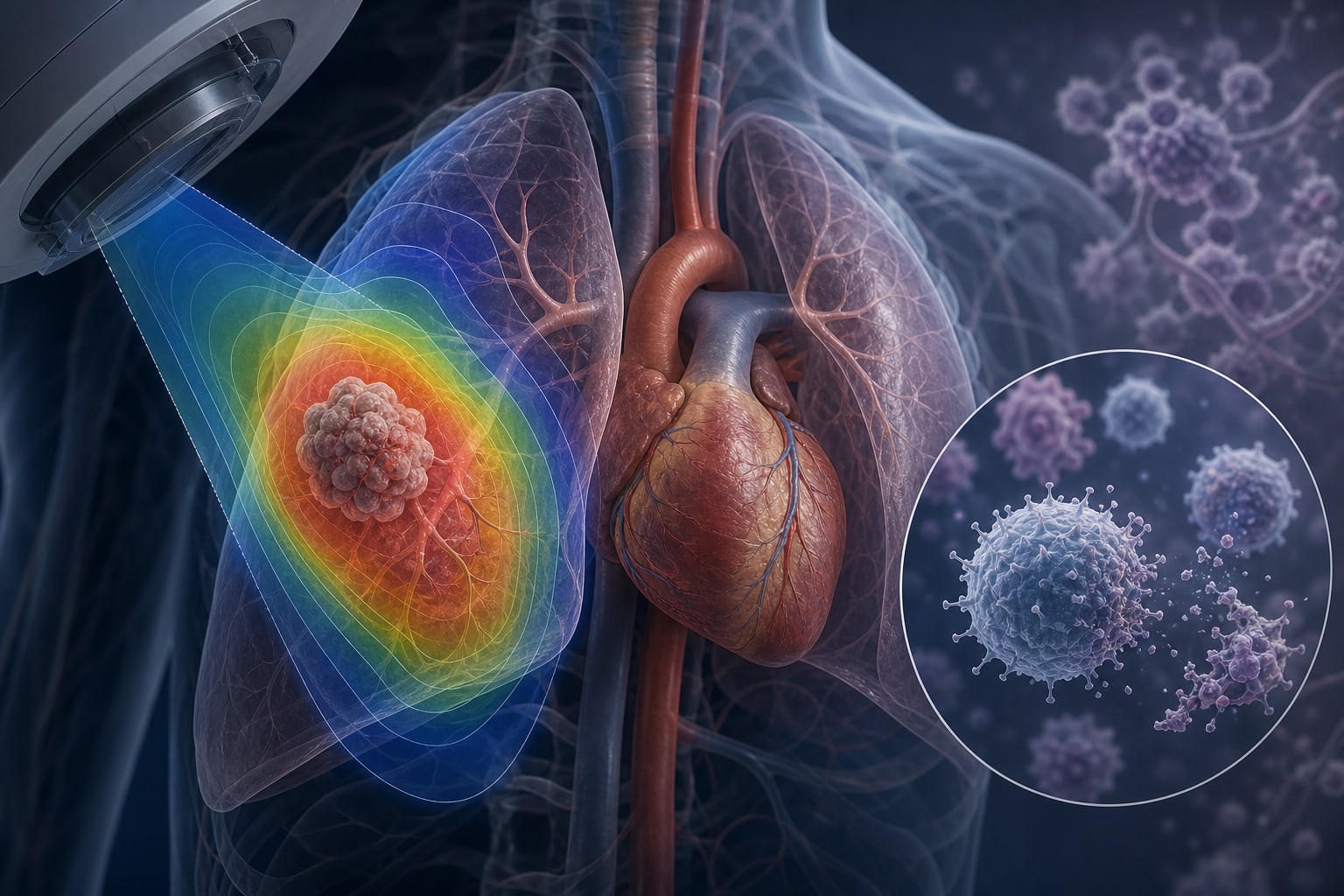
Understanding cardiac toxicity and immune responses to thoracic radiation therapy in non-small cell lung cancer – implications for future research
To examine the impact of thoracic radiation therapy on cardiac and immune system toxicities in patients with non-small cell lung cancer (NSCLC) and propose future research directions, emphasizing the significance of these findings for improving patient outcomes.
Key Findings:
Higher radiation doses to the heart are associated with increased mortality in NSCLC patients, highlighting the need for careful treatment planning.
Mean heart dose (MHD) correlates with high-grade cardiac events and all-cause mortality, suggesting a need for monitoring MHD in clinical practice.
Specific cardiac substructures, such as the sinoatrial node and coronary vessels, are linked to worse survival outcomes, indicating areas for targeted intervention.
Volume-based dosimetry to the pulmonary artery is associated with poorer overall survival, warranting further investigation into its clinical implications.
Discrepancies in survival rates in the RTOG 0617 trial cannot be fully explained by cardiac deaths alone, suggesting other contributing factors.
Interpretation:
Thoracic RT not only serves as an ablative local therapy but may also act as a systemic immune modulator, impacting immune system integrity and necessitating a reevaluation of treatment strategies.
Limitations:
The review primarily focuses on retrospective studies, which may introduce bias; further investigation is needed to understand the complex interplay between cardiac toxicity and immune response.
Conclusion:
Future research should explore immune-sparing techniques in radiation planning to preserve immune system integrity in NSCLC treatment, reinforcing the importance of these findings in current clinical practice.