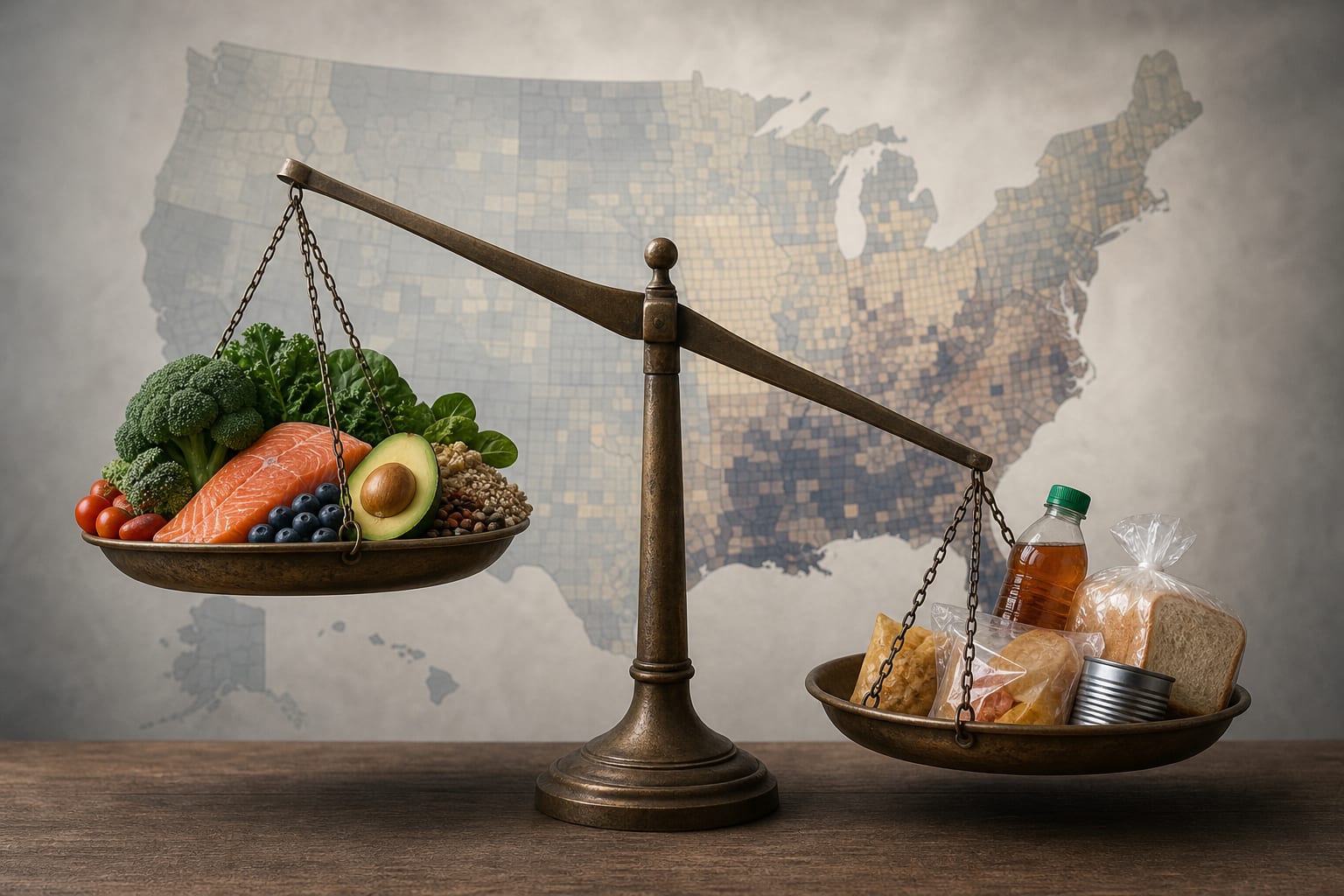
To explore how 13 barriers to healthy eating co-occur and their associations with sociodemographic characteristics and health outcomes in US adults.
Approach:
Study Design: Cross-sectional study using data from a national survey on perceptions of Food Is Medicine conducted from February to April 2023.
Participants: US adults aged 18 and older, recruited through the Qualtrics panel service, with oversampling of individuals with annual household incomes less than $50,000.
Nutrition Security Screener: Utilized a 2-item NSS to assess nutrition insecurity and barriers to healthy eating.
Data Analysis: Employed exploratory factor analysis (EFA) to characterize patterns of co-occurrence among barriers.
Key Findings:
Poor nutrition is linked to significant morbidity and mortality, contributing to 45% of cardiovascular disease mortality and 70% of new diabetes cases.
Food insecurity is a major factor affecting nutrition, but interventions have primarily focused on financial barriers with inconsistent effects on diet quality.
Barriers to healthy eating include family preferences, limited nutrition knowledge, and structural factors like food retail access.
Interpretation:
Limitations:
The study was not designed to generate nationally representative estimates as no survey weights were applied.
The sample may not fully capture the diversity of barriers experienced across different populations.
Conclusion:
The study highlights the complexity of barriers to nutrition security and the need for comprehensive approaches to address them.