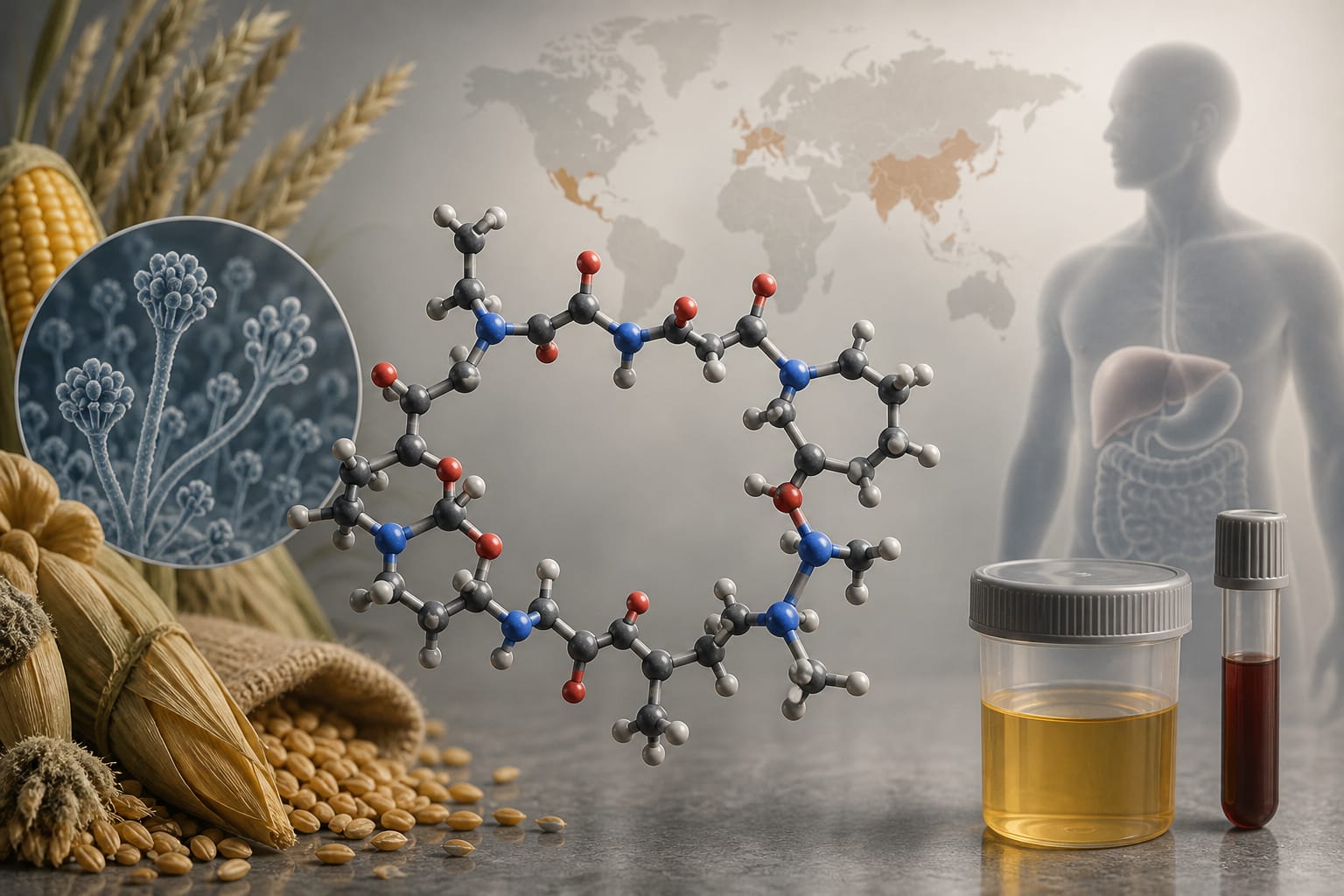
To summarize human biomonitoring data for Beauvericin (BEA) and Enniatins (ENNs) and assess their occurrence in biological samples.
Approach:
Literature Review: Data was compiled from early reports and newer studies on the determination of BEA and ENNs in human samples, utilizing databases like PubMed, Scopus, and Web of Science.
Analytical Methods: Current methodologies for assessing mycotoxin occurrence in biosamples include liquid chromatography combined with mass spectrometry, with various sample preparation techniques.
Key Findings:
BEA and ENNs are widespread food and feed contaminants produced by Fusarium species.
Grains and grain-derived products are the principal dietary sources of BEA and ENNs.
Human biomonitoring (HBM) can detect BEA and ENNs in urine, blood, and breast milk.
Interpretation:
The review highlights the need for comprehensive risk assessments and further research on the toxicokinetics of BEA and ENNs in humans.
Limitations:
Lack of regulatory limits for BEA and ENNs complicates routine monitoring.
Important gaps persist in hazard characterization and toxicokinetic data for these mycotoxins.
Conclusion:
The review emphasizes the importance of HBM in understanding human exposure to BEA and ENNs and the need for further research.