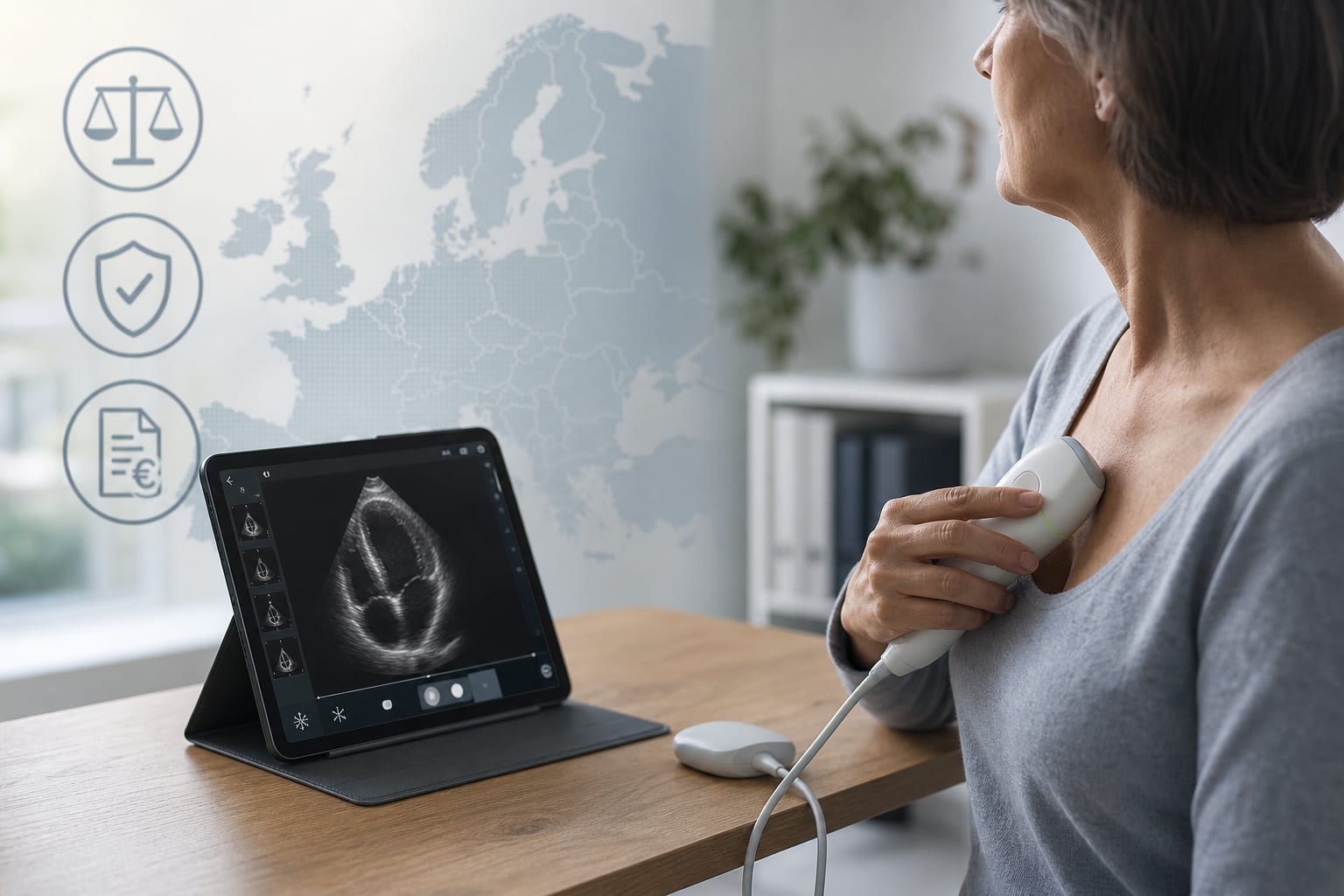
To examine patient-operated imaging for clinical assessment (POICA) as a regulatory and reimbursement boundary case under the EU Medical Device Regulation (MDR).
Approach:
Policy and Regulatory Analysis: A structured analysis was conducted to evaluate how patient-operated imaging interacts with existing European regulatory and reimbursement frameworks.
Key Findings:
Imaging acquisition must meet clinical adequacy thresholds at the time of interpretation, creating acquisition-dependent risk that cannot be mitigated through repetition alone.
Under the MDR, adequacy criteria and the mechanisms ensuring them must be explicit; usability validation must demonstrate interpretative reliability rather than procedural completion.
Responsibility becomes hybrid, with patients performing acquisition while clinicians retain interpretive and clinical decision-making authority.
Economically, this redistribution disrupts reimbursement models built around a single bundled professional imaging act.
Interpretation:
The central challenge is maintaining clinical reliability when imaging acquisition is decentralized.
Limitations:
The analysis is limited to the context of patient-operated imaging and does not extend to unrestricted diagnostic imaging or other forms of imaging acquisition.
Conclusion:
Integration into European health systems will depend on demonstrable reliability of patient-acquired images, clear allocation of responsibility, and reimbursement mechanisms capable of recognizing distributed clinical workflows.