Prevalence and associated factors of scabies among school going children in Khulna division: a comparative cross-sectional study between schools and madrasahs (Islamic religious schools) - Summary - MDSpire
Conexiant’s news site is now MDSpire News. Learn more
Advertisement
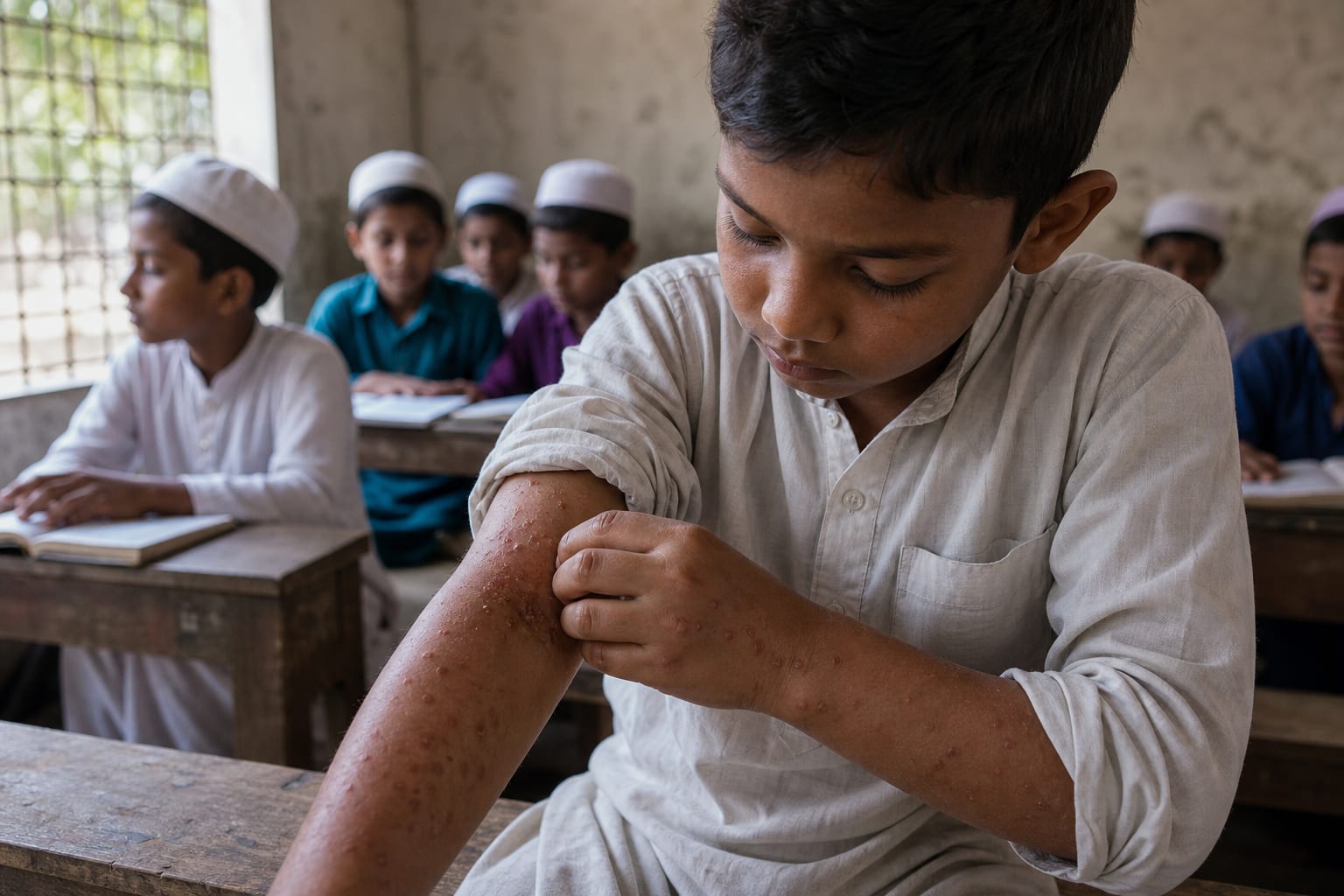
Assessment of Scabies Prevalence and Contributing Factors Among School-Aged Children in Khulna Division: A Comparative Cross-Sectional Analysis of Schools and Madrasahs
To assess scabies prevalence and associated factors among school and madrasa-going children in Kushtia District, Bangladesh.
Approach:
Study Design: Cross-sectional study conducted between April and May 2024 using a two-stage random sampling technique.
Participants: 394 randomly chosen children aged 5–17 from 5 schools and 5 madrasas.
Diagnosis: Scabies diagnosed using International Alliance for the Control of Scabies criteria.
Data Collection: Sociodemographic, environmental, and hygiene-related variables collected via face-to-face interviews.
Statistical Analysis: Bivariate associations tested using χ²; multivariable logistic regression used for adjusted odds ratios.
Key Findings:
Overall scabies prevalence was 40.35% (159/394).
Madrasa students had a higher prevalence (51.3%) compared to school students (31.65%).
Key associated factors included poverty, overcrowding, poor housing, irregular bathing, sharing personal items, and close contact with affected individuals.
Interpretation:
Limitations:
Cross-sectional design may underestimate mild or transient cases.
Investigators linked distinct odor patterns to life stage, sex, and skin microbes, while limited longitudinal evidence leaves their clinical utility uncertain.
These 10 states have paid family or medical leave programs and health, wellness, peer support, or monitoring resources available to physicians or other health professionals.