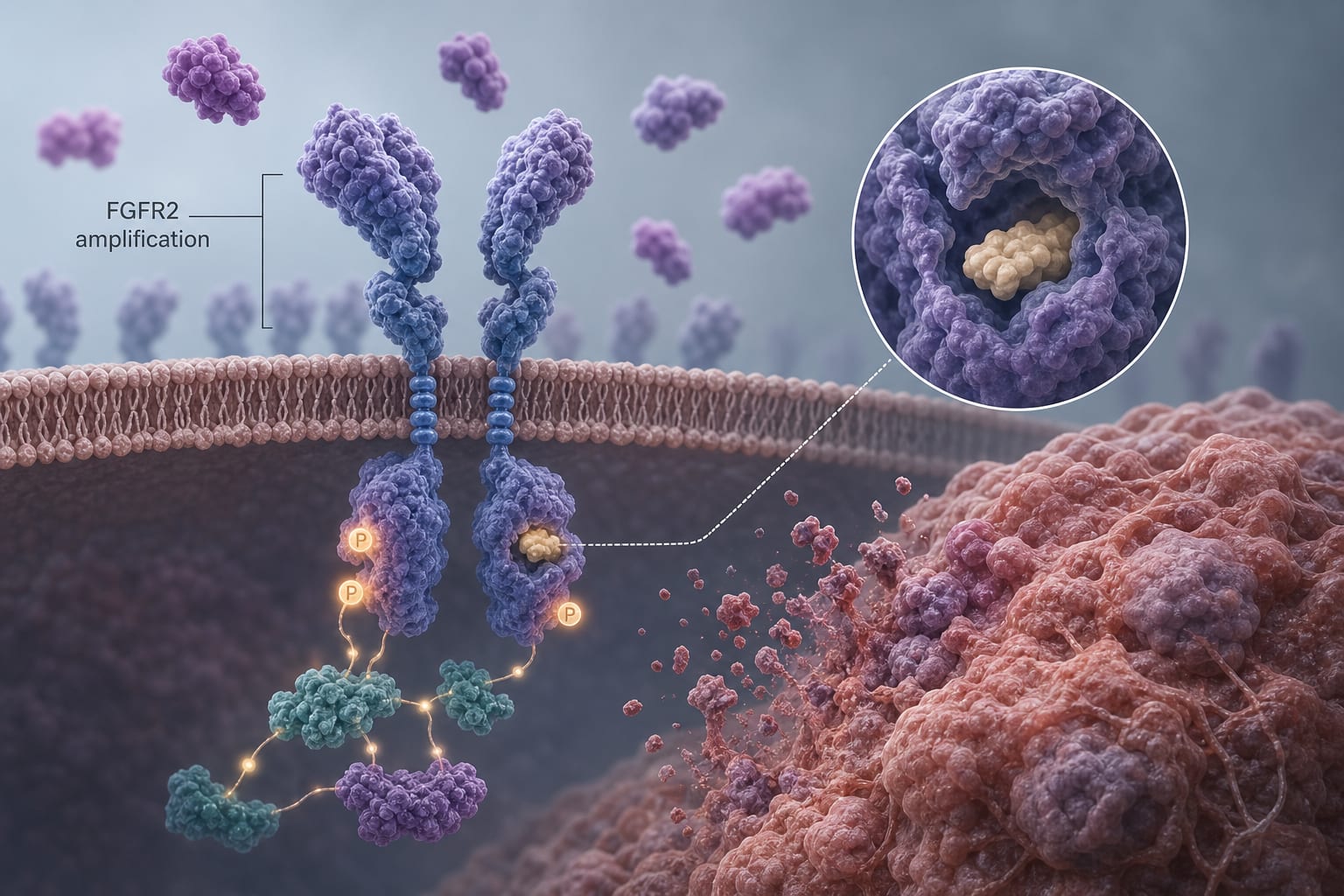
To present outcomes of FGFR inhibitors in two cases of advanced gastric cancer with FGFR2 amplification.
Approach:
Case 1: A 52-year-old female with stage IVB poorly differentiated signet-ring cell carcinoma received pemigatinib as first-line therapy, achieving a progression-free survival (PFS) of 4.4 months and overall survival (OS) of 8.3 months.
Case 2: A 61-year-old female with stage IVB poorly differentiated adenocarcinoma received infigratinib in the third-line setting, attaining a PFS of 5.7 months and OS of 18.5 months.
Key Findings:
Both patients had FGFR2 amplification and were intolerant to conventional therapies.
Pemigatinib and infigratinib showed potential activity in FGFR2-amplified advanced gastric cancer.
Both patients experienced manageable adverse events related to FGFR inhibitors, including keratitis, onychotoxicity, and hyperphosphatemia.
Interpretation:
Limitations:
The report is based on only two cases, limiting generalizability.