A review of mechanisms and optimization strategies for clinical improvement after repetitive transcranial magnetic stimulation in bipolar disorder - Summary - MDSpire
To summarize current knowledge on mechanisms of action of rTMS in bipolar disorder (BD) and identify predictors of treatment response and strategies to enhance therapeutic potential.
Approach:
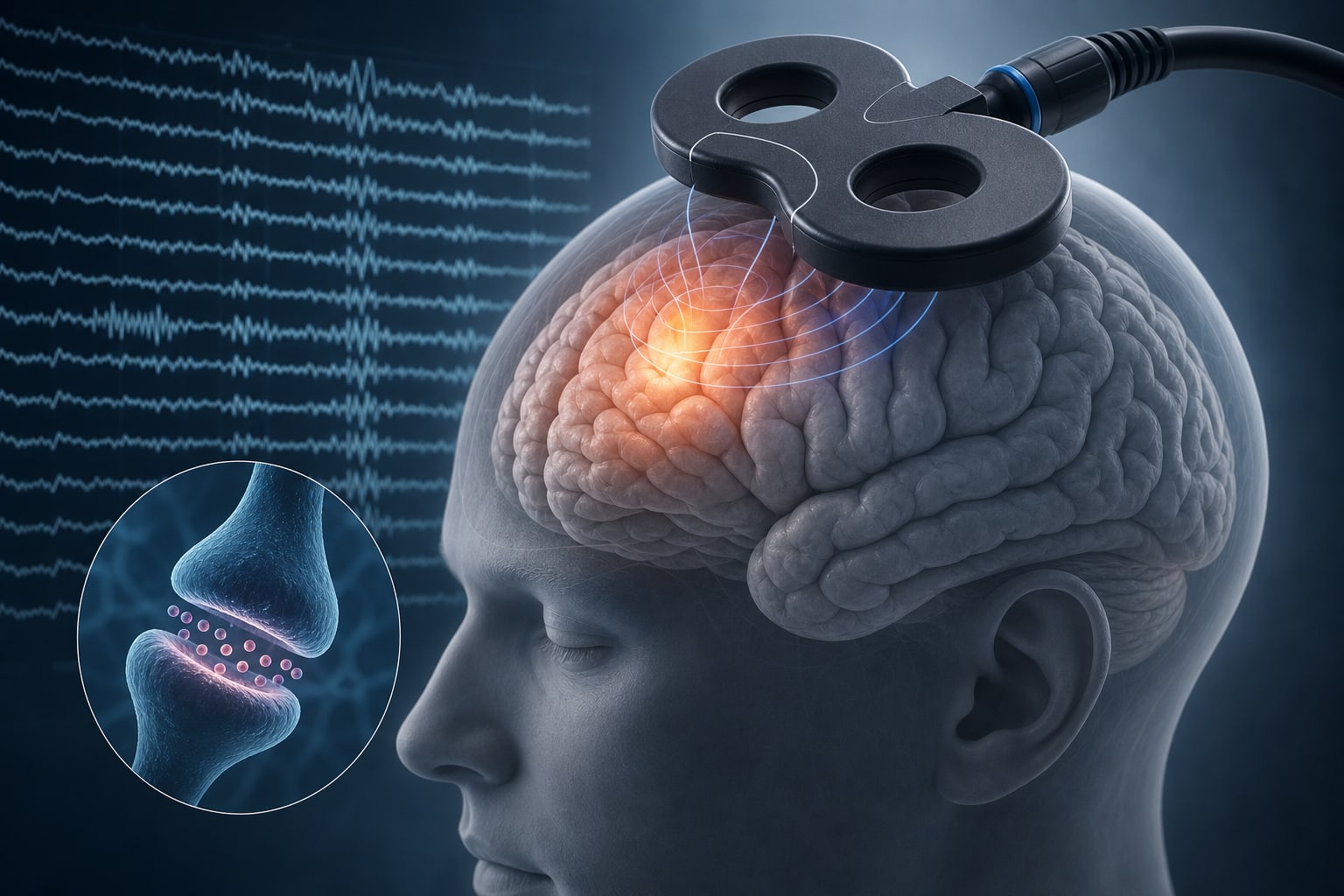
Clinical Response Factors: Investigated associations between clinical response to rTMS and factors such as left frontal cortex volume, EEG activity, and default mode network activity.
Neurochemical Changes: Reviewed evidence of rTMS inducing changes in neurotransmitters and neurochemical substances in BD.
Targeting Techniques: Explored the potential of neuronavigation and connectivity-guided targeting to enhance rTMS therapeutic outcomes.
Key Findings:
Lower left frontal cortex volume, slower EEG activity, and lower default mode network activity may correlate with better clinical response to rTMS.
rTMS can induce neurochemical changes and alterations in EEG patterns in BD, although studies are limited compared to major depressive disorder.
Navigated rTMS may improve clinical effects and provide insights into therapeutic mechanisms, particularly regarding cognitive performance.
Interpretation:
Several anatomical and neurophysiological factors are associated with therapeutic response to rTMS in BD.
Limitations:
Available studies on rTMS in BD are limited compared to those in major depressive disorder.
The understanding of the mechanisms and predictors of response to rTMS in BD remains incomplete.
Conclusion:
rTMS appears to induce significant neurochemical, connectivity, and EEG changes in BD.