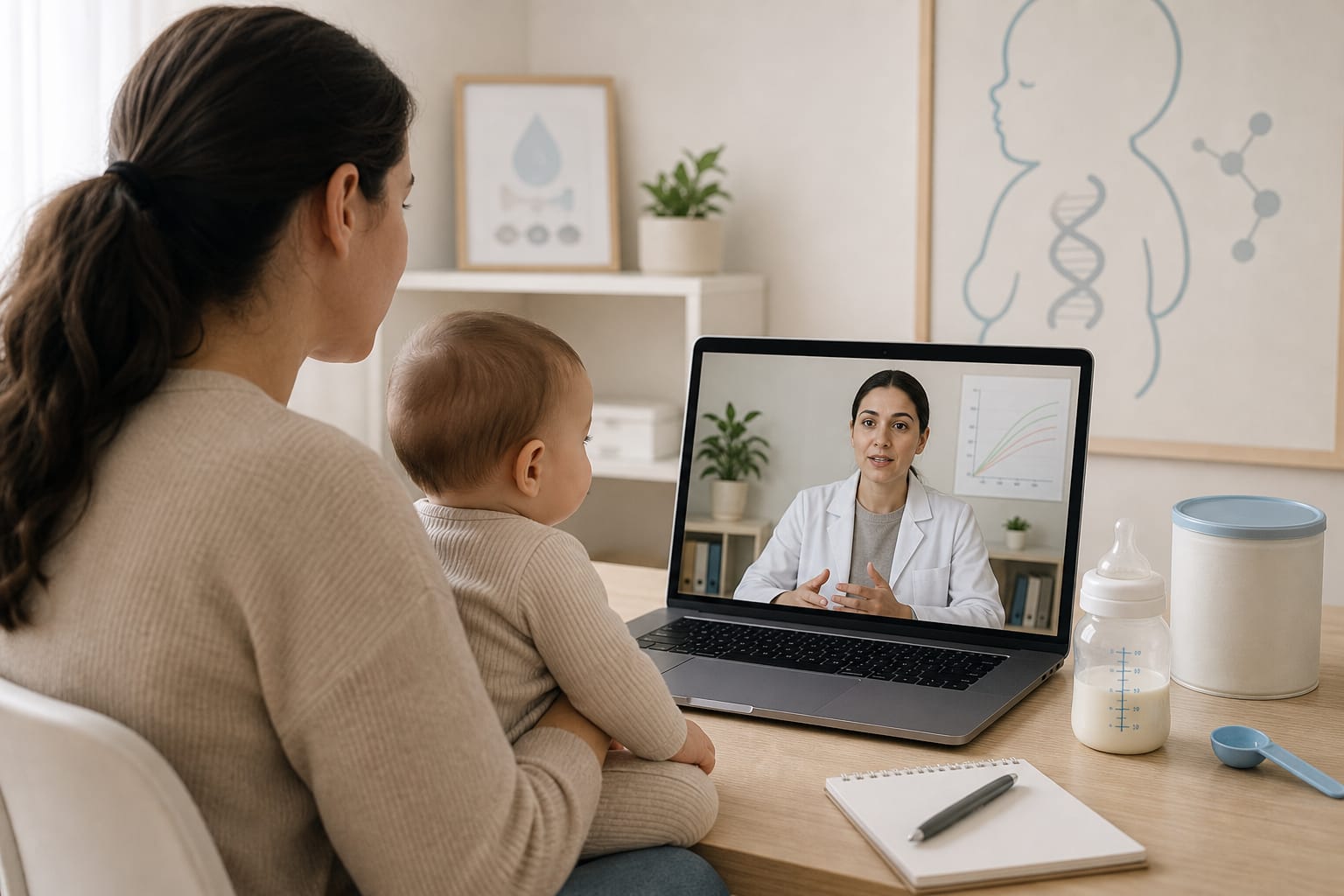
To assess the feasibility and acceptability of integrating telemedicine into routine nutritional management of infants with inherited metabolic disorders (IMDs) identified through newborn screening.
Approach:
Study Design: Caregivers of infants with IMDs chose between telemedicine-integrated follow-up (TM group) or exclusively in-person care (NO-TM group).
Assessment Methods: Anthropometric parameters and clinical signs of malnutrition were assessed at birth, 6, and 12 months. Disease-specific biomarkers were collected, and caregivers in the TM group completed satisfaction questionnaires.
Key Findings:
Nine infants with confirmed IMDs were enrolled and followed for 12 months.
Seventy-eight percent of patients were managed with TM integration.
Growth trajectories and metabolic outcomes remained within expected clinical targets in both groups.
No clinical signs of malnutrition were observed in any patient.
More stable phenylalanine levels were observed in patients in the TM group.
Caregivers reported high satisfaction with TM (median score: 94.5%).
Quality of life scores were high in all patients.
Interpretation:
Partial integration of telemedicine into nutritional management of infants with IMDs appeared feasible and well accepted by caregivers, without adverse effects on growth or metabolic control during the first year of life.
Limitations:
Small sample size of nine infants.
Findings need to be confirmed in larger studies.
Conclusion:
Larger studies are needed to confirm these observations and support wider implementation.
by Veronica Maria Tagi, Chiara Montanari, Martina Tosi, Eliana Stucchi, Aurora Maria Esmeralda Cartalemi, Letizia Gandini, Francesca Eletti, Veronica Perico, Barbara Borsani, Laura Fiori, Valeria Calcaterra, Gianvincenzo Zuccotti