Insulin resistance as a predictor of long-term adverse cardiovascular event risk in patients with atrial fibrillation following radiofrequency catheter ablation - Summary - MDSpire
Conexiant’s news site is now MDSpire News. Learn more
Advertisement
The Role of Insulin Resistance in Predicting Long-Term Cardiovascular Event Risk in Atrial Fibrillation Patients After Radiofrequency Catheter Ablation
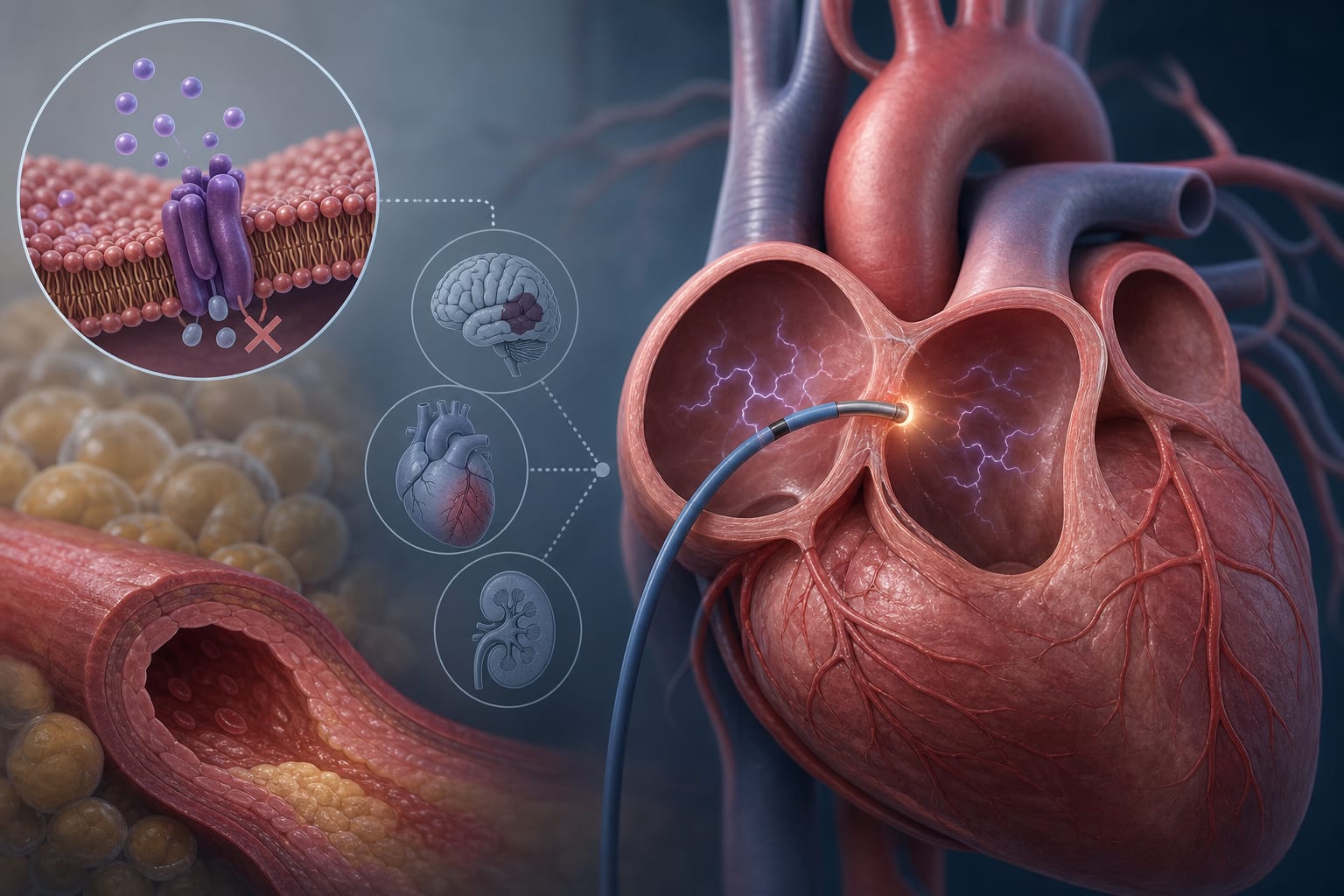
To evaluate the association between four non-insulin-based insulin resistance (IR) indices and long-term major adverse cardiovascular events (MACEs) in atrial fibrillation (AF) patients undergoing radiofrequency catheter ablation (RFCA), and to determine their incremental predictive value beyond established clinical risk factors.
Approach:
Study Design: A retrospective observational study involving 922 non-valvular AF patients who underwent RFCA from March 2017 to July 2023.
Endpoints: The primary endpoint was a composite of MACEs, including all-cause death, late AF recurrence, heart failure events, and stroke after a 3-month blanking period.
Statistical Analysis: Multivariable Cox proportional hazards regression, restricted cubic spline analysis, and Kaplan-Meier survival estimation were used to examine associations and quantify predictive value.
Key Findings:
MACEs occurred in 242 patients (26.25%) over a median follow-up of 36 months.
METS-IR and TyG-BMI were significantly associated with elevated MACE risk (P < 0.001).
METS-IR showed a linear dose-response relationship with MACEs.
Adding METS-IR to the baseline clinical model improved the C-statistic from 0.702 to 0.717 (P < 0.001).
METS-IR provided meaningful net reclassification improvement (NRI) and integrated discrimination improvement (IDI).
Interpretation:
METS-IR demonstrated a statistically significant incremental improvement in predicting composite MACE in AF patients following RFCA.
Limitations:
The study is retrospective and may have inherent biases.
The findings are based on a single-center cohort, which may limit generalizability.
Conclusion:
METS-IR may contribute to improved risk assessment in post-ablation AF patients.