A novel tubular construct using silk fibroin-chitosan scaffold seeded with bone marrow mesenchymal stem cells for urinary diversion in a preclinical rabbit model - Summary - MDSpire
Advertisement
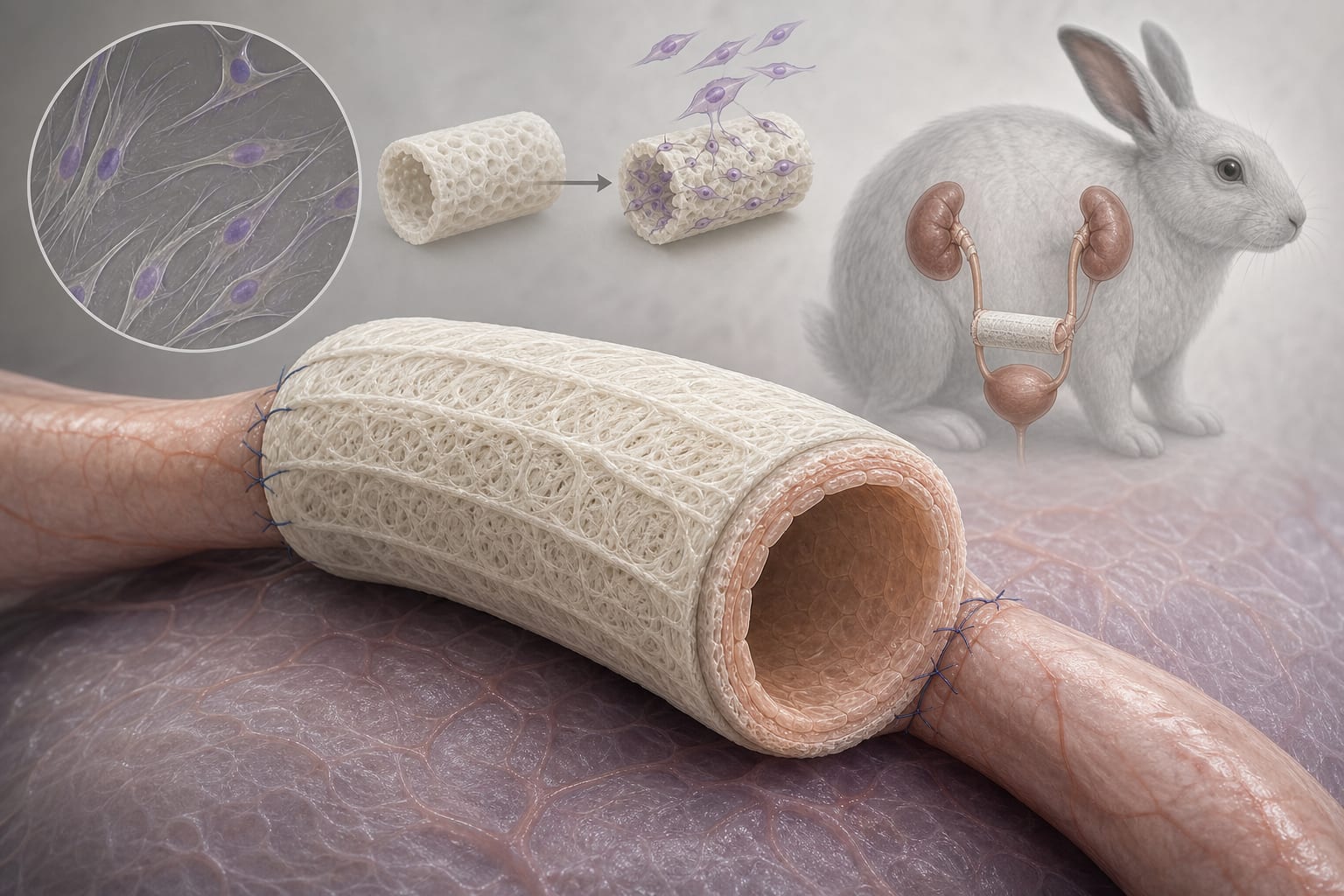
A novel tubular construct using silk fibroin-chitosan scaffold seeded with bone marrow mesenchymal stem cells for urinary diversion in a preclinical rabbit model
To construct tissue-engineered tubular grafts (TETGs) using bone marrow mesenchymal stem cells (BMSCs) and silk fibroin/chitosan (SF/CS) scaffolds, and to evaluate their feasibility and efficacy for urinary diversion in a rabbit model.
Approach:
Key Findings:
BMSCs exhibited high expression of CD44 and CD90 and low expression of CD34 and CD45.
BMSCs successfully differentiated into urothelium-like cells, expressing uroplakin 1A, cytokeratin 7, and cytokeratin 13.
All rabbits in the experimental group survived, showing luminal urothelial growth with complete epithelialization by week 8.
Immunohistochemistry confirmed the presence of mature and functional epithelial cells, as evidenced by positive staining for Anti-cytokeratin AE1/AE3, uroplakin 1A, and the tight junction protein ZO-1.
IVU confirmed patent outflow tracts without stenosis, urinary fistula, hydronephrosis, or ureteral dilation.
Control grafts collapsed by week 4, resulting in mortality.
Interpretation:
BMSCs can serve as a viable cell source for urinary tissue engineering, demonstrating the feasibility of constructing a urinary diversion conduit using BMSC-derived urothelium-like cells and silk fibroin/chitosan in rabbits.
Conclusion:
The study demonstrates the feasibility of BMSC-derived TETGs for urinary diversion.