Status, challenges, and prospects of artificial intelligence application in gout diagnosis and treatment, drug research and development, and disease monitoring - Summary - MDSpire
Conexiant’s news site is now MDSpire News. Learn more
Advertisement
Current Landscape, Obstacles, and Future Directions for the Use of Artificial Intelligence in Gout Diagnosis, Treatment, Drug Development, and Disease Monitoring
To systematically review the application of artificial intelligence (AI) in the diagnosis and management of gout, highlighting current challenges and future research directions.
Approach:
AI Overview: AI utilizes algorithms and statistical models to perform tasks requiring human intelligence, including machine learning and deep learning, which can analyze large datasets for gout diagnosis and treatment.
Data Mining in Gout: NLP can enhance the identification of gout flares in medical databases by processing unstructured electronic health record data.
Key Findings:
Gout prevalence is rising globally, with 55.8 million people affected in 2020, an increase of 22.5% since 1990.
Traditional diagnostic methods for gout have limitations, including the difficulty in distinguishing gout from other types of arthritis.
AI shows promise in enhancing diagnosis, treatment planning, and disease monitoring in gout care.
Interpretation:
Limitations:
Current AI applications in gout are still in developmental stages.
Challenges remain in accurately identifying gout flares due to the transient nature of symptoms.
Conclusion:
Further research is needed to fully realize the benefits of AI in gout diagnosis and management.
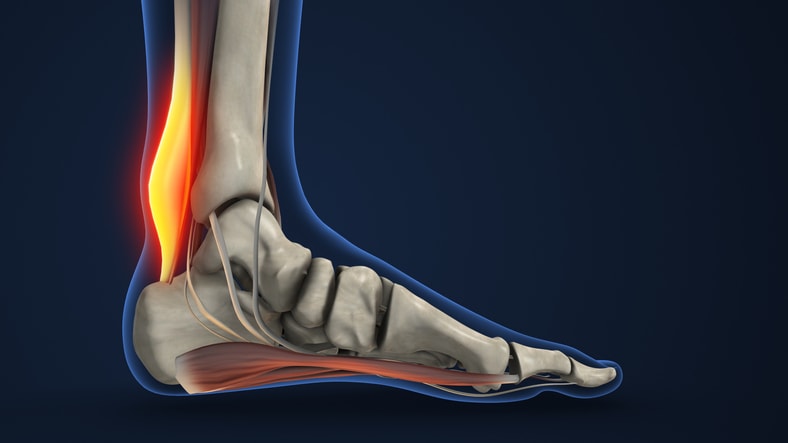
A case report highlighted extensive intratendinous urate deposition and bilateral Achilles tendon rupture, raising awareness of tendon complications in advanced gout.