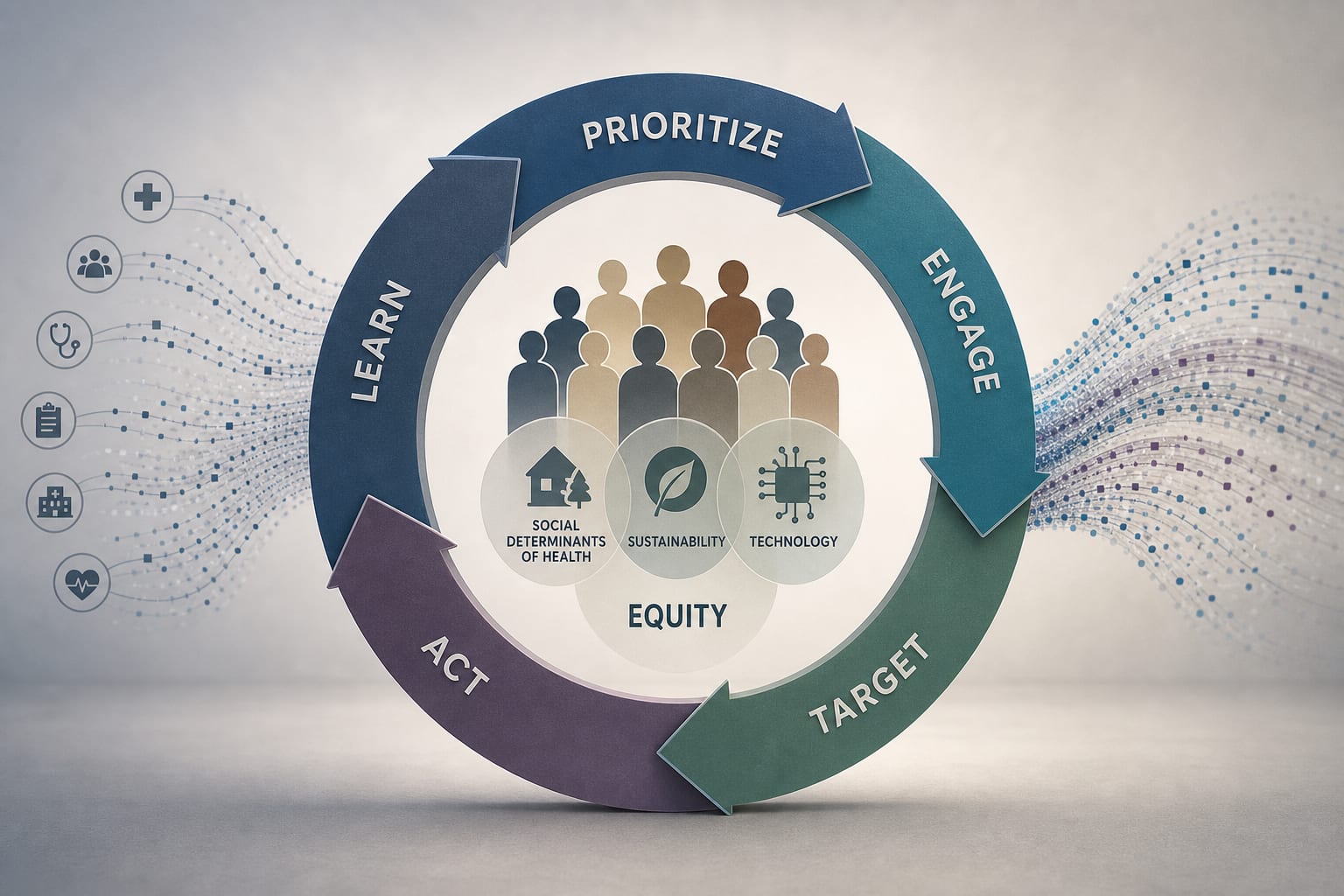
To describe how Learning Health System (LHS) principles were applied to address racial and ethnic disparities in patient experience within the Veterans Health Administration (VA).
Approach:
Prioritizing Health Equity: The VA prioritizes health equity by creating infrastructure to reduce gaps in care and improve population health, utilizing LHS foundational methods.
Engaging the Community: Input from diverse Veteran community members was sought to ensure findings resonated with their experiences and to improve data visualization.
Targeting Disparities: The NVHER provided data on racial and ethnic disparities in patient experience, with a focus on geographic variations across the 18 VA regions.
Key Findings:
The NVHER identified significant racial and ethnic disparities in patient experiences among Veterans.
Engagement with Veteran community members was limited due to the COVID-19 pandemic.
Interpretation:
The application of LHS principles in the VA demonstrates a structured approach to integrating equity into healthcare delivery.
Limitations:
Limited engagement with Veteran community members due to the COVID-19 pandemic.
Lack of earmarked funds for community member involvement in the analytic phase.
Conclusion:
The VA's approach illustrates the potential of LHS to advance health equity among diverse Veteran populations.
In a study of 50 echocardiography reports, GPT-5 mini extracted 55 cardiovascular fields from free-text echocardiography reports with 92.5% exact-match agreement with expert annotation.
The age-adjusted Parkinson disease death rate among US adults aged 65 years and older was 72.0 deaths per 100,000 standard population in 2024, lower than the 2021 rate, according to a National Center for Health Statistics Data Brief.