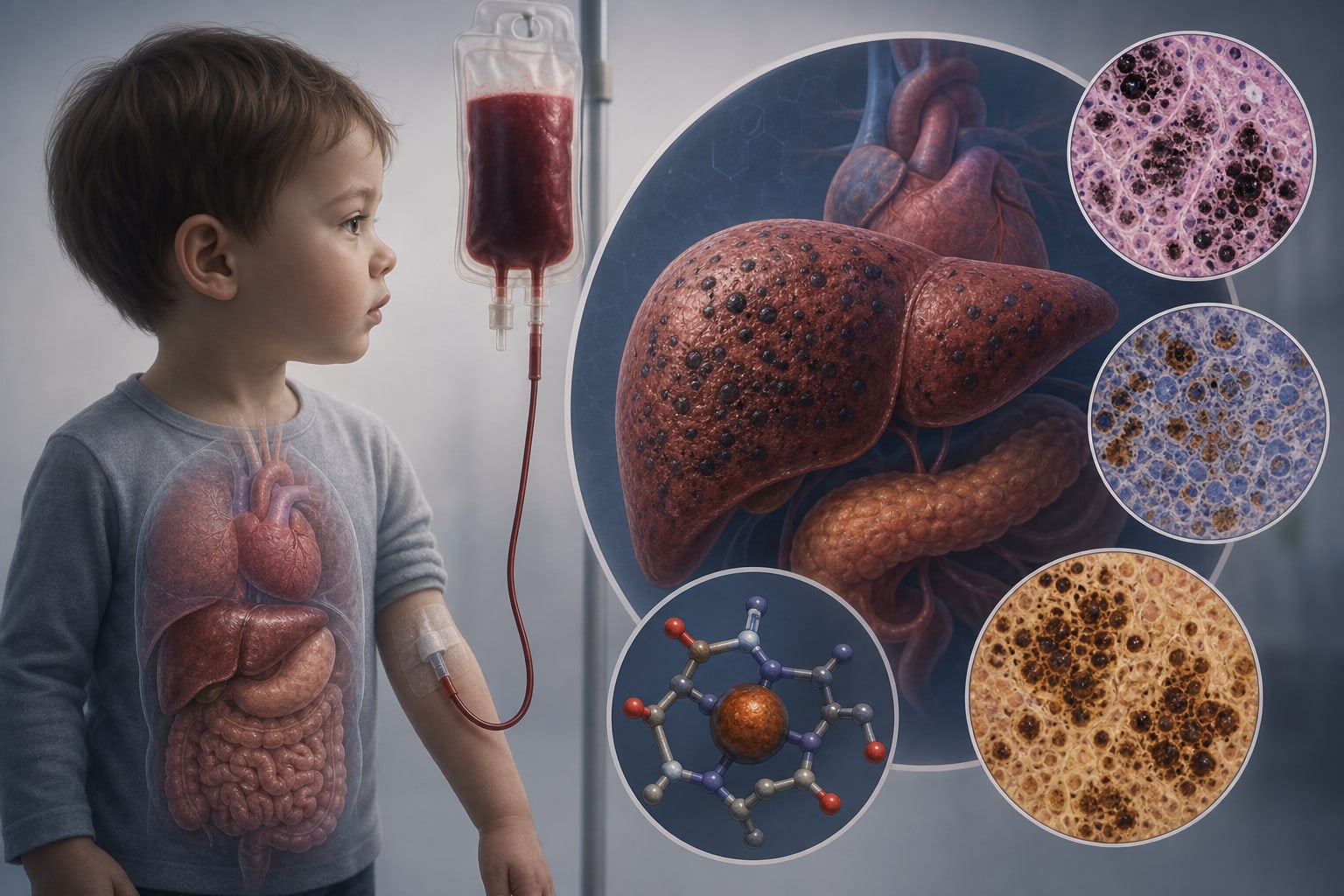
To determine the proportion of transfusion-dependent patients initiating iron chelation therapy before the age of three and to evaluate clinical and biological triggers for initiating chelation.
Approach:
Study Design: A retrospective, multicenter, noninterventional study based on clinical data from French and Italian national DBAS registries.
Patient Selection: Included patients diagnosed with DBAS, born between January 1, 2008, and December 31, 2022, who received at least one red blood cell transfusion before age three.
Data Collection: Collected demographic, genetic characteristics, and initiation timing of iron chelation therapy.
Key Findings:
Chronic iron overload is a significant concern for transfusion-dependent DBAS patients.
There are no specific guidelines for initiating iron chelation therapy in infants and toddlers with DBAS.
Regulatory constraints complicate the decision-making process for chelation therapy in young DBAS patients.
Interpretation:
The findings highlight the urgent need for establishing clear guidelines regarding the initiation of iron chelation therapy in young children with DBAS. The absence of such guidelines may lead to variability in clinical practice and potentially suboptimal management of iron overload.
Limitations:
No prior studies have documented real-world chelation practices in DBAS patients under three years of age.
There is limited data on the safety and efficacy of chelators in very young children.
Conclusion:
This study underscores the importance of addressing iron overload in young DBAS patients and suggests that further research is necessary to develop evidence-based protocols for chelation therapy in this vulnerable population. Establishing standardized practices could improve patient outcomes and reduce the risks associated with chronic iron overload.