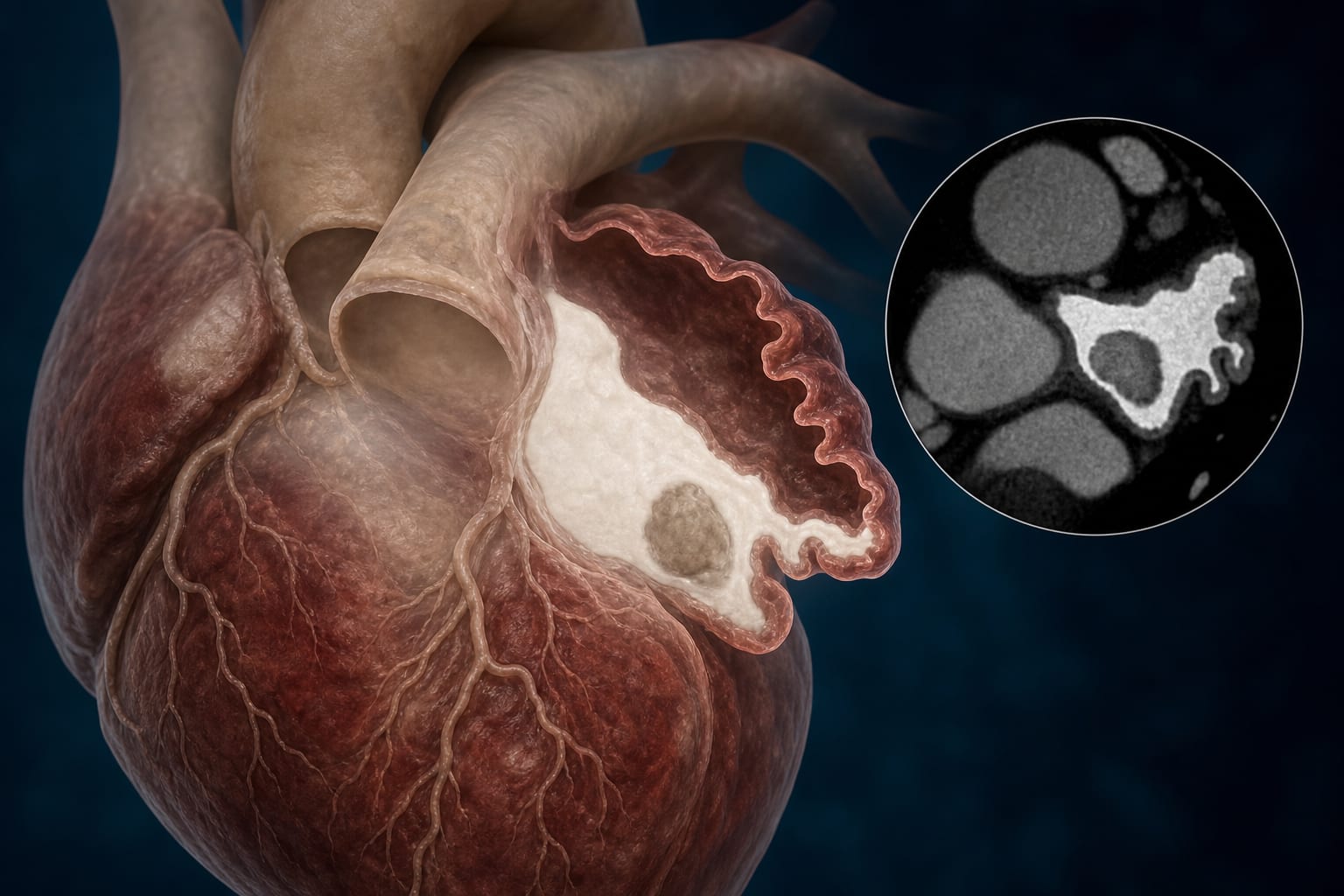
To evaluate whether single-phase left lateral decubitus (LLD) CCTA can maintain diagnostic accuracy while reducing radiation dose compared to conventional biphasic supine (BS) CCTA, specifically focusing on the efficacy of thrombus detection.
Key Findings:
LLD position significantly improved contrast agent filling in the LAA apex (median 444.8 HU vs. 70.3 HU, p < 0.001).
Early filling defect rate reduced from 28% in BS to 8.8% in LLD (p < 0.001).
Sensitivity for LLD-CCTA was 100% (95% CI, 61–100), specificity was 0.94 (95% CI, 0.87–0.97), PPV was 0.70 (95% CI, 0.40–0.89), and NPV was 1.00 (95% CI, 0.92–1.00).
Mean effective radiation dose was reduced from 7.84 mSv to 3.89 mSv (p < 0.001).
Interpretation:
Single-phase LLD-CCTA maintains diagnostic accuracy while significantly reducing radiation exposure and streamlining workflow, highlighting its potential for clinical application.
Limitations:
Single-center study may limit generalizability, potentially affecting the applicability of results in broader clinical settings.
Retrospective design may introduce selection bias, which could influence the outcomes.
Conclusion:
LLD-CCTA offers a promising alternative to BS CCTA, warranting further prospective, multicenter validation to confirm its clinical utility.
Dr. Uprety discusses the current role of non-invasive testing for coronary artery disease, highlighting evidence-based diagnostic strategies and the appropriate use of imaging modalities to improve early detection, risk stratification, and clinical decision-making.