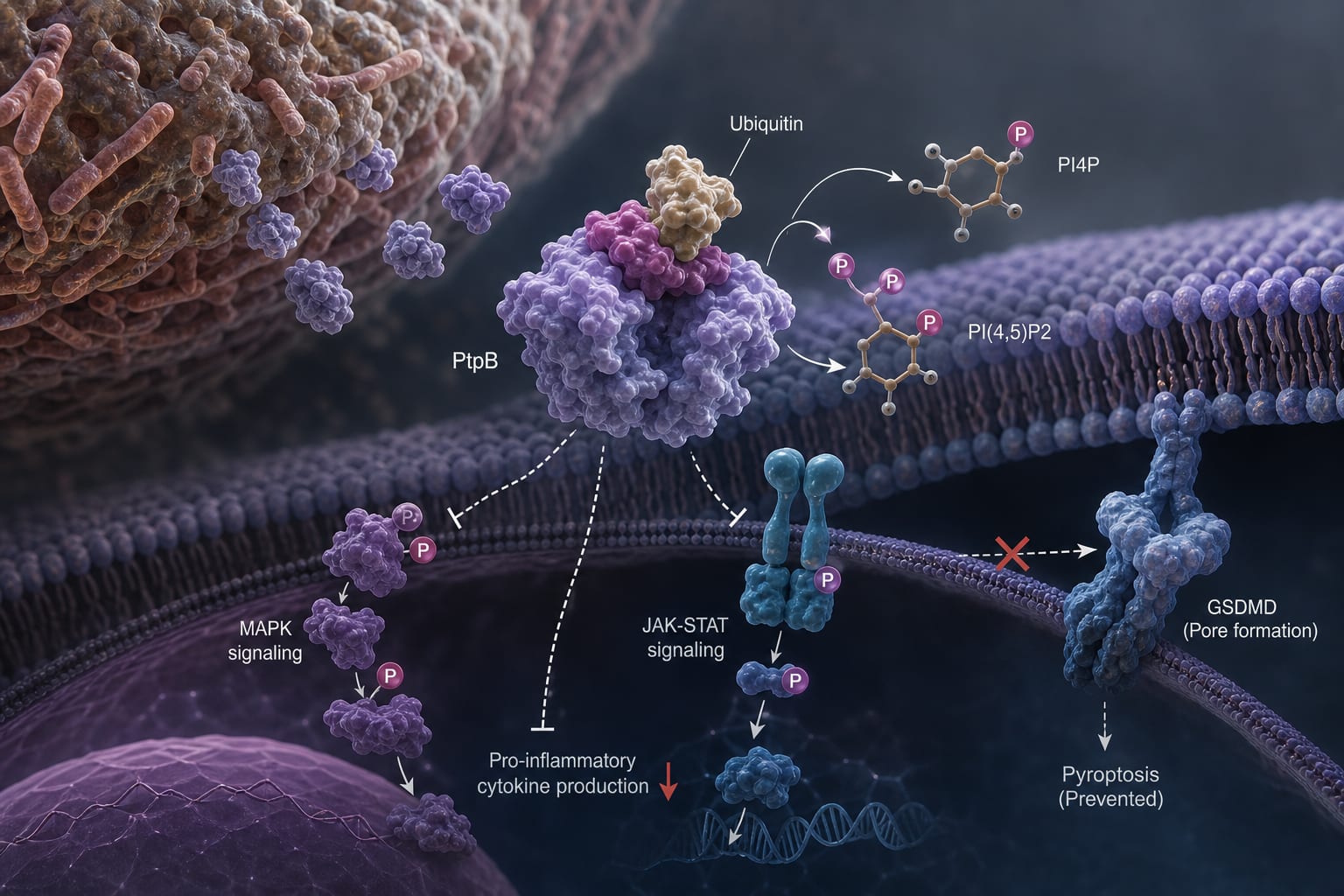
To synthesize current knowledge regarding PtpB, its structural features, and its critical role in immune evasion by Mycobacterium tuberculosis, highlighting its potential as a therapeutic target.
Key Findings:
PtpB disrupts host innate immune defenses by dephosphorylating components of the MAPK and JAK-STAT signaling pathways, which are crucial for immune response.
Potent inhibitors of PtpB, such as Kuwanol E and OMTS, have been identified and characterized, showing promise for therapeutic applications.
Interpretation:
PtpB is a critical virulence factor in Mycobacterium tuberculosis that undermines host immunity, presenting significant challenges for tuberculosis treatment and making it a promising target for novel therapies.
Limitations:
The exact molecular mechanism governing PtpB secretion remains unclear, which complicates the development of targeted therapies.
Challenges exist in developing effective inhibitors for clinical use, particularly in ensuring their efficacy against resistant strains.
Conclusion:
PtpB presents a viable target for host-directed therapies against tuberculosis, especially in light of rising drug resistance, underscoring the need for innovative therapeutic strategies.