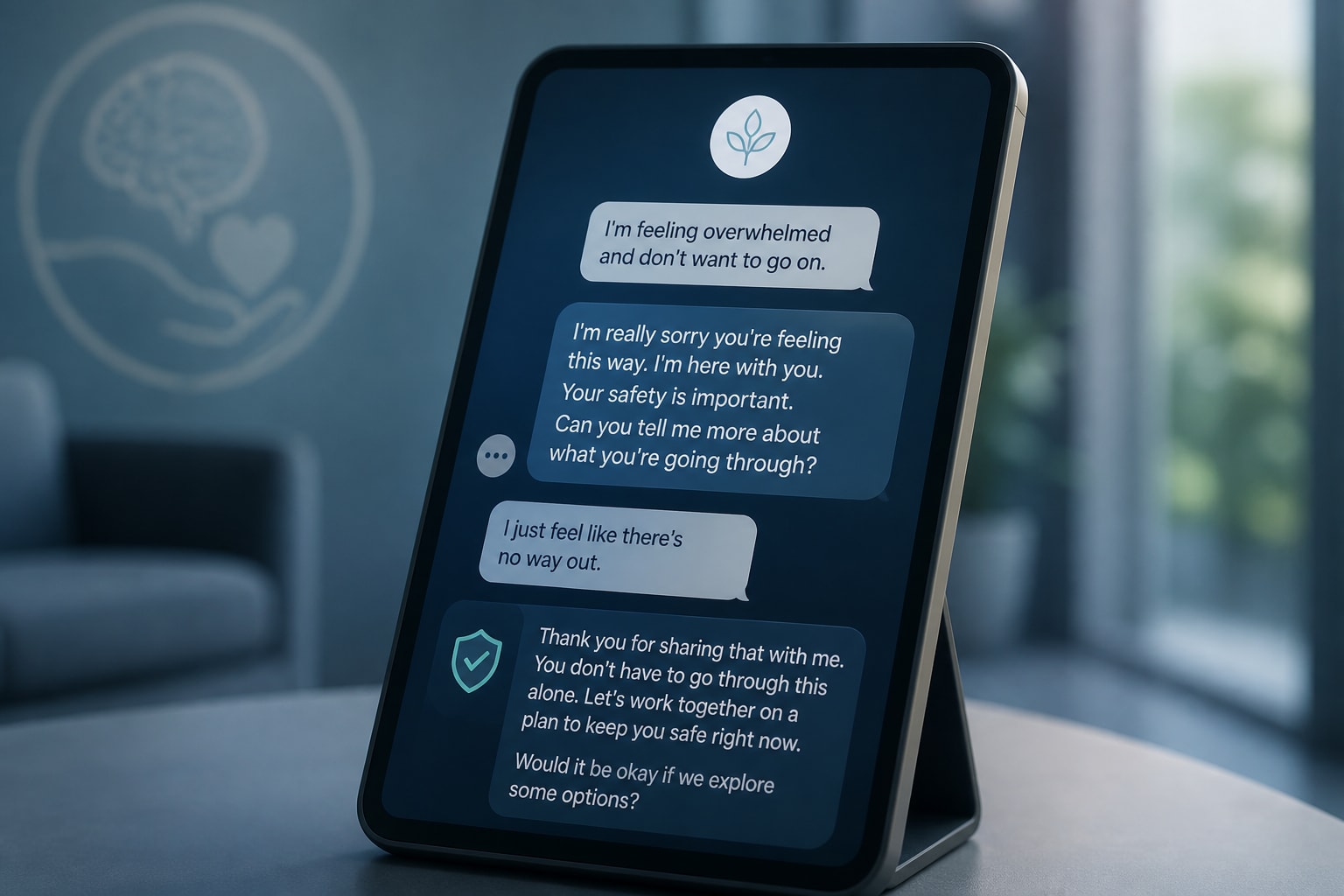
To present a framework for implementing AI chatbots that can address patient distress and suicide risk in high-risk healthcare settings, particularly for individuals with substance use disorders.
Approach:
Development of AI Chatbot 'Suzy': The AI chatbot 'Suzy' was developed to provide support for substance use disorder recovery and general wellness, with a focus on safety monitoring and suicide risk assessment.
Safety Monitoring Techniques: Implemented a safety disclaimer and a 'Safety Router' to triage user messages based on risk levels, ensuring appropriate responses to potential psychiatric distress.
Iterative Design Refinement: Incorporated feedback from clinicians and experts to refine the chatbot's ability to identify and respond to messages indicating varying levels of risk.
Key Findings:
AI chatbots can provide on-demand behavioral health support but carry risks such as inconsistent responses and potential harm.
The implementation of safety guardrails is crucial for monitoring suicide risk in AI chatbots.
The design of 'Suzy' included a structured approach to assess and respond to user messages based on their risk levels.
Interpretation:
The study emphasizes the need for rigorous safety protocols in AI chatbots to effectively support individuals at risk of suicide, particularly in addiction medicine settings.
Limitations:
The pilot design requires empirical validation beyond initial studies.
Limited information exists on the optimal methods for monitoring suicide risk in AI chatbots.
Conclusion:
The framework presented aims to enhance the safety and effectiveness of AI chatbots in addressing patient distress and suicidal thoughts in high-risk environments.
by Joanna M. Streck, Dallas Swendeman, W. Scott Comulada, Y. Xian Ho, Julia Cannistraro, Gladys N. Pachas, Danielle Alves-Back, Wei Sum Li, Jonathan L. Jackson, Delta-Marie Lewis, Namrata Tomar, David Warren, Douglas E. Levy, Lillian Gelberg