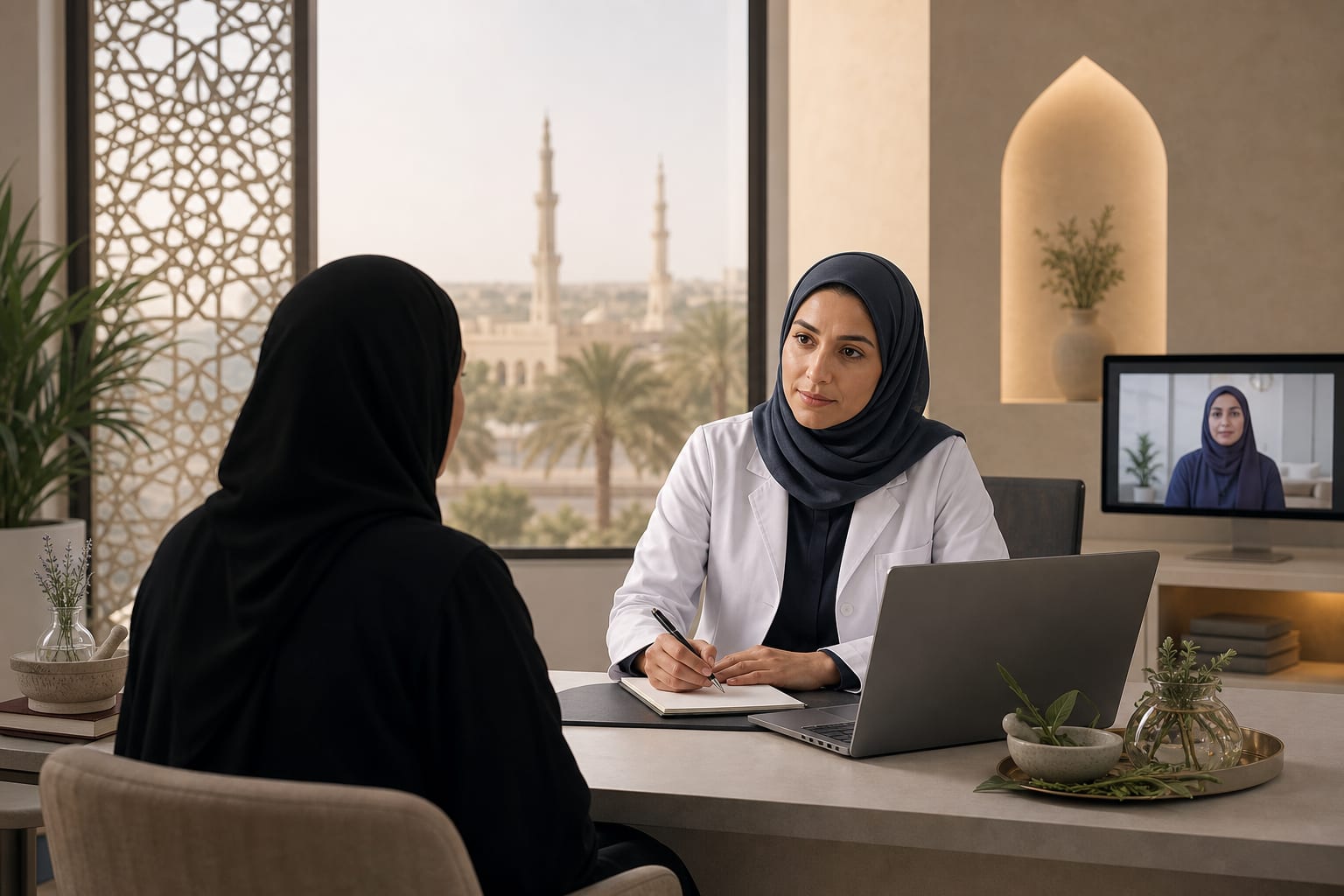
To provide a comprehensive examination of menopause among Saudi women by integrating cultural, religious, psychological, and social perspectives with existing healthcare system practices, ensuring clarity in the integration process.
Key Findings:
Cultural and Islamic values significantly influence Saudi women's perceptions of menopause and health-seeking behaviors.
Herbal and traditional remedies are preferred over hormone replacement therapy among Saudi women.
Barriers to effective PHC-level care include limited provider training, gender dynamics, lack of privacy, and absence of national menopause management guidelines.
Psychological effects such as mood changes and anxiety are common, with social factors playing a critical role in adjustment.
Emerging community-based programs and telemedicine platforms show promise for improving access and quality of care.
Interpretation:
Menopause among Saudi women is a complex biopsychosocial experience shaped by cultural and religious contexts, revealing notable gaps in current PHC services that need addressing.
Limitations:
Limited provider training and readiness in addressing menopause, impacting care quality.
Cultural norms affecting the reporting of intimate and urogenital concerns, leading to underdiagnosis.
Absence of national guidelines for menopause management, hindering standardized care.
Conclusion:
Improving menopausal care in Saudi Arabia requires urgent clinical training, culturally competent communication, integration of traditional practices, and expansion of telemedicine, alongside the development of national guidelines and community-based education initiatives.