Staged antibiotic-loaded cement-based reconstruction versus flap-based reconstruction for complex diabetic foot defects in patients with osteoporosis: a retrospective cohort study - Summary - MDSpire
Advertisement
Staged antibiotic-loaded cement-based reconstruction versus flap-based reconstruction for complex diabetic foot defects in patients with osteoporosis: a retrospective cohort study
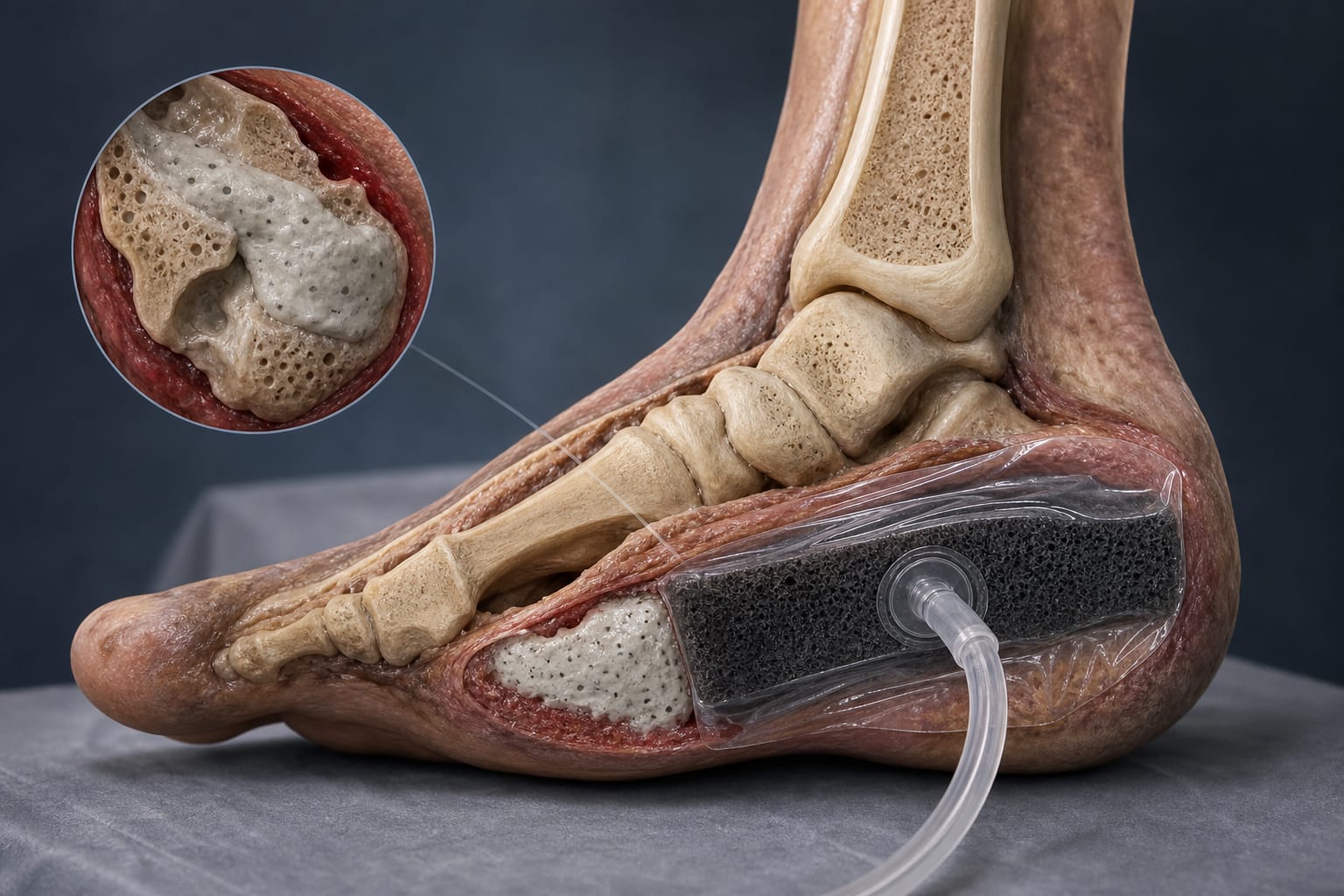
To compare the clinical efficacy and safety of staged antibiotic-loaded bone cement combined with negative pressure wound therapy (AB-NPWT) versus flap transplantation in treating chronic foot ulcers with soft tissue defects in patients with type 2 diabetes mellitus (T2DM) and osteoporosis.
Key Findings:
Operative time and blood loss were significantly lower in the AB-NPWT group (p < 0.001).
At 12 months, complete wound healing rates were similar (86.2% AB-NPWT vs. 88.9% flap, p = 0.754).
Limb salvage rates were comparable (93.1% AB-NPWT vs. 92.6% flap, p = 1.000).
Complication rates were similar (24.1% AB-NPWT vs. 33.3% flap, p = 0.446).
AOFAS scores at follow-up were comparable (72.5 ± 10.3 AB-NPWT vs. 75.8 ± 11.6 flap, p = 0.270).
Median healing time was 126 days for AB-NPWT vs. 112 days for flap (p = 0.221).
Interpretation:
No statistically significant differences in main clinical outcomes were found between AB-NPWT and flap transplantation, suggesting both methods are viable options for treatment.
Limitations:
Non-randomized treatment allocation may introduce bias.
Small sample size limits generalizability.
No formal sample size calculation was performed.
The analysis was not adjusted for multiple comparisons.
Conclusion:
AB-NPWT may reduce surgical trauma, while flap transplantation offers definitive coverage in a single session. Individualized treatment selection is recommended based on patient and wound characteristics. Further research is needed to confirm findings in larger prospective trials.