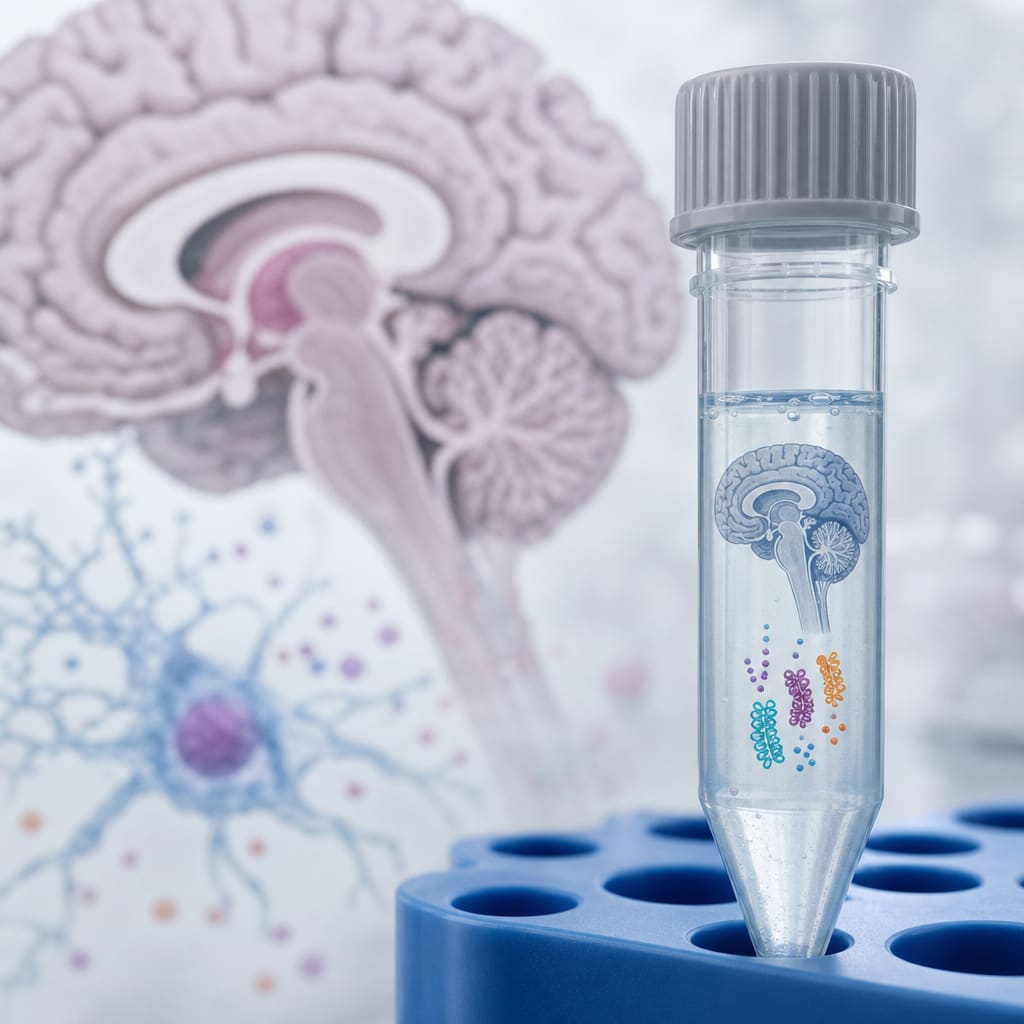
To investigate the presence of neuroinflammatory biomarkers in cerebrospinal fluid (CSF) of patients with atypical psychiatric presentations, such as treatment-resistant psychosis or mood disorders, and assess potential autoimmune contributions.
Key Findings:
Anti-nuclear antibodies and thyroid autoantibodies were the most common autoantibodies found in serum of psychiatric patients.
Only a few patients exhibited abnormal conventional CSF markers of neuroinflammation.
Elevated ITAC/CXCL11 levels were found in the psychiatric cohort, while TARC/CCL17 levels were lower compared to other groups.
17% of patients had at least one CSF cytokine significantly elevated above the mean of the non-inflammatory neurological disease cohort, indicating potential immune involvement.
Six patients had their diagnoses revised based on serological evaluation and showed improvement with immunosuppression.
Interpretation:
A subset of patients with atypical psychiatric disorders may have an underlying immune-mediated process, suggesting the need for reevaluation of their diagnoses and treatment approaches, particularly in cases of treatment resistance.
Limitations:
Small sample size may limit generalizability of findings.
The study is observational and does not establish causation.
Potential confounding factors, such as comorbid psychiatric conditions and varying treatment histories, were not fully controlled.
Conclusion:
The findings indicate that immune contributions may play a role in some atypical psychiatric disorders, warranting further investigation and consideration of autoimmune mechanisms in treatment-resistant cases.
by Jocelyn X. Jiang, Artur Shvetcov, Nicole Fewings, Prudence Gatt, Suat Dervish, Justin Y Garber, Matthew Silsby, Alessandro F Fois, Stephen Duma, Sushil Bandodkar, Sudarshini Ramanathan, Andrew Bleasel, Bryne John, Ian B Hickie, Elizabeth M Scott, Anthony Harris, Ming-Wei Lin, Caitlin A. Finney, David A. Brown