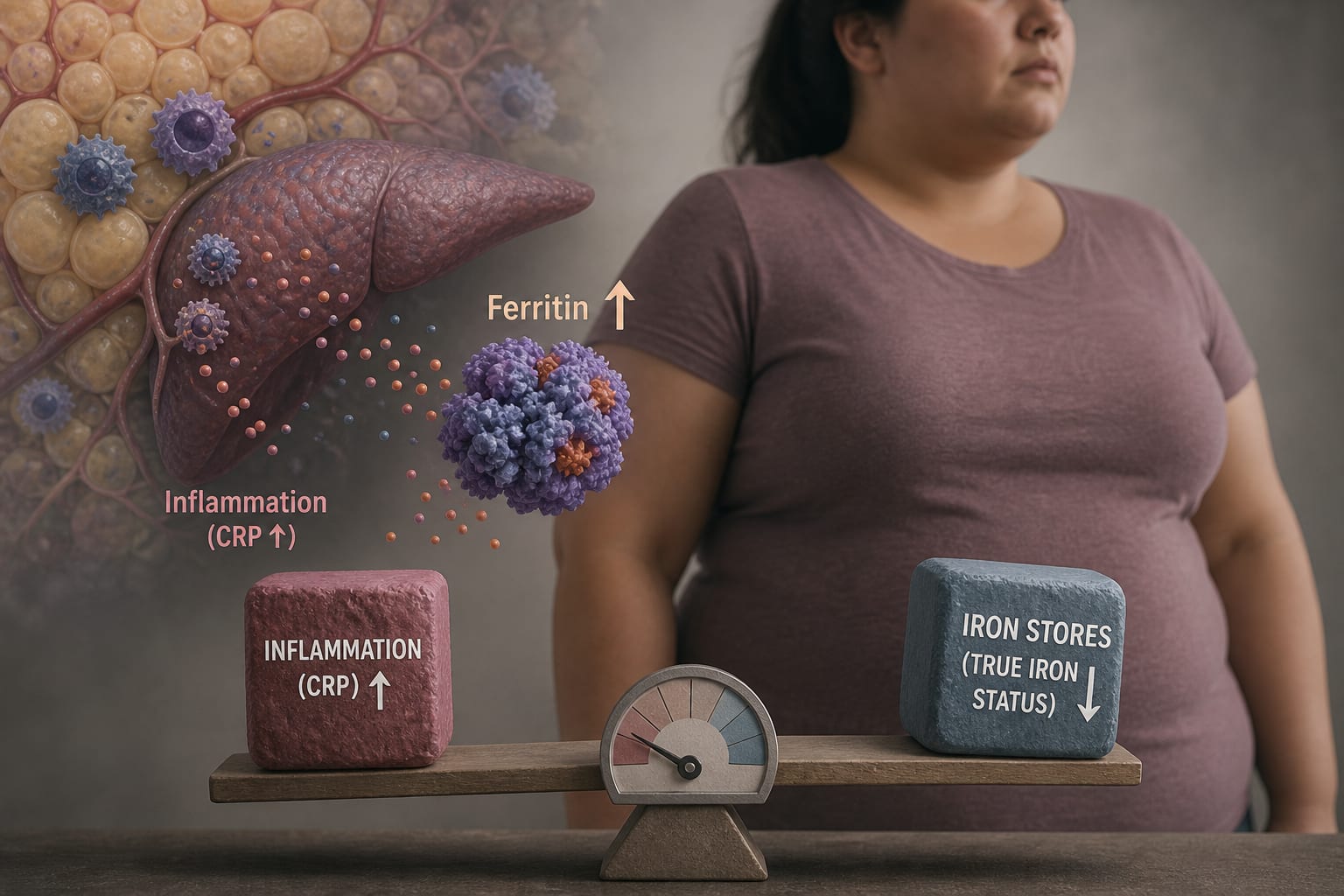
To assess the impact of C-reactive protein (CRP) correction on the prevalence of iron deficiency in women and men in the United States, with a focus on variations by body mass index (BMI).
Approach:
Data Source: Utilized NHANES 2017–March 2020 public-use files, focusing on non-pregnant adults aged ≥20 years with valid serum ferritin, high-sensitivity CRP, and recorded BMI.
Analysis Method: Natural log ferritin was regressed on natural log CRP, with ferritin values adjusted based on CRP levels. Iron deficiency was classified as ferritin <15 μg/L.
Key Findings:
Iron deficiency prevalence among women increased from 7.78% to 10.70% after CRP adjustment, indicating a significant reclassification of iron status.
Overall population prevalence rose from 4.50% to 6.07%, affecting approximately 3.6 million US adults.
In women, the increase in iron deficiency prevalence was greater in higher BMI categories, peaking at 7.4 percentage points for BMI 35–39.9.
Red cell indices indicated iron restriction among women reclassified by inflammation adjustment, supporting the findings.
Interpretation:
The adjustment for inflammation revealed a significant number of women previously classified as iron-replete were actually iron deficient, highlighting the need for CRP consideration in iron deficiency diagnosis.
Limitations:
The study's findings are based on observational data and may not establish causation, limiting the generalizability of the results.
Men were not a formal negative-control population, as corrections were estimated separately for each sex, which may affect comparative analysis.
Conclusion:
The study indicates that inflammation associated with obesity can obscure true iron deficiency in women.