Hospital-acquired infections in preterm infants with gestational age <32 weeks: a retrospective study of clinical characteristics, pathogen distribution, and associated factors - Summary - MDSpire
Advertisement
Hospital-acquired infections in preterm infants with gestational age <32 weeks: a retrospective study of clinical characteristics, pathogen distribution, and associated factors
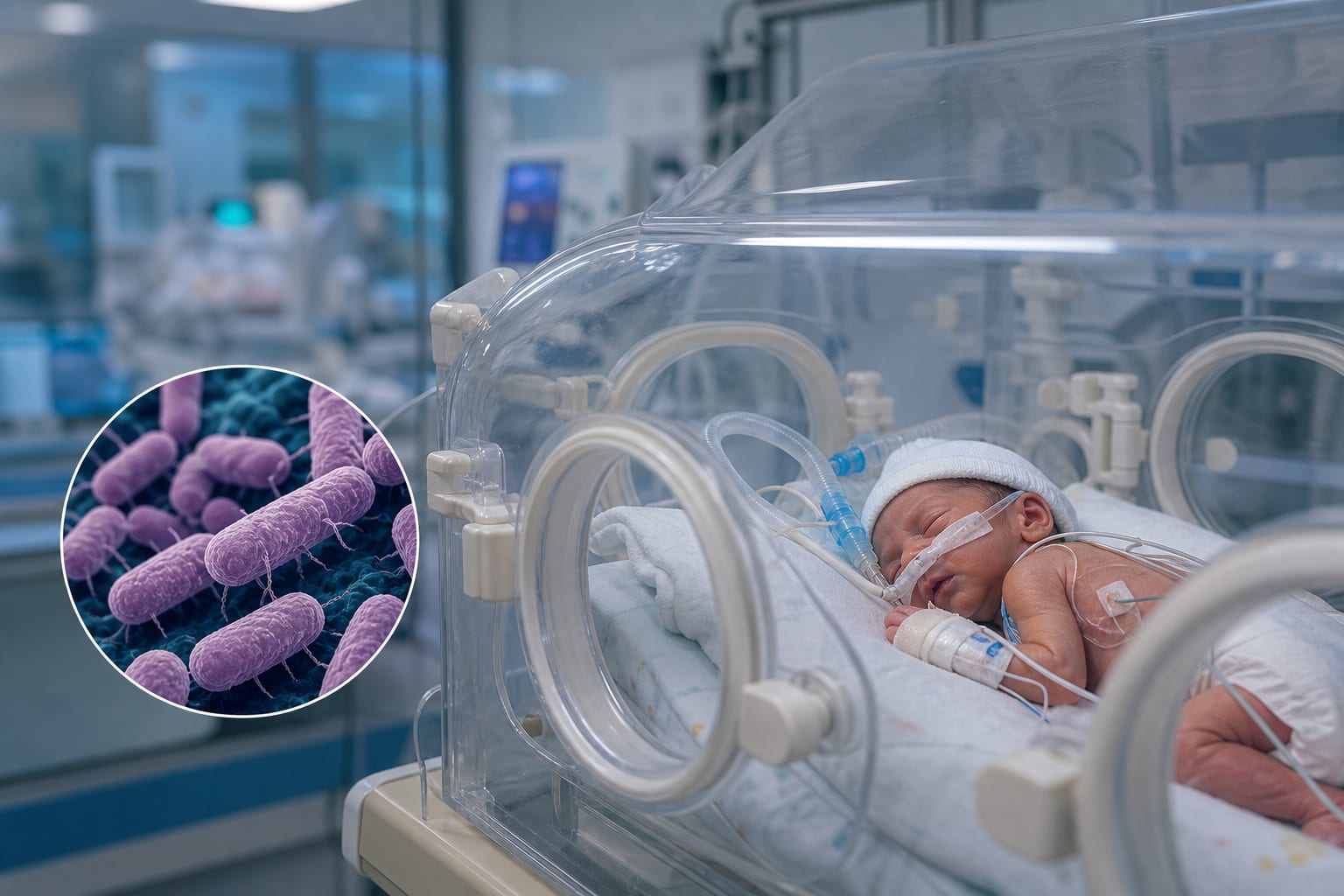
To describe the incidence, site distribution, and pathogen profile of nosocomial infections in preterm infants born at <32 weeks’ gestation, identify independent risk and protective factors, and assess the association between nosocomial infection and major neonatal complications.
Approach:
Key Findings:
31.18% of infants developed nosocomial infections, with an episode rate of 35.88%.
Respiratory tract infections were the most common, with Klebsiella pneumoniae being the predominant pathogen.
PICC catheterisation and 25-hydroxyvitamin D deficiency were identified as independent risk factors for infection.
Delayed cord clamping was found to be independently protective against infections.
BPD incidence was significantly higher in the infection group compared to the non-infection group.
Interpretation:
Nosocomial infections significantly affect preterm infants <32 weeks’ gestation, with specific modifiable factors influencing infection risk.
Limitations:
Single-centre study may limit generalizability of findings.
Retrospective design may introduce biases in data collection and interpretation.
Conclusion:
The study highlights the prevalence of nosocomial infections in preterm infants and suggests modifiable factors for potential infection prevention.