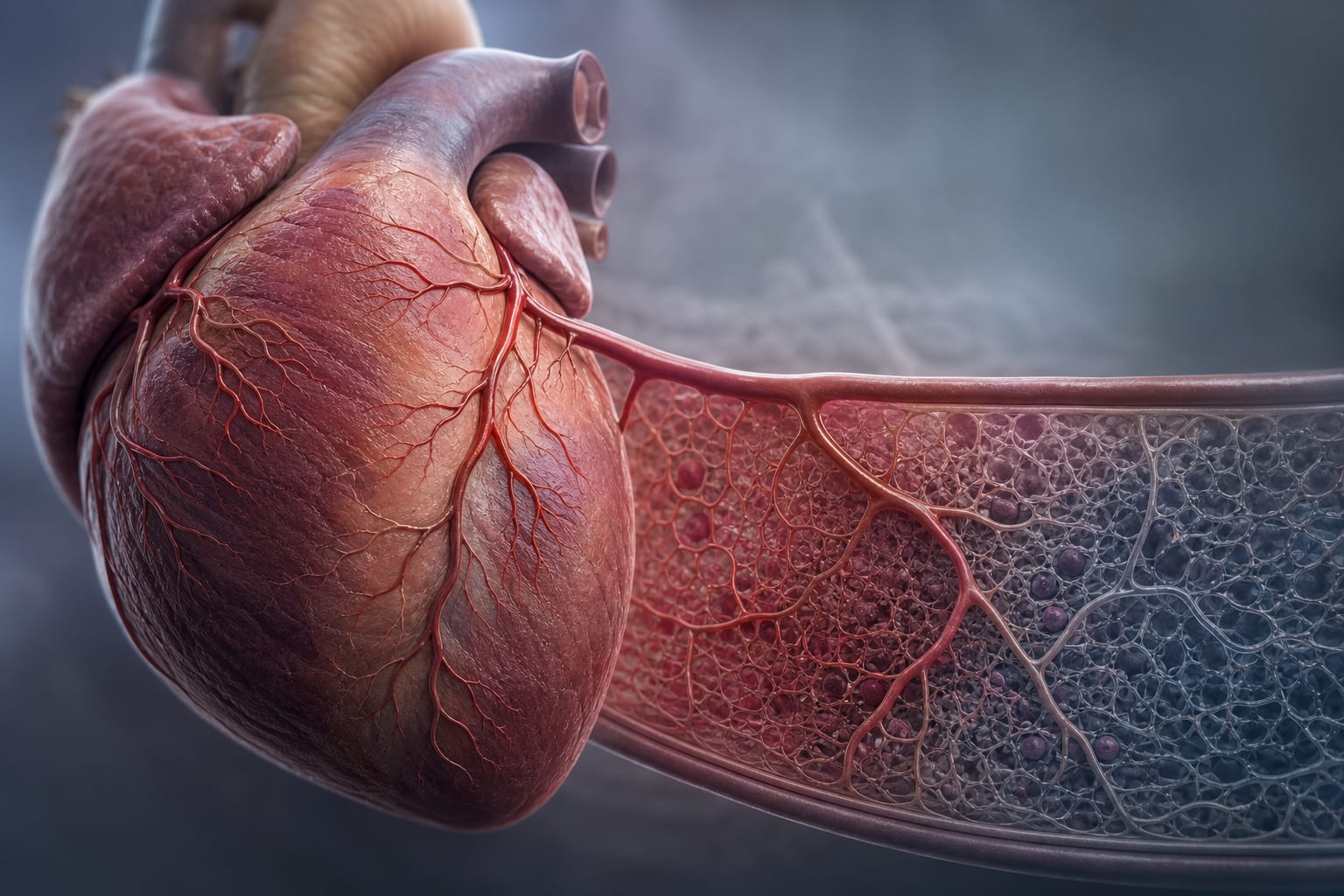
To reveal myocardial involvement and long-term cardiac magnetic resonance (CMR) changes in patients with post-acute sequelae of SARS-CoV-2 infection with cardiovascular involvement (PASC-CVS), providing insights into disease progression and recovery.
Key Findings:
PASC-CVS patients showed significant differences in multiparametric CMR parameters compared to controls, including Quantification of late gadolinium enhancement (LGE), Global extracellular volume (ECV), Heart rate, left ventricular global longitudinal strain (LV GLS), and Global native T1.
Combined multiparametric CMR parameters achieved an AUC of 0.94, indicating excellent predictive value.
At one-year follow-up, PASC scores significantly improved from 14.1 to 5.4 (P < 0.001).
Repeat CMR in 20 patients showed improvements in right ventricular ejection fraction (RV EF) and global T2, but no recovery in Quantification of LGE.
Interpretation:
The study highlights myocardial involvement in PASC-CVS patients and suggests that multiparametric CMR is valuable for monitoring cardiac health post-COVID-19, potentially guiding clinical management.
Limitations:
The single-center nature of the study may limit the generalizability of the findings.
The small sample size for follow-up CMR (n = 20) may affect the robustness of the findings.
The lack of recovery in Quantification of LGE raises questions about its clinical significance and implications for patient outcomes.
Conclusion:
Multiparametric CMR is effective in monitoring myocardial involvement and recovery in PASC-CVS patients, with notable improvements in cardiac function over one year, underscoring its potential role in clinical practice.