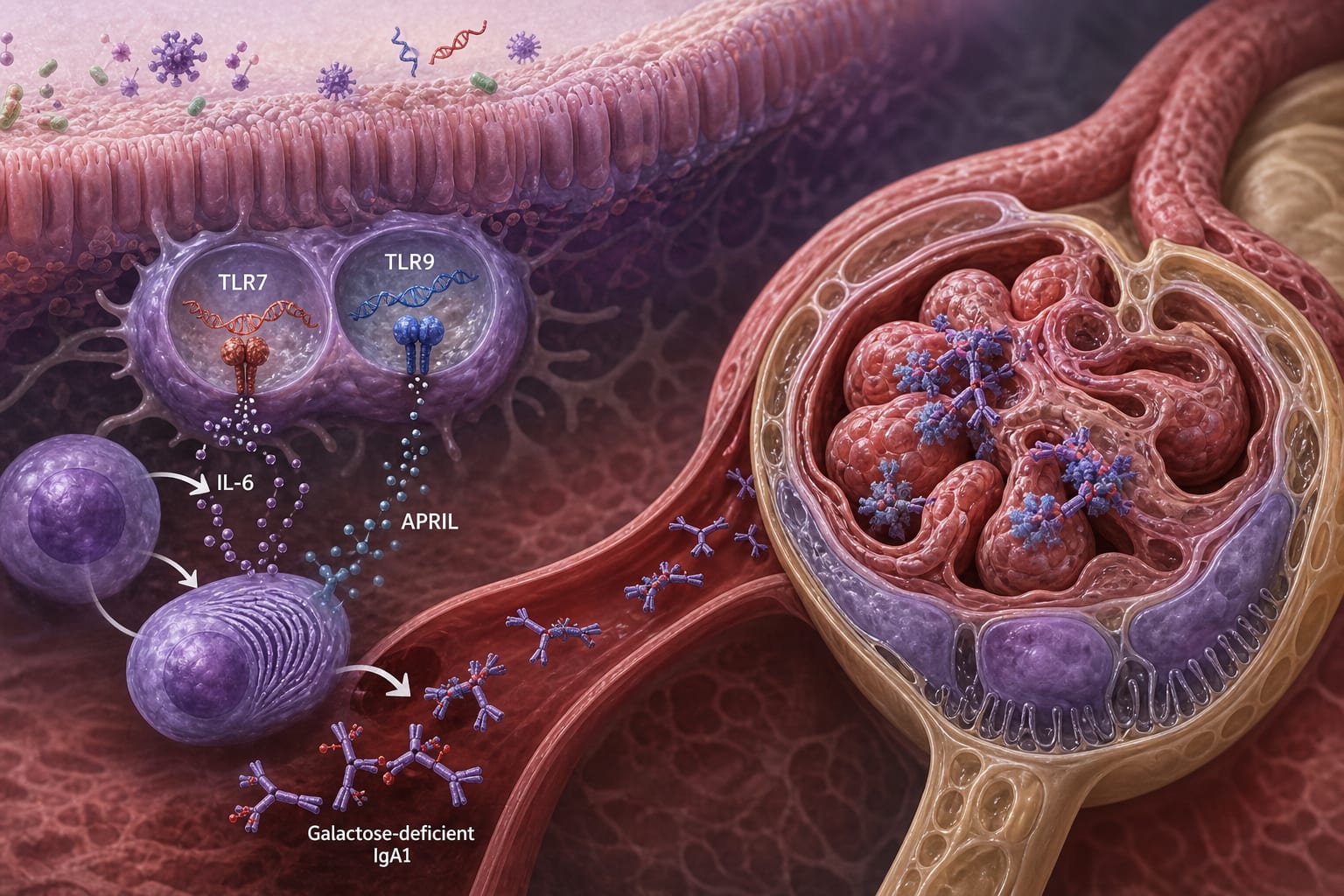
To summarize current evidence regarding the roles of TLR7 and TLR9 in IgA nephropathy (IgAN) and their contribution to mucosal immune abnormalities.
Approach:
Review of Evidence: The review integrates experimental models, genetic studies, and clinical observations related to TLR7 and TLR9 in IgAN.
Key Findings:
IgAN is characterized by mesangial deposition of IgA-containing immune complexes.
Dysregulated mucosal innate immune responses, particularly via TLR7 and TLR9, contribute to IgAN pathogenesis.
Increased expression of TLR7 and TLR9 has been observed in mucosal tissues of IgAN patients.
TLR activation may promote the production of galactose-deficient IgA1 (Gd-IgA1), leading to nephritogenic immune complexes.
Mucosal infections and gut microbiota alterations may enhance aberrant IgA responses.
Interpretation:
The findings indicate that TLR-mediated immune activation is involved in the pathogenesis of IgAN, but the direct impact on human disease is not fully understood.
Limitations:
Current animal models may not fully replicate human IgAN.
The specific microbial triggers of mucosal immune activation in IgAN are not definitively identified.
Conclusion:
Understanding the roles of TLR7 and TLR9 in IgAN may provide insights into potential therapeutic targets for managing the disease.
A cross-sectional metagenomic study found greater oral microbiome richness among adults with chronic rhinosinusitis, particularly nonallergic chronic rhinosinusitis, while associations with asthma, airway inflammation, and most lung-function measures were inconsistent.