Efficacy and safety of an implantable tibial neuromodulation system for overactive bladder with urgency urinary incontinence: an open-label, single arm trial - Summary - MDSpire
Advertisement
Efficacy and safety of an implantable tibial neuromodulation system for overactive bladder with urgency urinary incontinence: an open-label, single arm trial
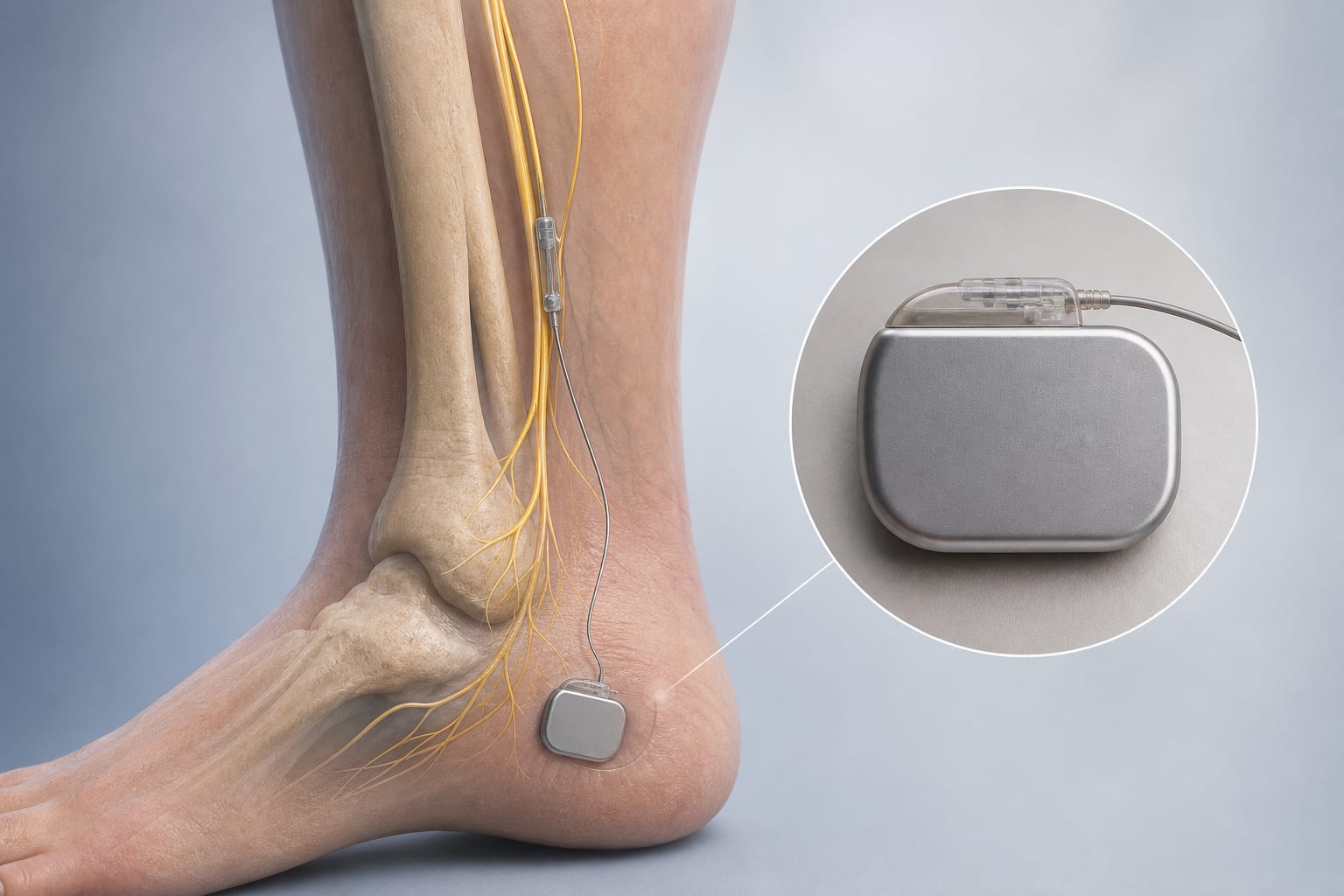
To evaluate the safety and efficacy of a domestically developed implantable tibial neuromodulation system (iTNS) in treating overactive bladder (OAB) in patients with urgency urinary incontinence (UUI).
Approach:
Study Design: A prospective single-center open-label trial involving 10 participants who underwent iTNS device implantation.
Follow-Up: Device activation occurred at 2–4 weeks post-implantation, with follow-up evaluations at 1, 3, and 6 months.
Assessment Methods: Evaluations included 3-day bladder diaries, validated questionnaires, and symptom satisfaction surveys.
Key Findings:
At 6 months, the iTNS system achieved a 90% response rate (9/10 patients), with the primary endpoint of a ≥50% reduction in UUI episodes per day.
40% of patients (4/10) attained ≥3 consecutive dry days.
Significant reduction in UUI episodes was observed at 3 months (from 3.235 to 0.766) and 6 months (from 3.235 to 0.632).
Quality of life improved significantly at 6 months, with OAB-Q scores changing from 69.5 ± 11.76 to 44.4 ± 12.06.
80% of patients reported satisfaction with their symptoms at the 6-month endpoint.
Interpretation:
The study results indicate that the domestically developed iTNS system shows significant symptom reduction and improved quality of life for patients with UUI.
Limitations:
Small sample size of 10 participants limits generalizability.
Single-center study may not reflect broader population outcomes.
Conclusion:
The iTNS system demonstrates a strong ability to significantly reduce or completely resolve UUI symptoms with a favorable safety profile.