G3BP1 methylation by PRMT5 facilitates its recruitment of TBK1 for IRF3 activation during host response to foreign ribonucleic acids - Summary - MDSpire
Advertisement
G3BP1 methylation by PRMT5 facilitates its recruitment of TBK1 for IRF3 activation during host response to foreign ribonucleic acids
Pharmacological Studies: Performed pharmacological inhibition studies to determine enzyme-substrate specificity.
Microscopy: Utilized confocal immunofluorescence microscopy to examine protein subcellular localization.
Key Findings:
G3BP1 binds TBK1 and IRF3, which are important for IFN-β production.
G3BP1 deficiency reduces TBK1–IRF3 complex formation and affects IRF3 phosphorylation and nuclear translocation.
G3BP1 associates with IRF3 and recruits TBK1 upon p(I:C) stimulation.
The C-terminal RGG region of G3BP1 is critical for binding IRF3 and TBK1.
G3BP1 is arginine-methylated at R435 and R460 upon p(I:C)-stimulation, with R460 necessary for TBK1 binding.
PRMT5 promotes symmetric arginine-dimethylation of G3BP1, affecting G3BP1–TBK1 interaction.
Interpretation:
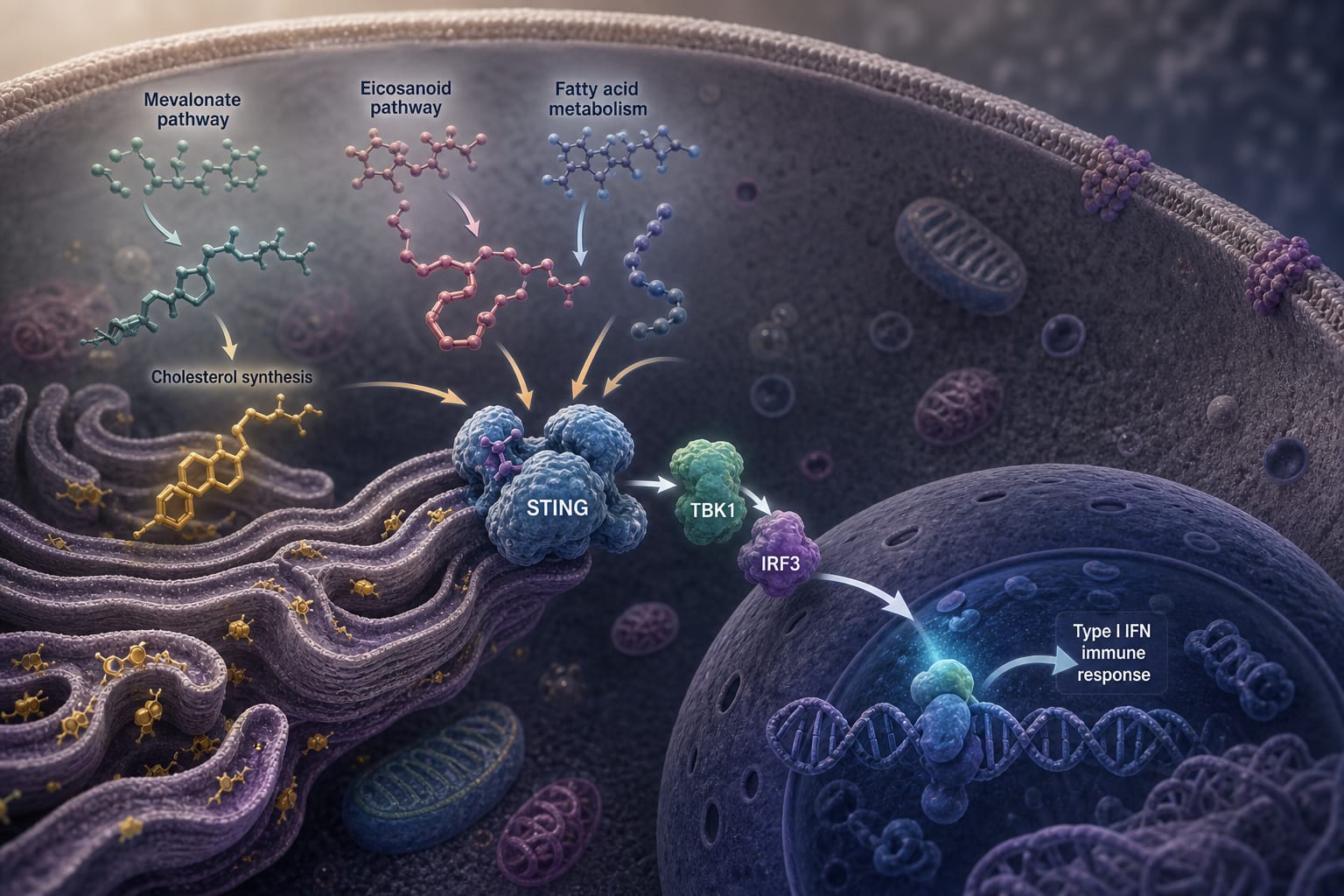
G3BP1 serves as a signaling hub that binds IRF3 and is methylated by PRMT5 to recruit TBK1 for IRF3 activation and IFN-β induction during antiviral responses.
Conclusion:
G3BP1 facilitates TBK1 recruitment and IRF3 activation through arginine methylation.