Inflammatory CADASIL: the cross-link between CADASIL and multiple sclerosis: a report of two cases and systematic review of the literature - Summary - MDSpire
To explore the relationship between CADASIL and multiple sclerosis (MS) and its clinical implications through detailed case reports and a comprehensive literature review.
Approach:
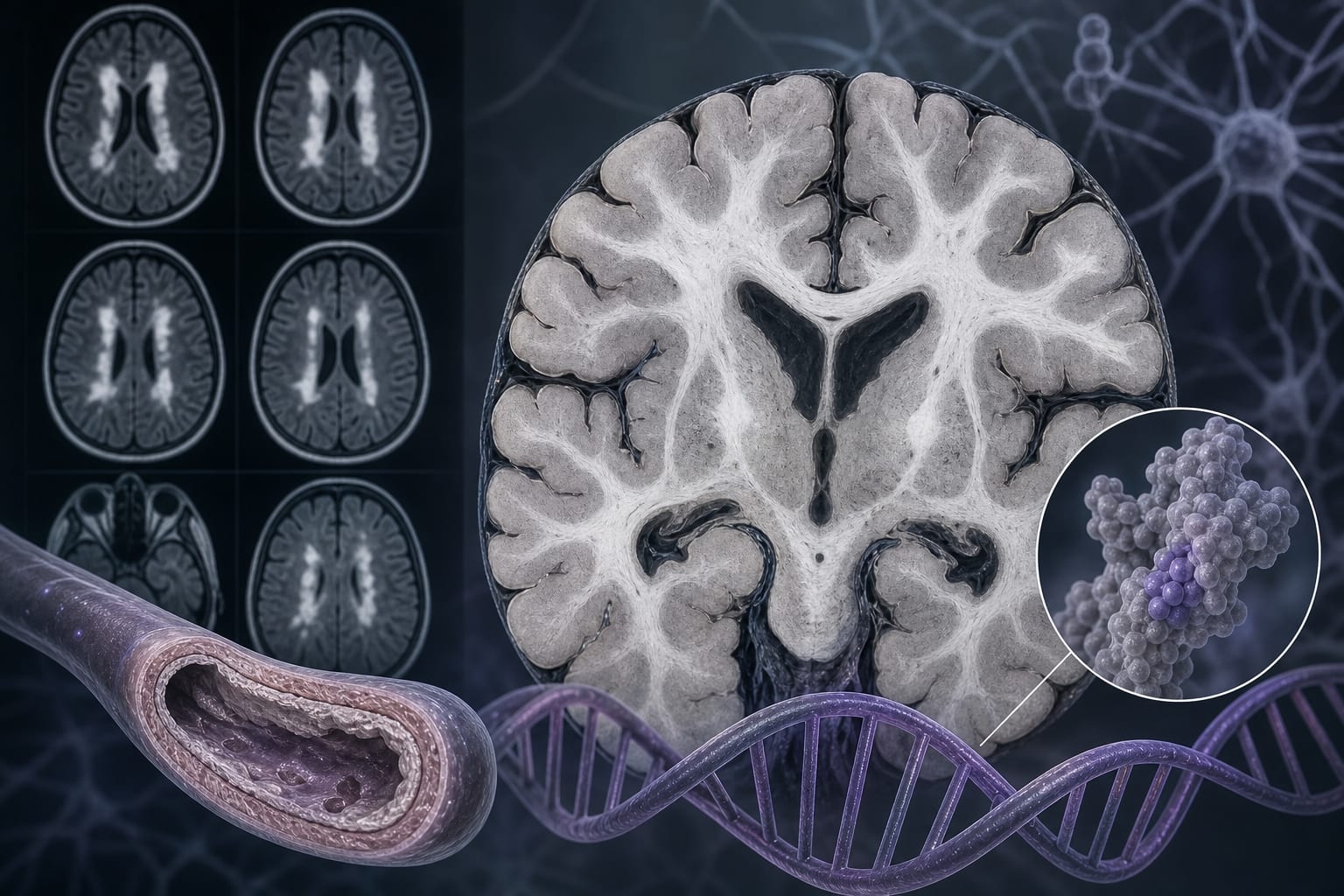
Case Reports: Two cases of patients initially diagnosed with MS who were later found to have CADASIL were presented. The first case involved a 45-year-old female with recurrent neurological symptoms and MRI findings suggestive of MS, who later exhibited characteristic features of CADASIL upon further investigation. The second case was a 50-year-old male with a history of migraines and transient ischemic attacks, initially misdiagnosed with MS, who was ultimately confirmed to have CADASIL through genetic testing. Both cases highlighted the clinical progression and diagnostic challenges faced by the patients.
Literature Review: A systematic review of previously published cases of CADASIL with neuroinflammation was conducted, focusing on diagnostic criteria, clinical outcomes, and the neuroimaging characteristics that overlap with MS. The review included 12 relevant reports that provided insights into the clinical presentations and outcomes of patients with CADASIL misdiagnosed as MS.
Key Findings:
CADASIL can present with clinical and radiological features that closely mimic those of MS, leading to potential misdiagnosis. This misdiagnosis can result in delays in appropriate treatment and management strategies.
Some patients with CADASIL exhibited atypical features that did not conform to the classic presentations of either MS or CADASIL, complicating the diagnostic process and necessitating a high index of suspicion among clinicians.
The literature review underscored the importance of recognizing the overlap between CADASIL and MS, emphasizing the need for heightened awareness among healthcare providers to avoid misdiagnosis.
Interpretation:
The findings suggest that CADASIL may predispose individuals to develop MS-like manifestations, raising important questions about the pathophysiological mechanisms underlying this association. This highlights the necessity for clinicians to consider CADASIL in differential diagnoses when encountering patients with MS-like symptoms, and it suggests a need for revised treatment approaches tailored to the unique needs of affected patients.
Limitations:
The study relies on previously published case reports, which may vary in quality and detail, potentially introducing bias into the findings.
The sample size is limited to two case reports and 12 literature reports, which may not provide a comprehensive representation of the broader population affected by CADASIL and MS.
Conclusion:
Further research is needed to elucidate the relationship between CADASIL and MS, particularly concerning the refinement of diagnostic criteria, exploration of treatment options, and identification of red flags for genetic testing in patients presenting with neurological symptoms suggestive of MS.
Federal prosecutors allege that a Florida physician and research staff fabricated clinical trial records that were submitted into database systems used to evaluate investigational drugs.