To summarize evidence linking immunometabolic pathways to gouty inflammation and discuss questions regarding cell specificity, temporal sequence, causal relevance, and therapeutic translation.
Approach:
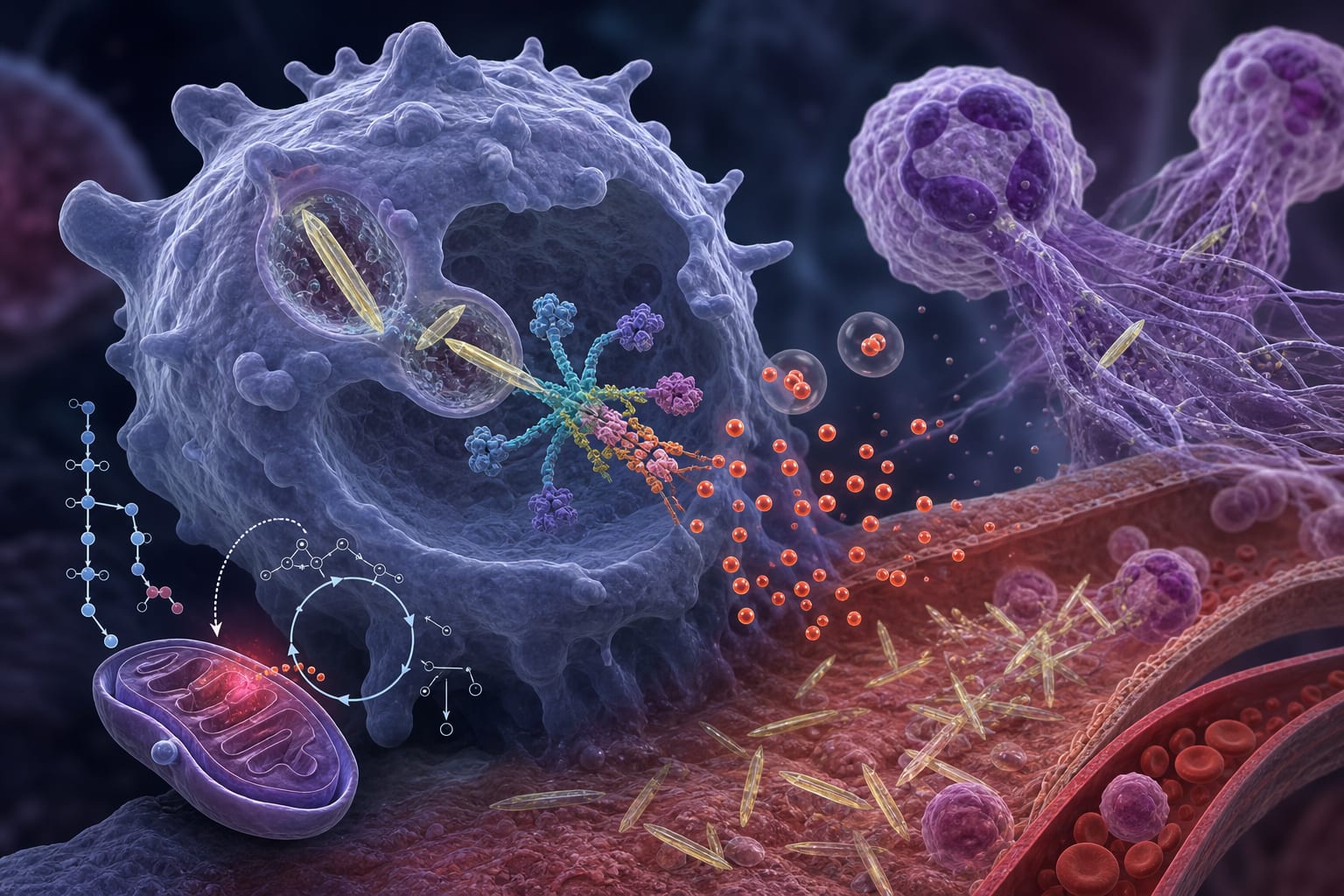
Overview of Gouty Arthritis: Gouty arthritis is characterized by monosodium urate (MSU) crystal deposition and inflammation driven by the NLRP3 inflammasome–IL-1β axis, which plays a central role in the inflammatory response.
Immunometabolic Perspective: The review integrates macrophage- and neutrophil-centered immunometabolic programs across the trajectory of gouty inflammation, from crystal sensing to resolution.
IL-1β is a key mediator of acute gouty inflammation, influencing the recruitment of neutrophils and amplification of inflammation.
Interpretation:
While MSU crystals are necessary for gout inflammation, the initiation, amplification, resolution, and recurrence of inflammation are modulated by host response states and the local tissue microenvironment.
Limitations:
The review does not address specific mechanisms by which systemic metabolic abnormalities influence gout.
Questions remain regarding cell specificity and temporal sequence of immunometabolic changes based on the review's findings.
Conclusion:
Immunometabolism provides insights into the complexities of gouty arthritis beyond crystal deposition.