To examine the pathological role of succinate, a metabolite derived from gut microbiota, in the progression of diabetic myocardial ischemia/reperfusion injury, highlighting its potential as a therapeutic target.
Approach:
Key Findings:
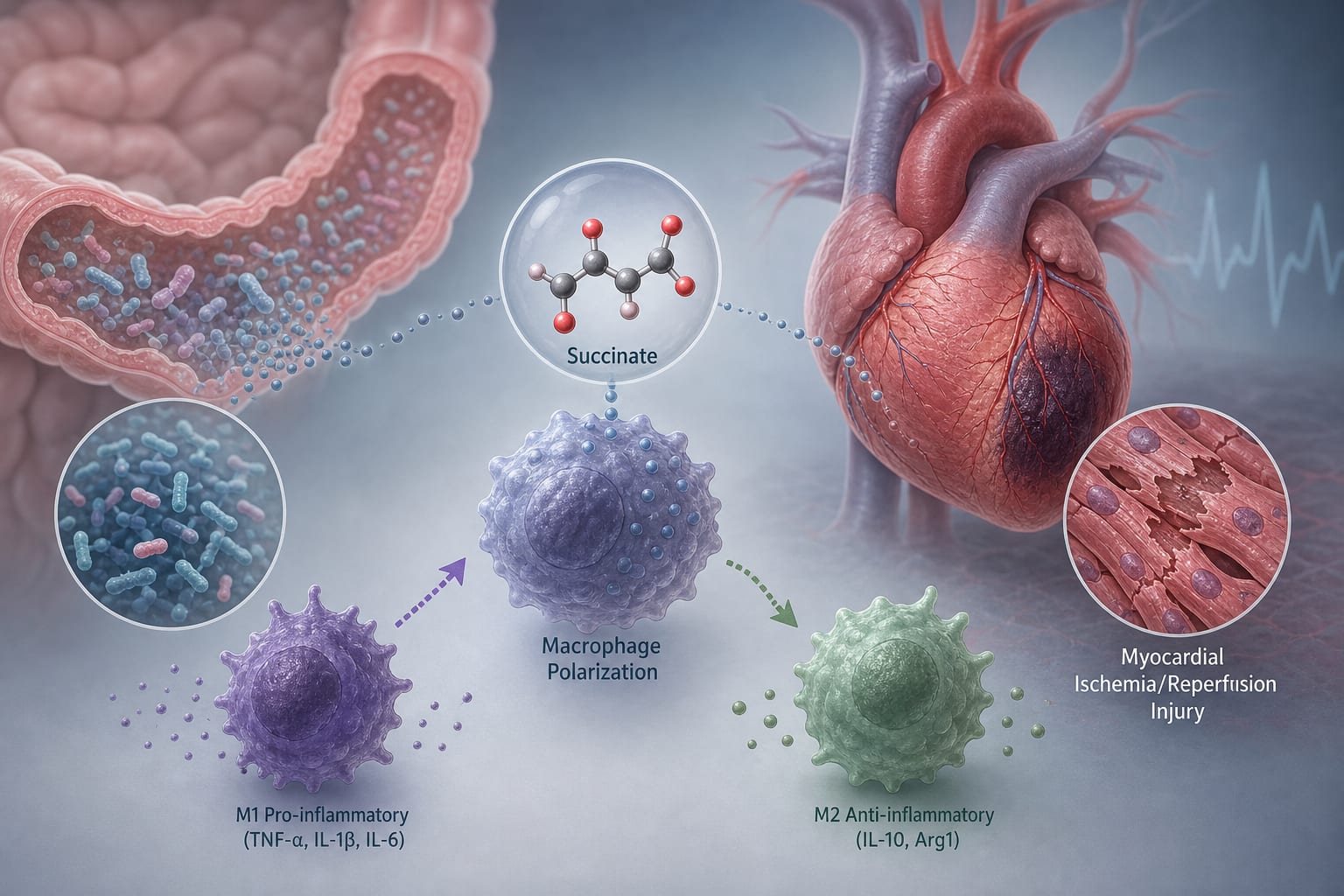
Cardiac succinate accumulation during diabetes is linked to gut microbial dysbiosis, suggesting a potential target for intervention.
Antibiotic-mediated gut microbiota depletion reversed succinate accumulation, indicating the importance of microbial communities.
Succinate exacerbated myocardial ischemia/reperfusion injury by driving macrophage polarization, highlighting a mechanism for therapeutic targeting.
Genetic knockdown of Sucnr1 ameliorated the detrimental effects of succinate, suggesting a protective strategy.
Interpretation:
The accumulation of succinate in diabetic hearts is associated with gut microbiota dysbiosis and exacerbates myocardial ischemia/reperfusion injury through macrophage polarization via SUCNR1 activation, indicating a potential therapeutic pathway.
Limitations:
The study primarily utilized animal models, which may not fully replicate human conditions, necessitating caution in translating findings.
Further research is needed to explore the therapeutic potential of targeting microbial succinate production in human subjects.
Conclusion:
Targeting microbial succinate production may represent a promising therapeutic strategy for mitigating myocardial ischemia/reperfusion injury in diabetic patients.