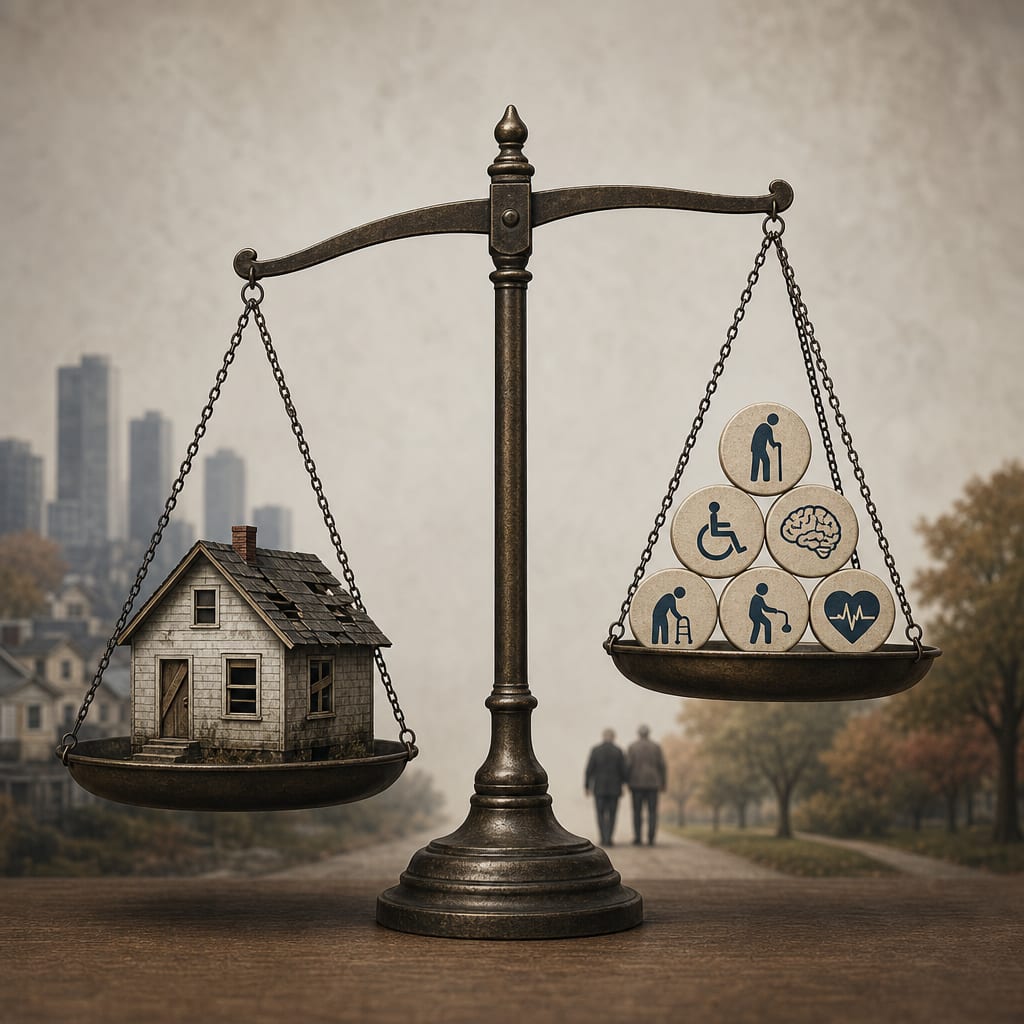
To examine the association between housing insecurity and incident geriatric conditions and mortality among older adults, highlighting its significance as a public health concern.
Key Findings:
Housing insecurity is prevalent among over 1 in 3 older adults and linked to frailty, disability, dementia, and increased mortality, with specific statistics to illustrate these associations.
Poor housing affordability is particularly associated with adverse health outcomes.
Nationally representative data provides robust insights into the impact of housing conditions on health.
Interpretation:
The findings highlight the urgent need for healthcare systems and policymakers to address housing insecurity as a modifiable social determinant of health to promote healthy aging, with specific recommendations for action.
Limitations:
Variability in screening methods for housing insecurity.
Potential underrecognition of elder neglect and financial mistreatment.
Mixed evidence on the effectiveness of interventions following positive screens, including potential biases in data collection.
Conclusion:
Addressing housing insecurity through targeted screening and interventions is essential for improving health outcomes in older adults, necessitating a patient-centered approach and a commitment from policymakers.