Prospective randomised controlled trial to compare tissue reactions and scarring with polypropylene versus polyglactin 910 sutures in periocular skin - Summary - MDSpire
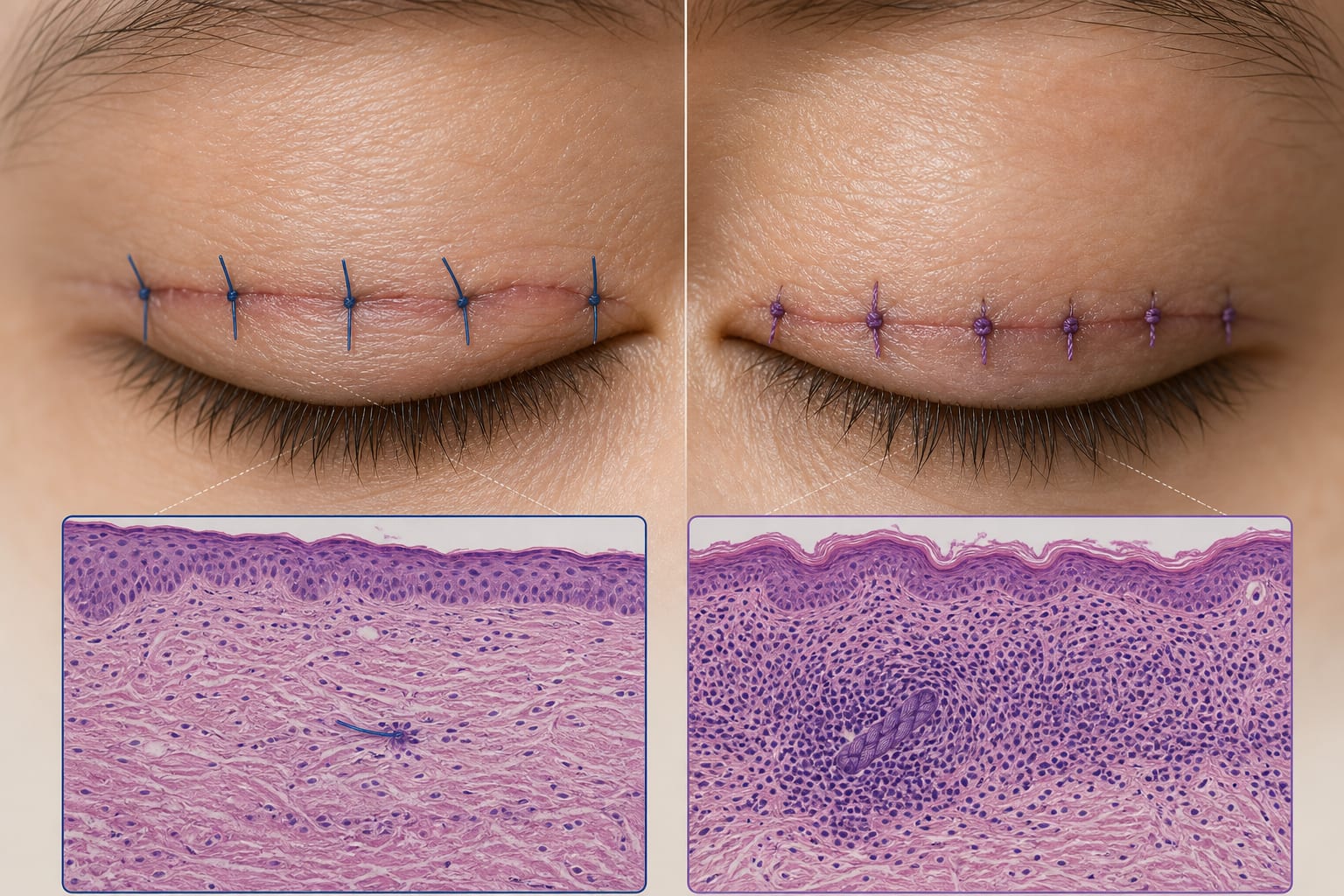
To compare the histopathological reaction and clinical scarring resulting from Prolene and Vicryl sutures in patients undergoing surgery for involutional entropion.
Approach:
Study Design: A prospective, randomized, triple-masked clinical study conducted across two sites from 2021 to 2024.
Participants: Consecutive patients over 18 years with involutional entropion and significant horizontal lid laxity were included.
Suture Materials: 6–0 gauge MPV489 Vicryl and MPP8697 Prolene were used for the study.
Surgical Technique: Patients received three everting sutures followed by definitive surgery one month later, with histological analysis of the tissue reaction.
Key Findings:
Histological tissue inflammatory reaction may be less with Prolene than Vicryl in the short term.
Long-term clinical scarring is very good with both sutures in eyelid skin.
Some patients developed clinical 'granuloma' to Vicryl, which may require further surgery.
Interpretation:
In patients more prone to significant scarring, using Prolene may reduce the risk of a significant inflammatory response compared to Vicryl.
Limitations:
The study was limited to patients with involutional entropion and may not be generalizable to other conditions.
The follow-up period for assessing long-term scarring was not specified.
Conclusion:
Both Prolene and Vicryl sutures show good long-term clinical outcomes.