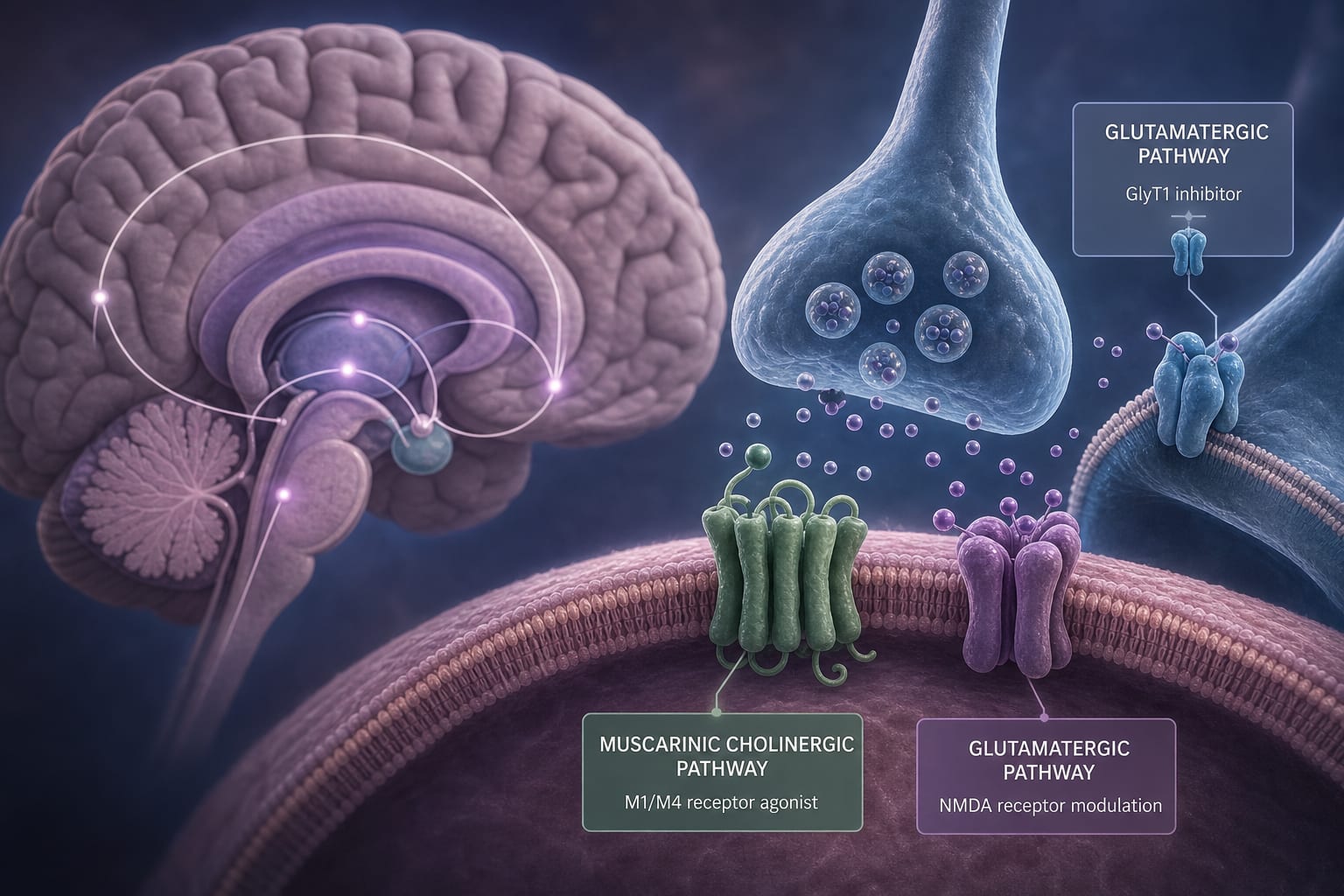
To systematically evaluate emerging non-D2 receptor-based therapeutic strategies for schizophrenia, focusing on muscarinic and glutamatergic mechanisms.
Approach:
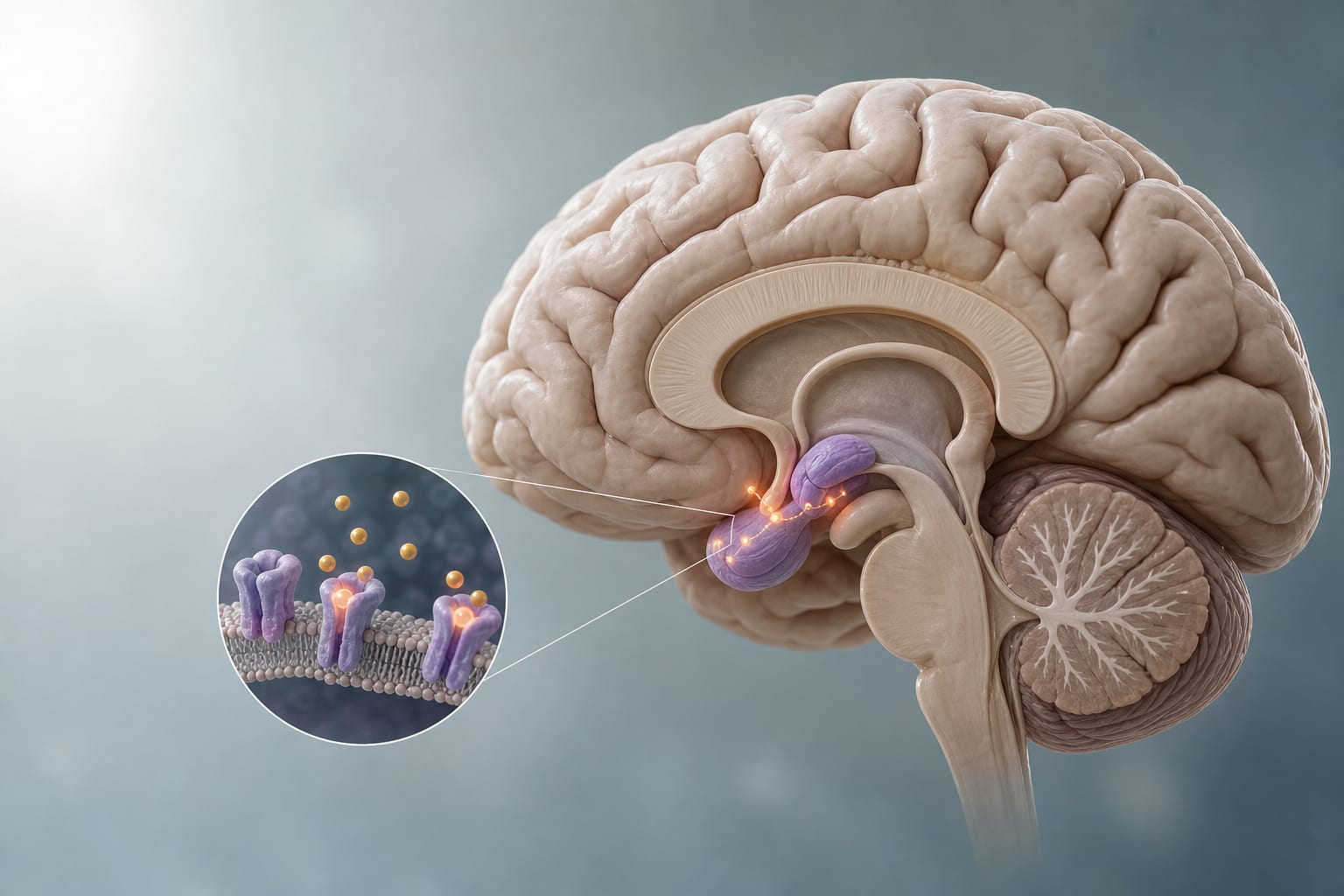
Muscarinic Agonism: Evaluation of KarXT, a muscarinic acetylcholine receptor agonist targeting M1 and M4 subtypes, and its clinical trial outcomes.
Glutamatergic Pathway: Assessment of GlyT1 inhibitors and their clinical trial results.
Key Findings:
KarXT significantly improves both positive and negative symptoms and has favorable metabolic safety compared to conventional antipsychotics.
KarXT shows no evidence of clinically meaningful weight gain or glucose dysregulation.
Preliminary evidence from exploratory subgroup analyses suggests potential cognitive benefits in patients with baseline cognitive impairment, but these findings require prospective validation.
Clinical trial outcomes for glutamatergic agents, including GlyT1 inhibitors, have been heterogeneous and inconsistent, leaving the therapeutic viability of this pathway uncertain.
Interpretation:
Muscarinic agonism represents the first clinically validated non-D2 receptor-based mechanism for schizophrenia treatment.
Limitations:
Long-term safety data for KarXT remain limited.
Clinical trial results for glutamatergic agents have been heterogeneous, raising questions about their therapeutic viability.
Conclusion:
Advancing precision psychiatry will necessitate rigorous comparative trials and biomarker-informed patient stratification.
This Neuroscience Grand Rounds session, led by Yasaman Movahedi and Deanna Aghbashian, explores psychosis in adolescence through both clinical and neurocognitive lenses, emphasizing early recognition and multidisciplinary management.