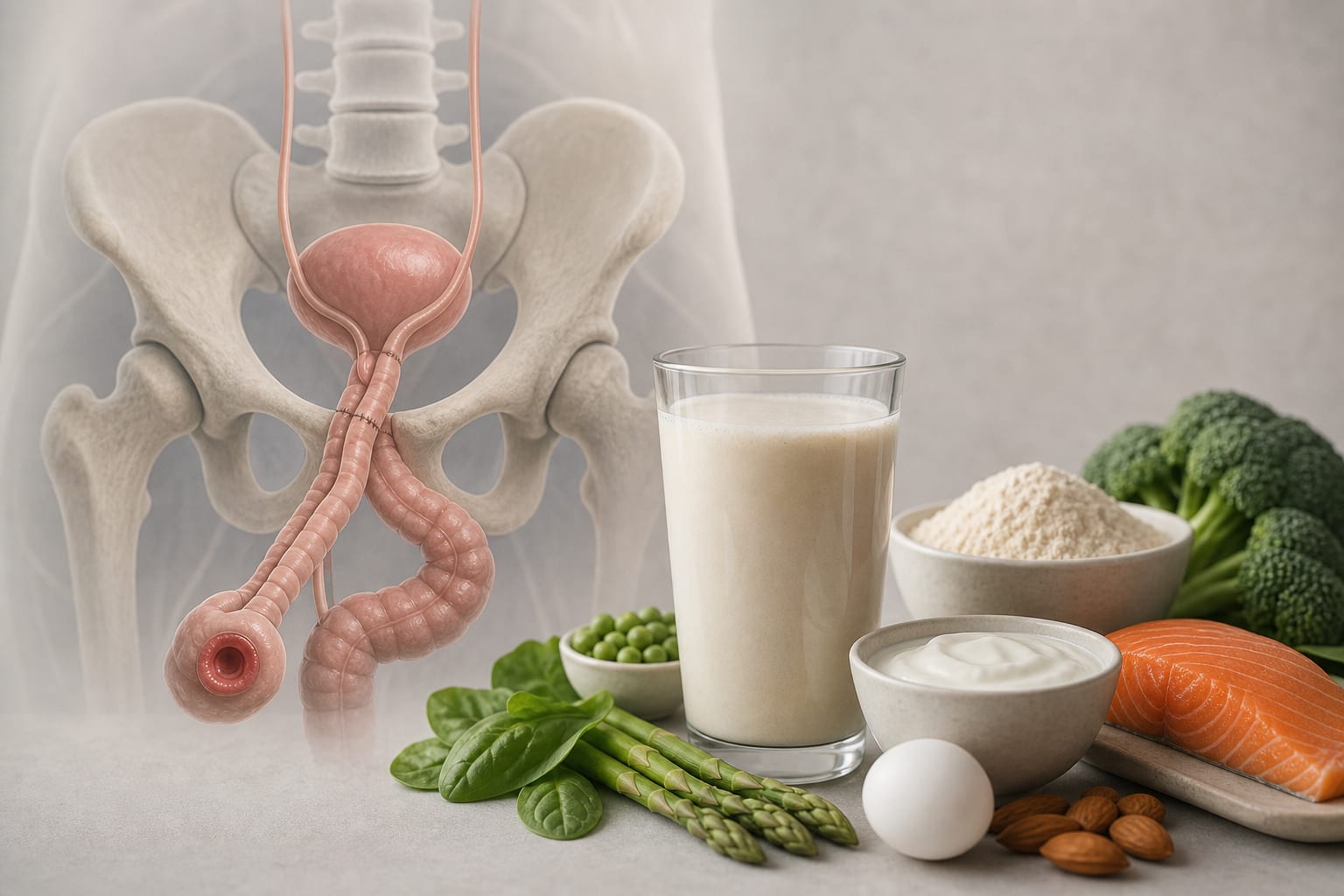
To evaluate whether specialized immunonutrition (SIM) reduces postoperative complications compared with standard oral nutrition support (ONS) among patients undergoing radical cystectomy (RC) for bladder cancer.
Approach:
Study Design: A randomized, double-blind, phase 3 trial (SWOG S1600) conducted across 13 US study sites.
Participants: Eligible patients were aged 18 or older with confirmed primary urothelial carcinoma scheduled for RC, excluding those with severe malnutrition or planning adjuvant chemotherapy within 90 days.
Intervention: Participants were randomized 1:1 to receive either SIM or isocaloric, isonitrogenous ONS for 5 days before and after surgery.
Primary Endpoint: Occurrence of any postoperative complication within 30 days of surgery, assessed using the Clavien-Dindo scale.
Secondary Endpoints: Complication rates at 90 days, high-grade complications, infections, hospital readmission rates, and exploratory endpoints including 2-year disease-free and overall survival.
Key Findings:
The trial aimed to evaluate the effectiveness of SIM in reducing postoperative complications compared to ONS among patients undergoing radical cystectomy.
The study's findings will contribute to understanding the role of immunonutrition in surgical recovery.
Interpretation:
The study is designed to evaluate the effectiveness of perioperative SIM compared to ONS in reducing postoperative complications.
Limitations:
The study excludes patients with severe malnutrition, which may limit generalizability.
Compliance assessment relies on biochemical measures, which may not capture all off-protocol supplement use.
Conclusion:
The trial seeks to clarify the role of specialized immunonutrition in enhancing recovery after radical cystectomy.
by Jill M. Hamilton-Reeves, Joseph M. Unger, Jeffrey M. Holzbeierlein, Danika L. Lew, J. Ryan Mark, Siamak Daneshmand, Seth P. Lerner, Janet E. B. Kukreja, Eugene K. Lee, William B. Tabayoyong, Dawn L. Hershman, Michael J. Fisch, N. Lynn Henry