To explore the role of gut microbiota in the pathogenesis of asthma in children, emphasizing its significance as a potential target for prevention and therapy.
Key Findings:
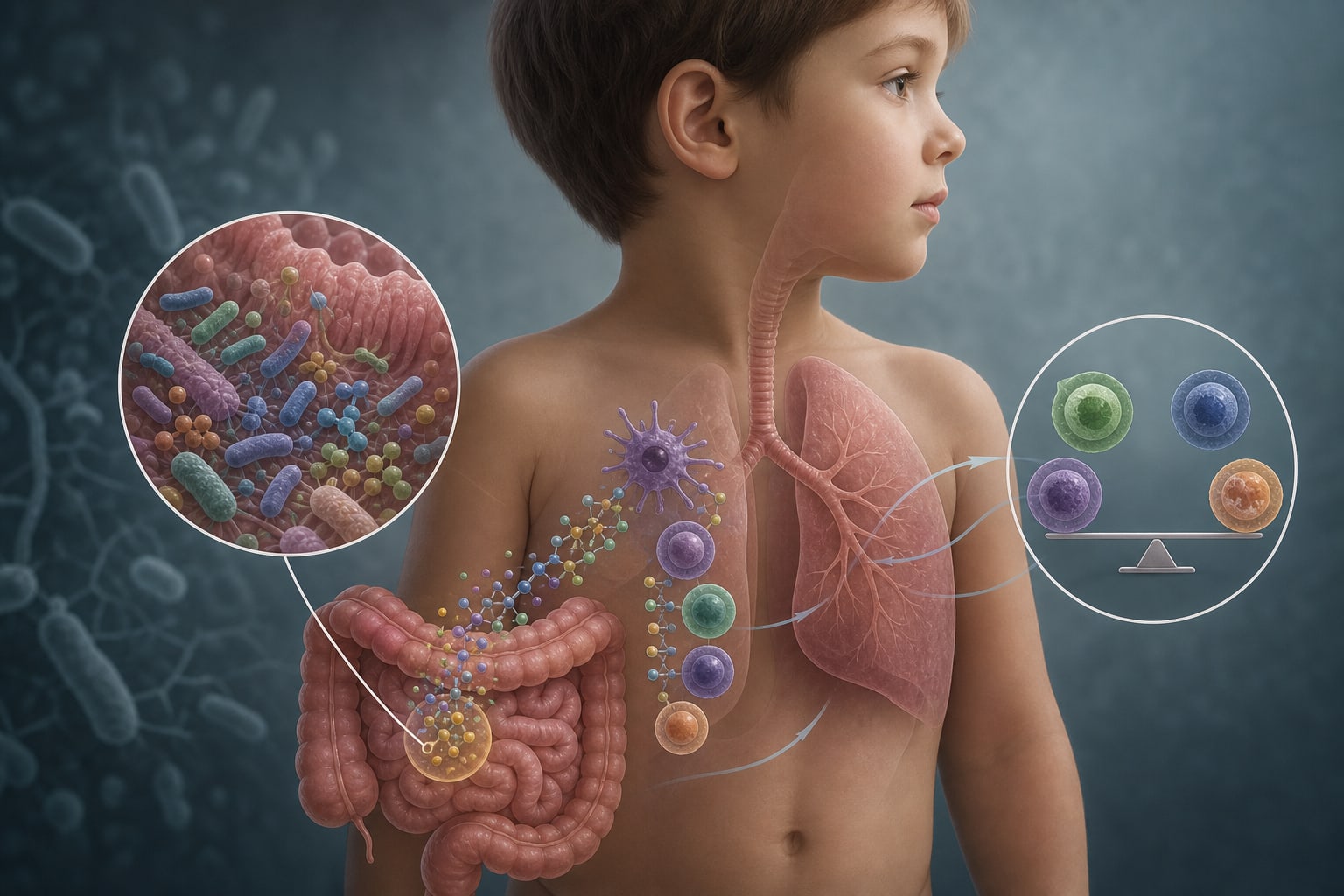
Children with asthma exhibit reduced diversity in gut microbiota and lower levels of beneficial bacteria like Bifidobacterium and Lactobacillus, which are crucial for immune health.
Dysbiosis in gut microbiota may lead to an imbalance in T cell differentiation, promoting Th2 responses associated with asthma, highlighting the need for early intervention.
Microbial metabolites such as short-chain fatty acids and lipopolysaccharides play significant roles in modulating airway inflammation, suggesting potential therapeutic avenues.
Interpretation:
The gut microbiota is crucial in shaping immune responses that influence asthma development, suggesting that interventions targeting gut health may help prevent or manage asthma in children, potentially through dietary or probiotic strategies.
Limitations:
The review primarily synthesizes existing studies without presenting new experimental data, limiting the depth of conclusions.
Further longitudinal studies are needed to establish causality between gut microbiota and asthma, particularly focusing on early-life interventions.
Conclusion:
Understanding the gut-lung axis and the immunological roles of gut microbiota opens avenues for microbiota-focused strategies in asthma prevention and treatment, emphasizing the importance of early intervention based on gut health.