Association between aspirin use and decline in intrinsic capacity among community-dwelling elderly: a study based on the Lianyungang ICOPE pilot project - Summary - MDSpire
Advertisement
Association between aspirin use and decline in intrinsic capacity among community-dwelling elderly: a study based on the Lianyungang ICOPE pilot project
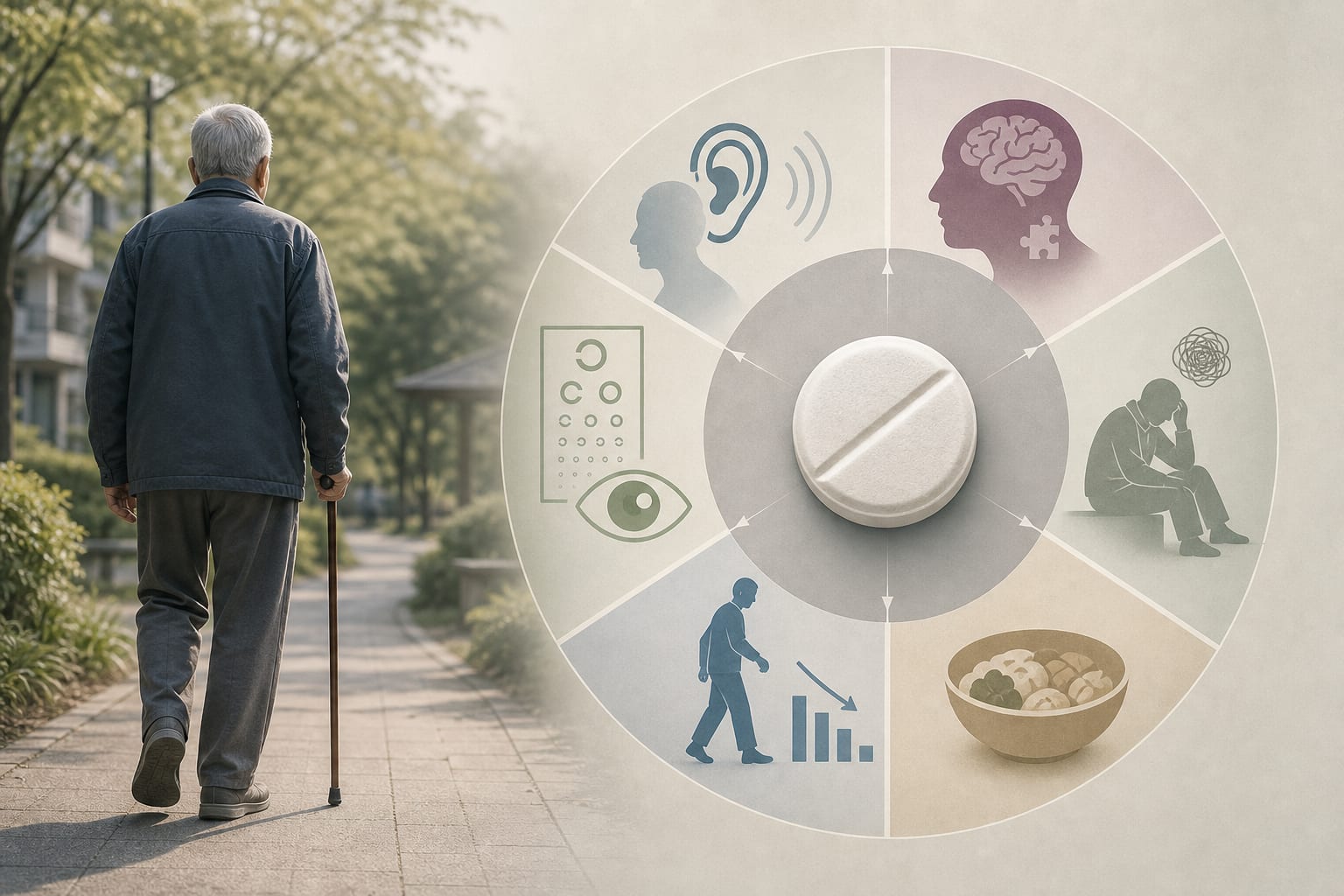
To examine the relationship between aspirin use and deterioration in intrinsic capacity (IC) among older adults in Chinese communities, and to evaluate the impact of concomitant use of ACEI or ARBs.
Approach:
Study Design: Cross-sectional study using data from the Lianyungang ICOPE pilot trial, employing a 1:1 closest-neighbor propensity score matching strategy.
Data Analysis: Multivariate logistic regression analysis was conducted to assess the relationship between aspirin use and deterioration in IC across various subdomains.
Key Findings:
Aspirin use alone was not significantly correlated with severe loss of intrinsic capacity (adjusted OR = 1.54, 95% CI: 0.88–2.71, p = 0.134).
Aspirin use was linked to negative outcomes in sensory function, including very poor vision (adjusted OR = 2.95, 95% CI: 1.10–7.94, p = 0.032) and poor hearing (adjusted OR = 3.21, 95% CI: 1.29–7.97, p = 0.012).
The combination of aspirin with ACEI or ARBs significantly reduced the incidence of severe loss of intrinsic ability (p < 0.05).
Sex variability was observed in the relationship between aspirin use and sensory function outcomes.
Interpretation:
The study indicates that aspirin alone may not significantly impact overall intrinsic capacity, but it is associated with adverse sensory outcomes.
Limitations:
The study is cross-sectional, limiting causal inferences.
Potential confounding factors may not be fully controlled despite propensity score matching.
Conclusion:
Aspirin use is associated with specific sensory function impairments in older adults.
Acidic gum beat sugar-free at cranking out nitric oxide from beetroot juice — exactly backward from what test-tube studies predicted. Also this week: a sleep gene that ignores amyloid, and jackfruit sap moonlighting as a bone-building drug delivery system.