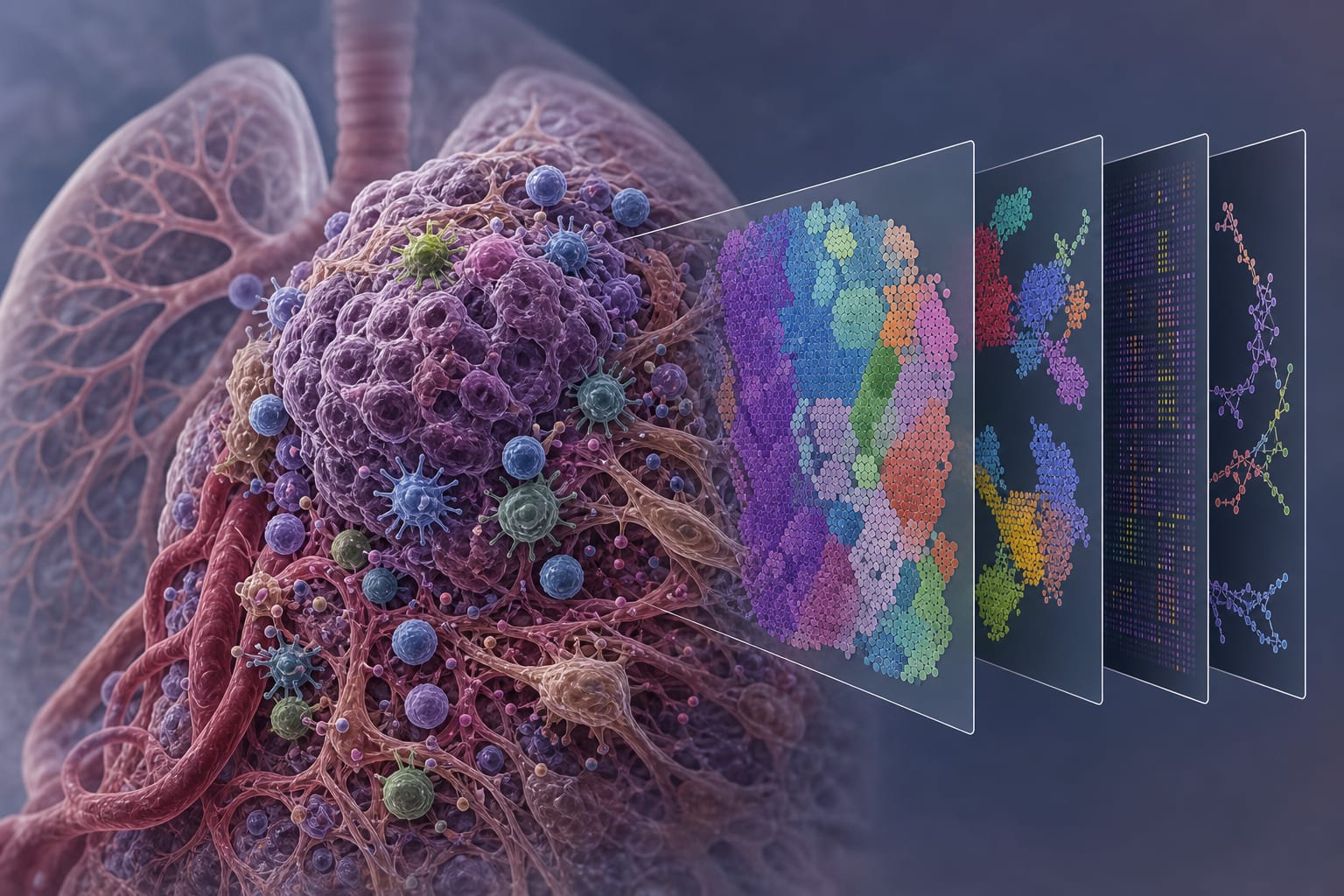
To discuss how single-cell and spatial omics are reshaping the understanding of metabolic reprogramming and tumor–immune ecosystems in NSCLC, emphasizing their potential to inform biomarker discovery, patient stratification, resistance monitoring, and rational combination therapy.
Approach:
Single-Cell Omics: Utilizes single-cell RNA sequencing, chromatin profiling, and spatial transcriptomics to analyze cellular heterogeneity and metabolic reprogramming in NSCLC.
Spatial Omics: Examines spatially organized tumor–immune interactions to connect cell state, metabolic activity, and treatment response.
Key Findings:
NSCLC tumors exhibit significant cellular heterogeneity, with diverse cell states linked to proliferation, differentiation, and drug tolerance, as well as metabolic reprogramming influenced by oncogenic signaling, hypoxia, and treatment pressure.
Single-cell omics can identify rare subpopulations that contribute to metastasis and therapeutic resistance, revealing the complexity of tumor evolution.
Metabolic reprogramming in NSCLC is shaped by the competition for nutrients and oxygen between tumor and immune cells, as well as the influence of local tissue stress.
Interpretation:
Single-cell and spatial omics provide insights into the complex interplay between tumor cells and the immune microenvironment.
Limitations:
The review does not address the clinical applicability of findings from single-cell and spatial omics.
Potential biases in sample selection and analysis methods may affect the generalizability of results, particularly regarding the representation of diverse cell states.
Conclusion:
Single-cell and spatial omics are critical for understanding the dynamics of NSCLC, offering new avenues for precision pharmacotherapy.