Synergistic TCR-independent action of IL-33 and IL-12 drive a potent IFNγ secretory program in human circulating MAIT cells with immunomodulatory properties - Summary - MDSpire
Advertisement
Synergistic TCR-independent action of IL-33 and IL-12 drive a potent IFNγ secretory program in human circulating MAIT cells with immunomodulatory properties
To investigate the roles of alarmins in controlling MAIT cell activation and function.
Approach:
Study Design: The study evaluates how alarmins (IL-25, IL-33, TSLP) and established MAIT cell-related stimuli (IL-12p70, 5-OP-RU) affect MAIT cell activation and effector functions.
Cell Isolation and Culture: Human PBMCs were isolated and cultured to study MAIT cell biology, using various combinations of cytokines and stimuli.
Key Findings:
IL-33, in combination with IL-12p70, induces a potent IFNγ secretory/cytotoxic program in MAIT cells.
This response is dependent on p38 MAPK signaling and glycolytic metabolism.
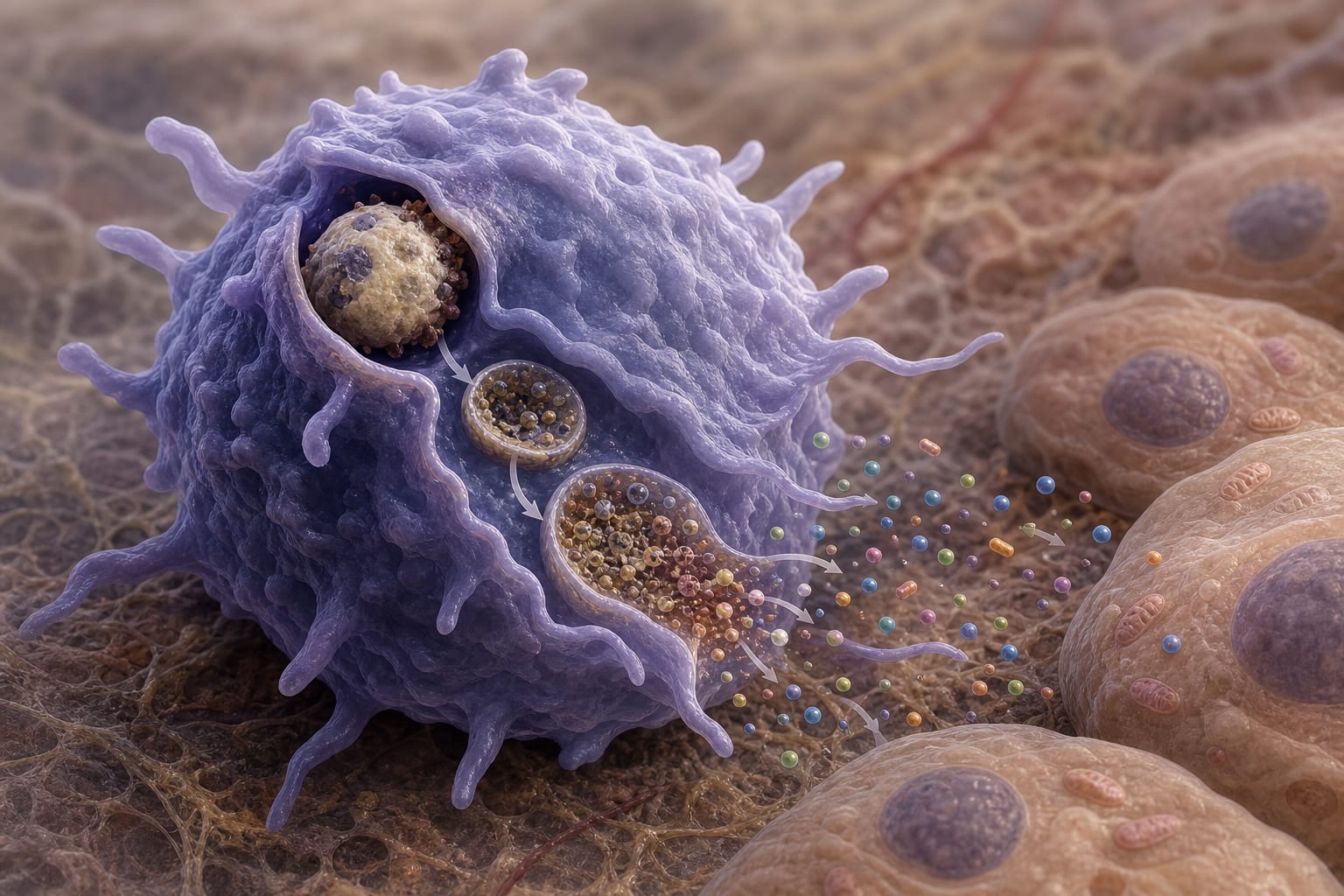
Activated MAIT cells secrete a diverse panel of immune mediators including TNF, VEGF, OSM, CXCL11, and CCL3.
Conditioned media from MAIT cells can polarize CD14+ monocytes towards a M1-like inflammatory phenotype.
Interpretation:
The findings suggest a broader immunomodulatory potential for MAIT cells during inflammatory responses.
Limitations:
The study primarily focuses on the effects of specific alarmins and does not encompass all potential inflammatory mediators.
The in vitro nature of the study may limit the generalizability of the findings to in vivo conditions.
Conclusion:
The study highlights the significant role of IL-33 and IL-12 in modulating MAIT cell functions and their potential impact on immune responses.
by Carlota García-Escribano, Maria Gallardo-Jiménez, Ana García-Cadarso, Paloma Fernández Martínez, Ricardo Arroyo-Solera, Luis Senador Zaldívar-Martínez, Kelin Lin, Jeffrey Aubé, Patricia Barral, Tomás Chivato, Domingo Barber, Maria M. Escribese, Elena Izquierdo, Juan Carlos López-Rodríguez