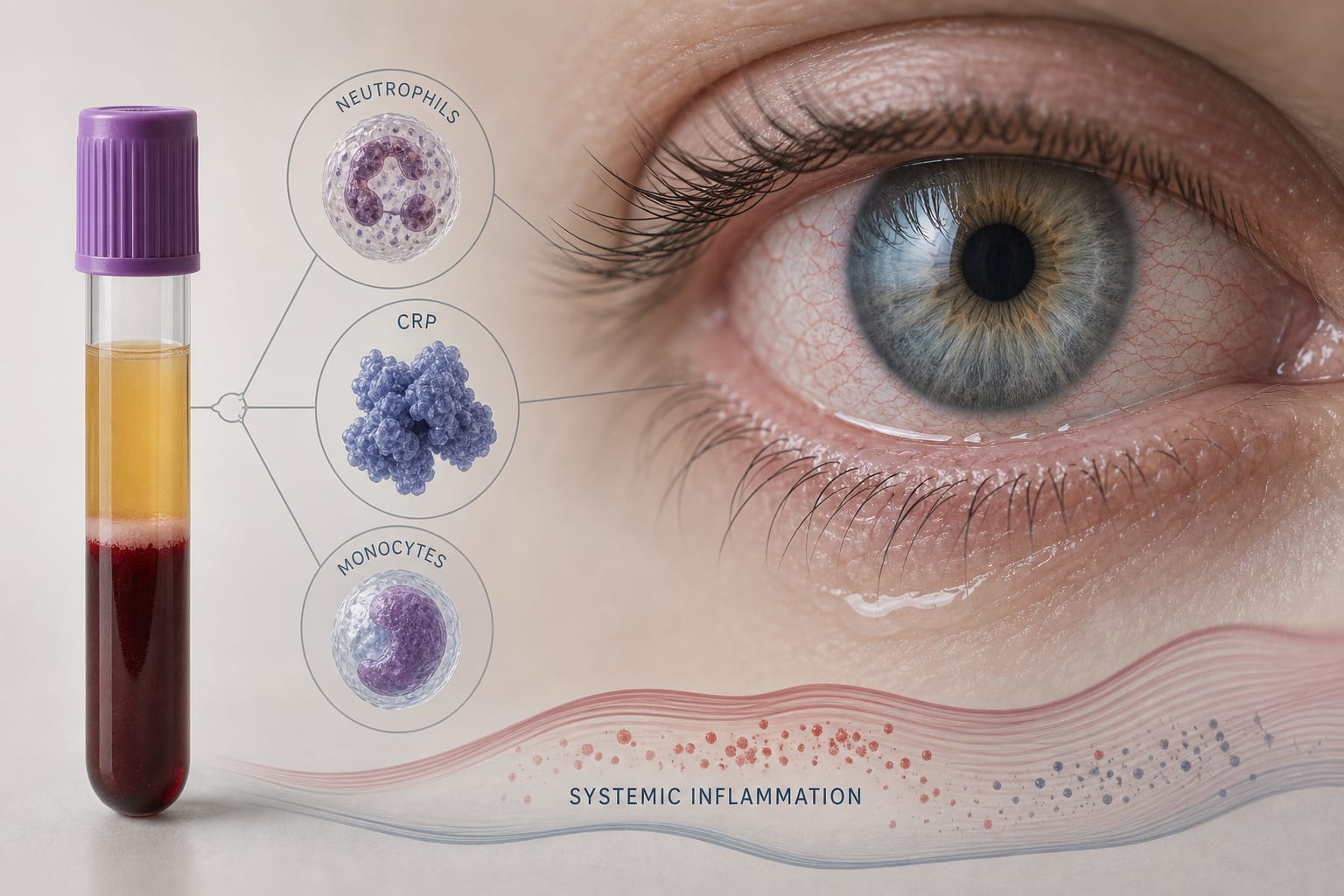
To evaluate inflammation in dyslipidemia patients with and without dry eye disease using the aggregate index of systemic inflammation (AISI) and specific inflammatory biomarkers such as C-reactive protein (CRP).
Approach:
Key Findings:
The DLP-DED group had significantly higher neutrophil and monocyte counts compared to the DLP group.
AISI showed a positive correlation with C-reactive protein (CRP) and a weak negative correlation with HDL and total cholesterol, indicating potential inflammatory pathways.
AISI was not associated with dry eye disease after adjusting for confounding variables, suggesting limited direct relevance.
Interpretation:
AISI may indicate components of systemic inflammation in dyslipidemia patients, but its direct association with dry eye disease is not supported after adjustments.
Limitations:
The study is retrospective and may have selection bias, potentially affecting the generalizability of the findings.
Insufficient data on Schirmer’s test or tear break-up time limits the assessment of dry eye severity.
Conclusion:
Further prospective research is needed to evaluate the clinical value of AISI in dyslipidemia and dry eye disease.
Neda Gioia, OD, CNS, FMCP, FOWNS, reviewed how levels of individual hormones and the balance between them help regulate tear production, inflammation, wound healing, lipid secretion, intraocular pressure (IOP), and neuroprotection, and therefore can result in a higher burden of dry eye, glaucoma, or retinal disease in women.