Comparison of subxiphoid and lateral intercostal approaches for video-assisted thoracoscopic extended thymectomy: a retrospective cohort study - Summary - MDSpire
Advertisement
Comparison of subxiphoid and lateral intercostal approaches for video-assisted thoracoscopic extended thymectomy: a retrospective cohort study
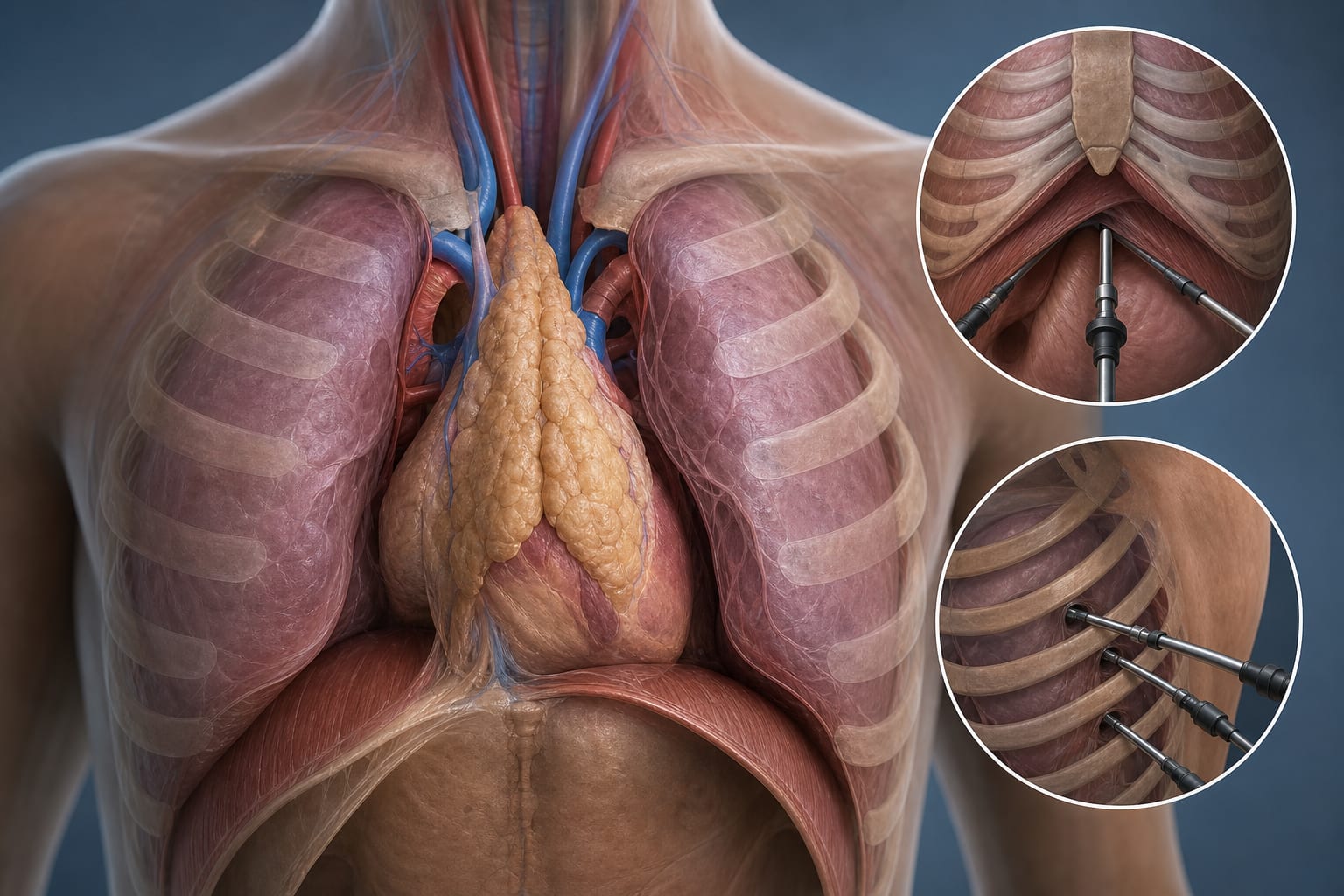
To compare perioperative, neurological, and short-term oncologic outcomes between subxiphoid and lateral intercostal approaches in video-assisted thoracoscopic extended thymectomy (VATET).
Approach:
Key Findings:
Baseline characteristics and histopathological features were comparable between groups (P > 0.05).
The ICA group had lower intraoperative blood loss, shorter postoperative stay, shorter drainage duration, and lower hospitalization costs (all P < 0.05).
VAS scores on postoperative days 1, 3, and 7 were lower in the SA group (all P < 0.001).
Complication rates were similar between groups (8.24% vs. 6.02%, P > 0.05).
Neurological outcomes in myasthenia gravis were similar between groups.
Thymoma recurrence occurred in two patients in each group.
Interpretation:
Both approaches are safe and feasible for VATET. The lateral intercostal approach improves operative efficiency, while the subxiphoid approach reduces early postoperative pain without affecting neurological or short-term oncologic outcomes.
Conclusion:
Both surgical approaches are viable for VATET, with distinct advantages in terms of pain management and operative efficiency.