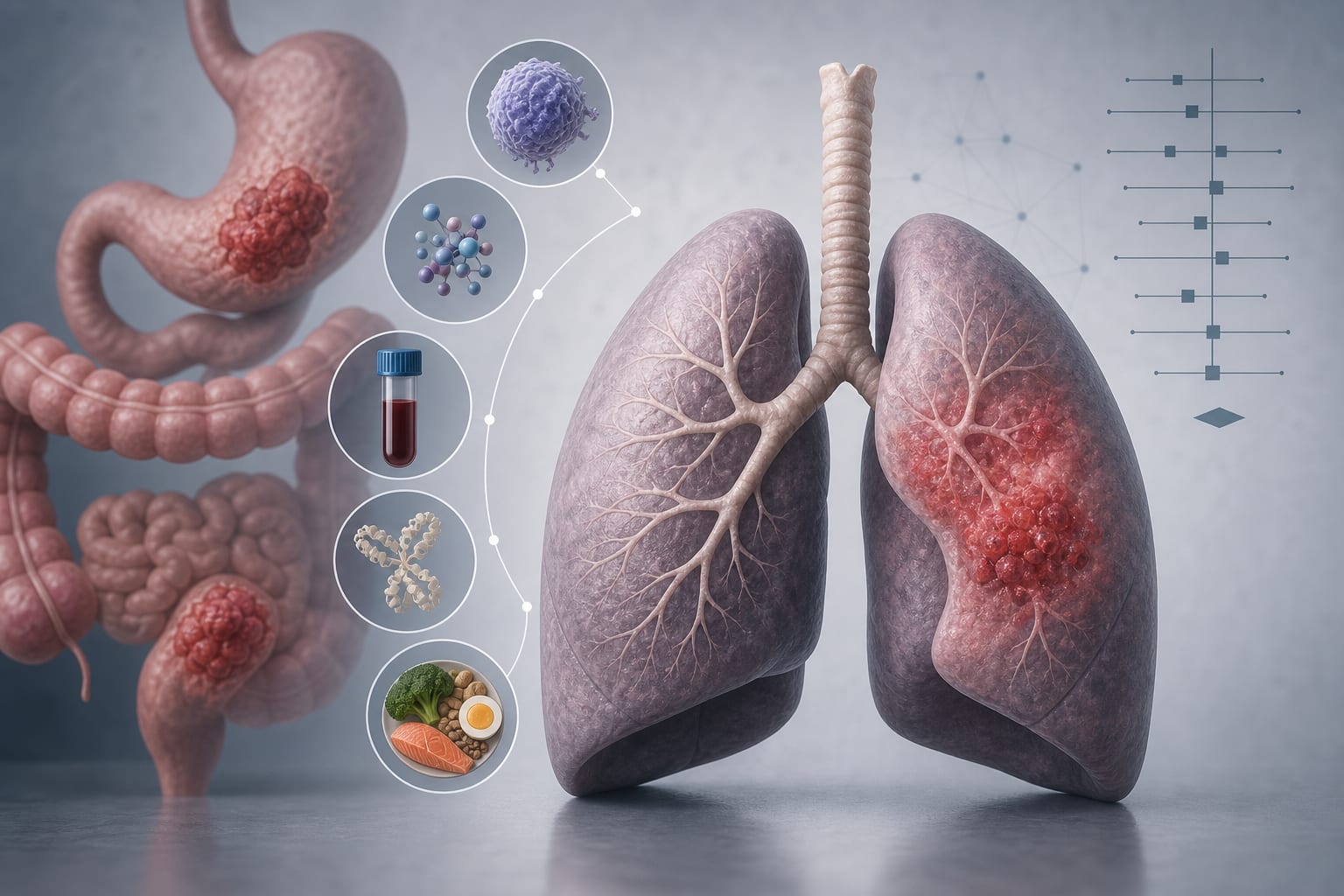
Preoperative inflammatory and immune-nutritional markers and postoperative pulmonary complications after gastric and colorectal cancer surgery: a systematic review and narrative synthesis - Summary - MDSpire
Conexiant’s news site is now MDSpire News. Learn more
Advertisement
Systematic Evaluation of Preoperative Inflammatory and Immune-Nutritional Biomarkers in Relation to Postoperative Pulmonary Complications Following Gastric and Colorectal Cancer Surgery
To systematically evaluate the association between preoperative inflammatory and immune-nutritional markers and postoperative pulmonary complications after gastrointestinal cancer surgery.
Approach:
Study Design: Systematic review following PRISMA 2020 guidelines, searching multiple databases for observational studies on preoperative biomarkers and postoperative pulmonary complications.
Eligibility Criteria: Included studies evaluated preoperative inflammatory or immune-nutritional markers in adult patients undergoing surgery for gastrointestinal malignancies and reported PPCs or related outcomes.
Data Synthesis: Findings were synthesized narratively due to substantial heterogeneity in outcome definitions, biomarker selection, and statistical modeling.
Key Findings:
Fifteen observational studies included, with moderate-to-high methodological quality.
Adverse preoperative inflammatory and nutritional profiles generally associated with increased postoperative pulmonary risk.
Inflammatory markers like neutrophil-to-lymphocyte ratio and systemic immune-inflammation index showed strong associations.
Nutritional indicators such as albumin and controlling nutritional status score indicated elevated risk in patients with poorer nutritional status.
Findings suggest a combined burden of inflammation and nutritional impairment rather than reliance on a single biomarker.
Interpretation:
A preoperative double burden of heightened systemic inflammation and impaired nutritional status is associated with increased postoperative pulmonary risk after gastric and colorectal cancer surgery.
Limitations:
Heterogeneity in outcome definitions, biomarker modeling, and effect reporting across studies.
Most biomarker-specific findings supported by single studies, limiting generalizability.
Conclusion:
Standardized prospective studies are needed before these markers can be reliably integrated into perioperative pulmonary risk stratification.