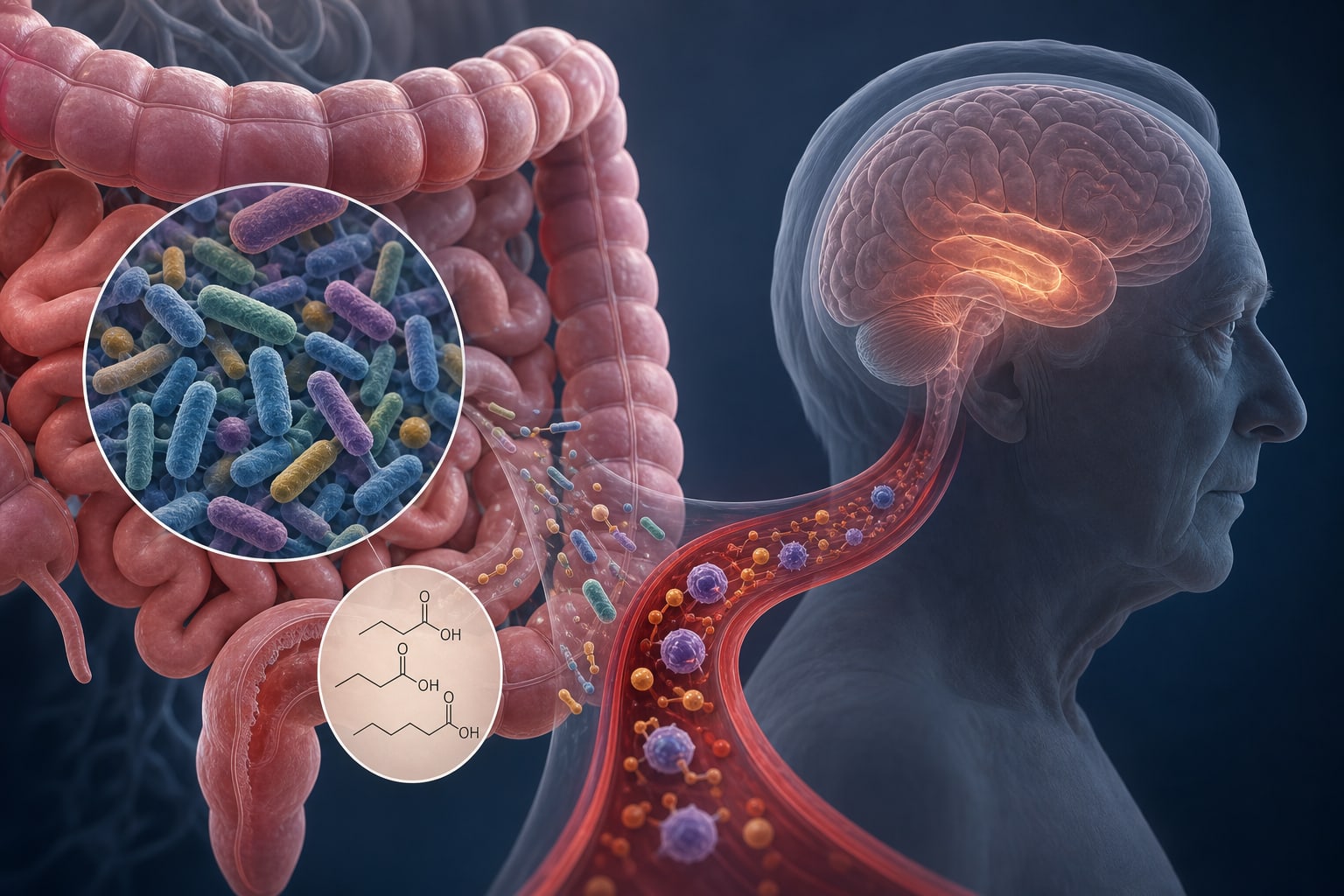
To characterize changes in gut microbiota composition and structure in elderly hypertensive patients with amnestic mild cognitive impairment (aMCI) compared to hypertensive individuals without aMCI and cognitively healthy controls, highlighting the significance of these changes in understanding cognitive decline.
Approach:
Key Findings:
HTN-aMCI group showed greater richness of gut microbes and a segregated microbial community structure compared to HTN-CN and control groups, suggesting a unique microbial profile that may influence cognitive function.
Significant depletion of SCFA-producing genera (e.g., Roseburia, Blautia, Faecalibacterium) and enrichment of opportunistic pathogens (e.g., Streptococcus, Clostridium_sensu_stricto_1, Enterococcus) in HTN-aMCI, indicating a shift towards a potentially harmful microbial environment.
Disrupted microbial interactions and enhanced lipopolysaccharide biosynthesis with reduced SCFA metabolism were observed in HTN-aMCI, which may contribute to systemic inflammation.
Elevated pro-inflammatory cytokines (IL-1β, IL-6, IL-8, IL-17, IP-10, RANTES) were found in HTN-aMCI patients, linking gut dysbiosis to systemic inflammation.
Blautia abundance negatively correlated with inflammatory markers and positively with cognitive scores, while pathobionts showed opposite patterns, suggesting potential biomarkers for cognitive health.
Interpretation:
Hypertensive individuals with aMCI exhibit specific gut microbial dysbiosis linked to systemic inflammation and cognitive decline, which may inform future therapeutic strategies.
Study population limited to older Chinese adults, which may affect generalizability to other populations and age groups.
Conclusion:
The findings suggest that targeting gut microbiota may represent a potential therapeutic avenue for hypertension-related cognitive impairment, warranting further investigation into specific interventions.
In a target-trial emulation of more than 600,000 veterans, GLP-1 RA initiators saw fewer new substance use disorders—and patients with existing SUDs had fewer overdoses, hospitalizations, and deaths.
Population-based cohort shows higher rates of cardiac arrhythmias and coronary artery disease following nonhospitalized infections, with sex-specific differences.
A four-factor staging system stratified response rates from 90.9% to 37.5% in a retrospective cohort study, although the model showed only moderate discrimination (C statistic, 0.68) and requires external validation