To synthesize recent findings, evaluate existing evidence, and propose urgent future research directions in the management of paediatric traumatic brain injury (pTBI).
Key Findings:
pTBI is a leading cause of death and disability in children, with over 4 million cases reported in 2021, highlighting the need for improved management.
Current management guidelines for pTBI are limited and largely based on adult data, which may not be applicable to children, necessitating tailored approaches.
There is a significant evidence gap in low- and middle-income countries (LMICs) regarding pTBI management, which requires urgent attention.
Recent advances in biomarker discovery and clinical trial designs offer potential for improving pTBI outcomes, warranting further exploration.
Interpretation:
The review highlights the urgent need for age-appropriate, evidence-based guidelines for pTBI that consider the unique developmental and physiological characteristics of children, emphasizing the implications for clinical practice.
Limitations:
The evidence base for pTBI management is primarily derived from level III studies, indicating a need for higher-quality research.
There is a lack of standardized reporting and data collection, particularly in LMICs, which hampers effective management and research.
Conclusion:
Comprehensive, developmentally informed clinical guidelines are essential for improving pTBI outcomes globally, necessitating further research and collaboration across diverse healthcare settings to address existing disparities.
by Shruti Agrawal, Rebekah Mannix, Vicki Anderson, Miriam H Beauchamp, Adam Ferguson, Lucia W Braga, Shu-Ling Chong, Anthony Figaji, Christopher Giza, David K Menon, Michael J Bell
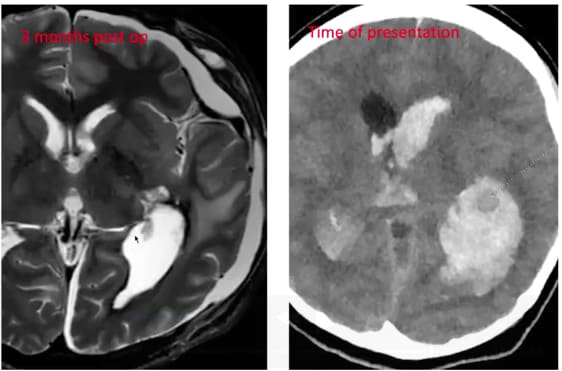
This Neuroscience Grand Rounds session, led by Muhammad Osama, MD, provides a pediatric neurosurgeon’s perspective on arteriovenous malformations (AVMs) in children, rare but high-risk vascular lesions that can lead to seizures, neurological deficits, or life-threatening hemorrhage.