Comparative discriminative ability of CVAI and traditional insulin resistance indices for MAFLD in Chinese adults with type 2 diabetes - Summary - MDSpire
Advertisement
Comparative discriminative ability of CVAI and traditional insulin resistance indices for MAFLD in Chinese adults with type 2 diabetes
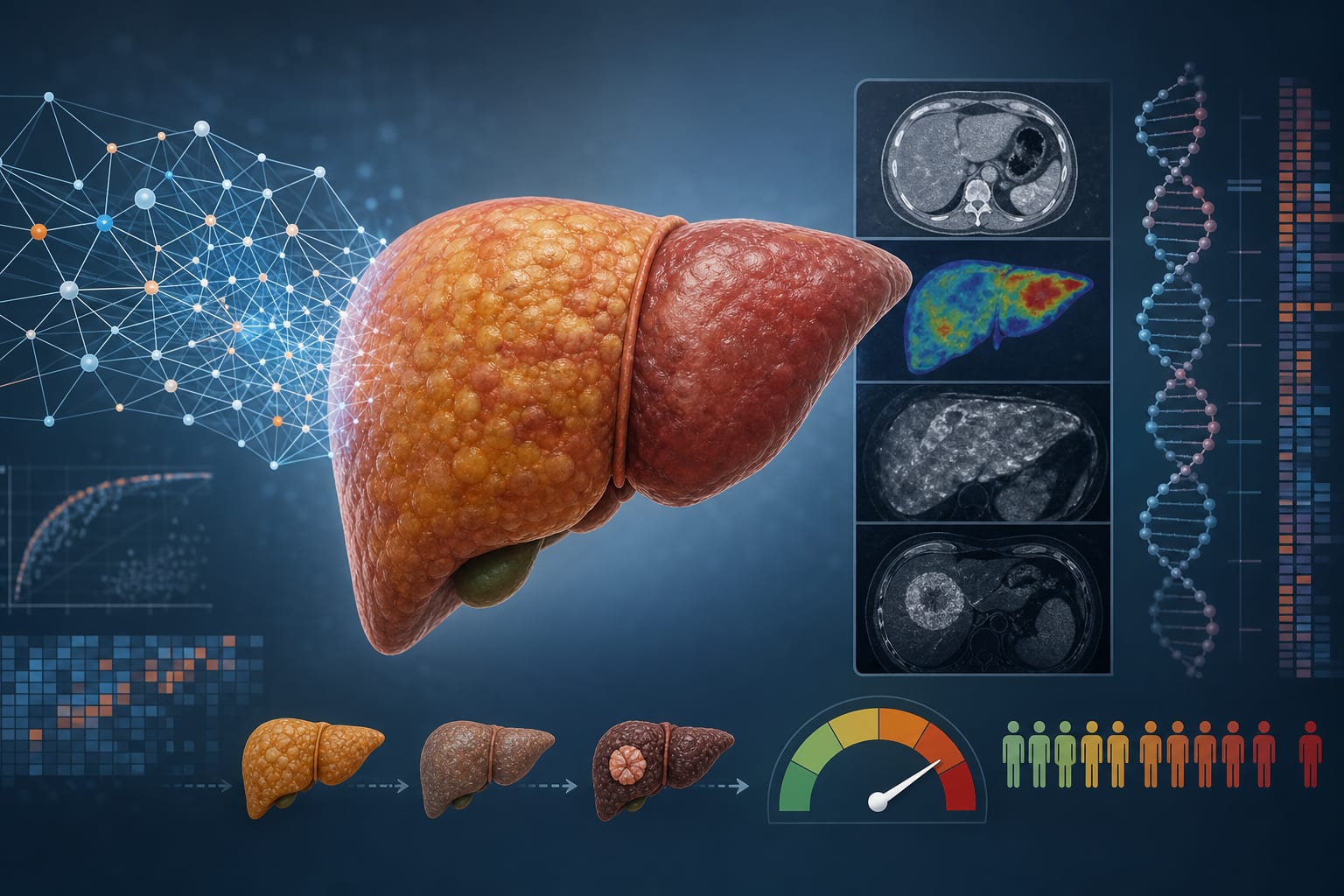
To evaluate and compare the discriminative ability of the Chinese Visceral Adiposity Index (CVAI) and traditional insulin resistance indices for diagnosing metabolic dysfunction-associated fatty liver disease (MAFLD) in Chinese adults with type 2 diabetes mellitus (T2DM).
Approach:
Study Design: Retrospective cross-sectional study involving 2,945 Chinese adults with T2DM from 45 community health centers.
Data Analysis: Calculated seven insulin resistance indices and employed multivariable logistic regression, ROC curve analysis, NRI, IDI, RCS regression, and DCA.
Key Findings:
44.6% of participants were diagnosed with MAFLD.
All insulin resistance indices were independently associated with MAFLD (P < 0.001).
CVAI showed the highest discriminative ability (AUC = 0.754, 95% CI: 0.737–0.771), outperforming other indices (P < 0.001).
Adding CVAI to the baseline model significantly improved risk reclassification (NRI = 0.598, 95% CI: 0.533–0.665; IDI = 0.081, 95% CI: 0.072–0.090).
The association between CVAI and MAFLD was stronger in females and older adults (P for interaction < 0.05).
Interpretation:
CVAI is independently associated with MAFLD and demonstrates superior discriminative performance compared to traditional insulin resistance indices in the studied population.
Limitations:
Retrospective design may limit causal inferences.
Findings may not be generalizable beyond the Chinese population.
Conclusion:
CVAI is a promising non-invasive screening tool for MAFLD in Chinese adults with T2DM, particularly in females and older adults.