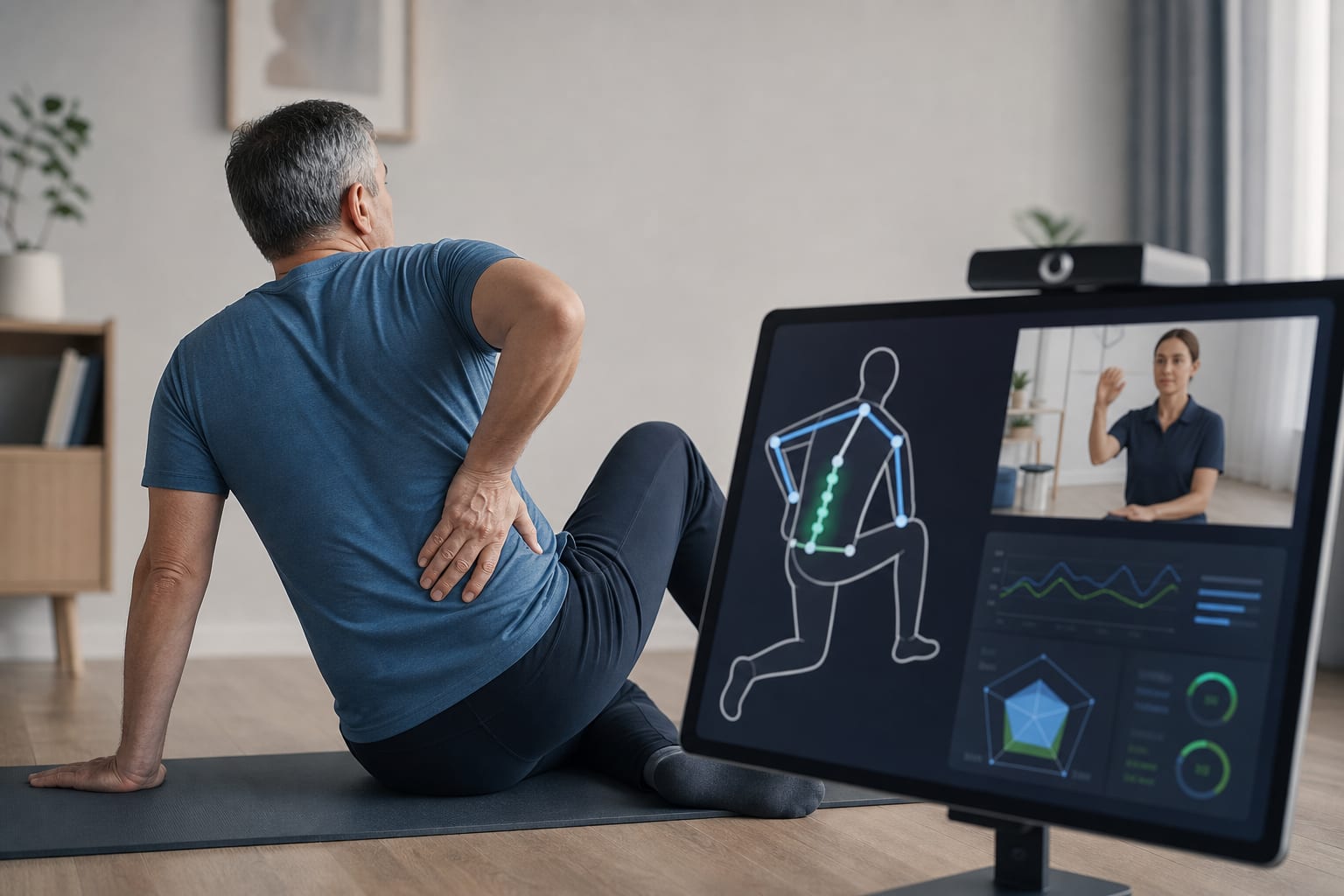
Comparative Effectiveness of AI-Assisted Telerehabilitation, Telerehabilitation, In-Person Care, and Usual Care for Chronic Nonspecific Low Back Pain: Bayesian Network Meta-Analysis - Summary - MDSpire
Conexiant’s news site is now MDSpire News. Learn more
Advertisement
Evaluating the Effectiveness of AI-Enhanced Telerehabilitation Compared to Traditional Telerehabilitation, In-Person Treatment, and Standard Care for Chronic Nonspecific Low Back Pain: A Bayesian Network Meta-Analysis
To conduct a Bayesian network meta-analysis to compare the efficacy of AI-enhanced telerehabilitation (TLRH-AI), telerehabilitation, in-person rehabilitation (IPR), and usual care (UC) in managing chronic nonspecific low back pain (CNSLBP).
Approach:
Study Design: Bayesian network meta-analysis integrating evidence from existing randomized controlled trials (RCTs).
Key Findings:
CNSLBP is a major public health challenge, affecting quality of life and productivity.
Current guidelines emphasize nonpharmacological interventions, particularly supervised exercise therapy.
Telerehabilitation offers advantages in accessibility and personalized care, especially in resource-limited settings.
Existing evidence suggests telerehabilitation can achieve outcomes comparable to IPR for certain patient populations.
Interpretation:
The study aims to clarify the effectiveness of various rehabilitation approaches for CNSLBP through a comprehensive meta-analysis.
Limitations:
Heterogeneity in results of related clinical trials.
Insufficient systematic comparisons across different rehabilitation models.
Conclusion:
The study aims to clarify the effectiveness of various rehabilitation approaches for CNSLBP through a comprehensive meta-analysis.
A structured overview of recent FDA recalls, corrections, and alerts involving medications, ventilators, insulin delivery systems, cardiovascular devices, anesthesia products, and other equipment used in clinical practice.