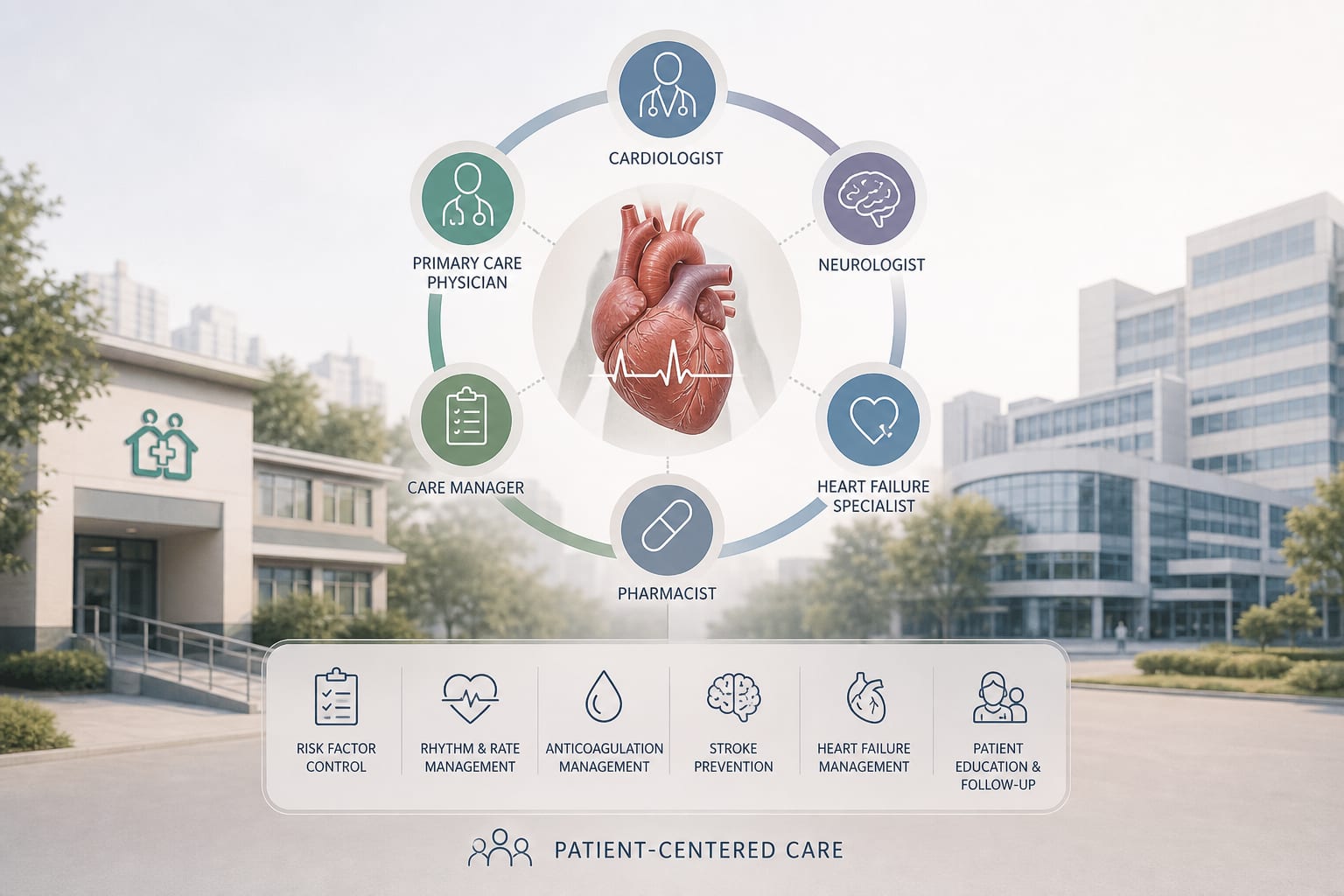
To address the need for equity-centered policies in the implementation of precision medicine approaches for cardiovascular disease (CVD), particularly in low- and middle-income countries (LMICs), emphasizing the role of precision medicine in improving health outcomes.
Approach:
Framework Proposal: The World Heart Federation (WHF) proposes a framework that views innovation as a public good and health equity as a universal right.
Operationalization: WHF operationalizes equity through initiatives like the World Heart Observatory, Digital Health Roadmap, and Emerging Leaders Program, which aim to enhance access and representation in cardiovascular care.
Implementation Strategies: The article outlines strategies and policy levers to translate scientific advancements into population-level impact.
Key Findings:
CVD is the leading cause of death globally, with significant impact in LMICs.
Precision medicine has the potential to transform CVD prevention and management but risks amplifying disparities without equity-focused policies.
Access to precision medicine tools is limited by infrastructure, regulatory challenges, and workforce capacity in many regions.
Interpretation:
Precision cardiovascular medicine can benefit all populations if designed with equity in mind from the outset.
Limitations:
Many discovery datasets and validation cohorts are based on high-income country contexts.
Infrastructure limitations in LMICs hinder the deployment of precision medicine tools.
Social determinants of health and foundational health system needs must be addressed alongside precision medicine initiatives.
Conclusion:
Equity-centered precision cardiovascular medicine is essential for ensuring that innovations benefit historically underserved populations.