Roux-en-Y Gastric Bypass Compared to Glucagon-Like Peptide-1 Receptor Agonists is Associated with Lower Out-of-Pocket Costs in Insured Patients with Type 2 Diabetes and Obesity: A Matched Analysis Over Two Years - Summary - MDSpire
Advertisement
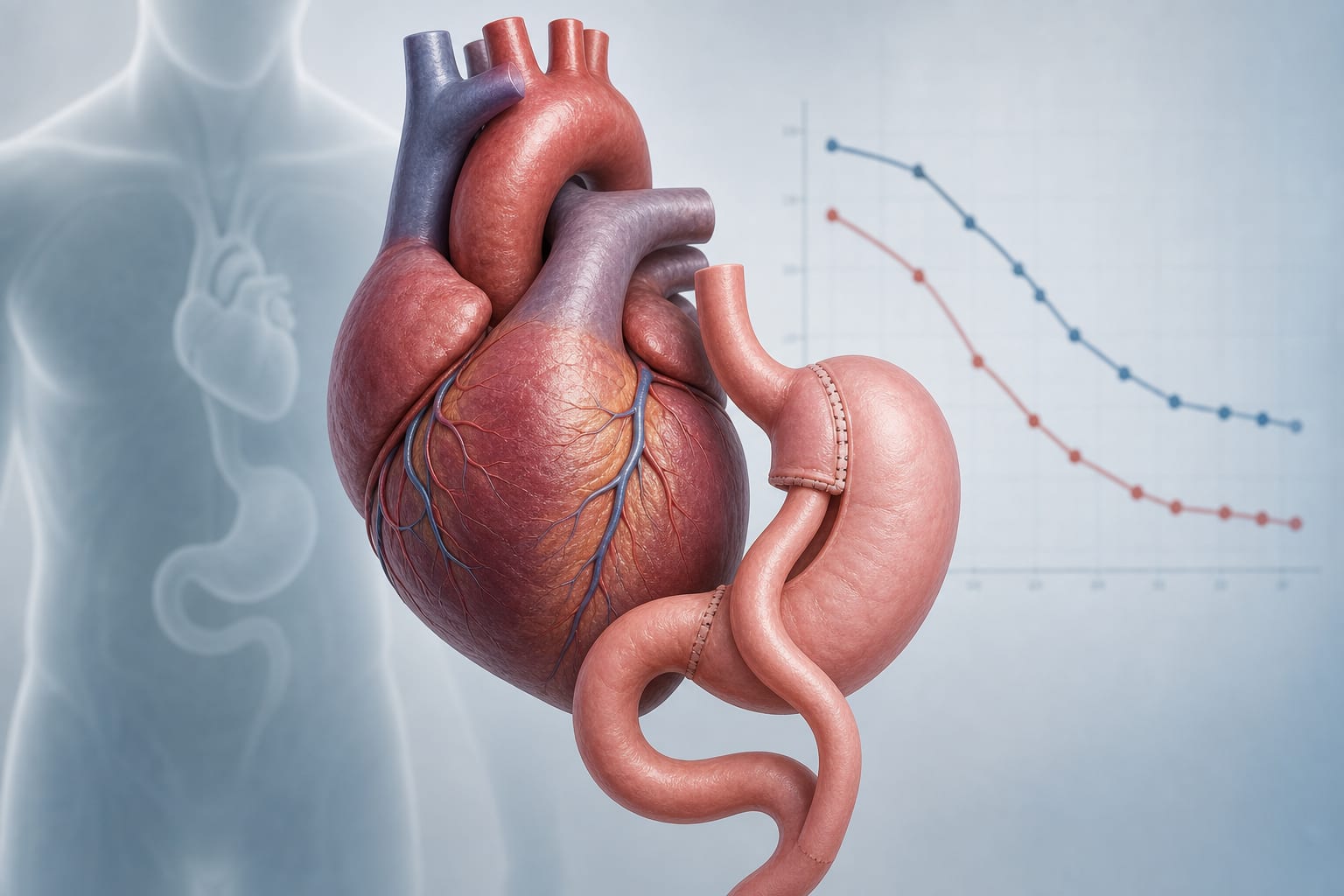
Roux-en-Y Gastric Bypass Compared to Glucagon-Like Peptide-1 Receptor Agonists is Associated with Lower Out-of-Pocket Costs in Insured Patients with Type 2 Diabetes and Obesity: A Matched Analysis Over Two Years
To analyze out-of-pocket healthcare costs for commercially insured patients with class 2 or 3 obesity and type 2 diabetes undergoing Roux-en-Y gastric bypass (RYGB) versus those treated with GLP-1 receptor agonists over two years, highlighting the significance of cost implications in treatment choices.
Key Findings:
RYGB patients incurred lower out-of-pocket costs compared to GLP-1 RA patients over two years, with specific cost differences to be detailed.
RYGB is associated with greater weight loss and higher rates of diabetes resolution despite higher initial costs.
Interpretation:
The findings suggest that RYGB may be a more cost-effective long-term treatment option for insured patients with obesity and T2D compared to GLP-1 RAs, despite initial higher costs, emphasizing the need for informed patient decision-making.
Limitations:
Study limited to commercially insured patients, which may not represent the broader population and could affect generalizability.
Retrospective design may introduce selection bias.
Conclusion:
RYGB may provide better long-term financial outcomes for patients with obesity and T2D compared to GLP-1 RAs, highlighting the importance of considering OOP costs in treatment decisions and the need for patient education on financial implications.
A four-factor staging system stratified response rates from 90.9% to 37.5% in a retrospective cohort study, although the model showed only moderate discrimination (C statistic, 0.68) and requires external validation