Lower preoperative vitamin D levels are associated with poor clinical outcomes in elderly patients with osteoporotic vertebral compression fractures after percutaneous vertebroplasty - Summary - MDSpire
Advertisement
Lower preoperative vitamin D levels are associated with poor clinical outcomes in elderly patients with osteoporotic vertebral compression fractures after percutaneous vertebroplasty
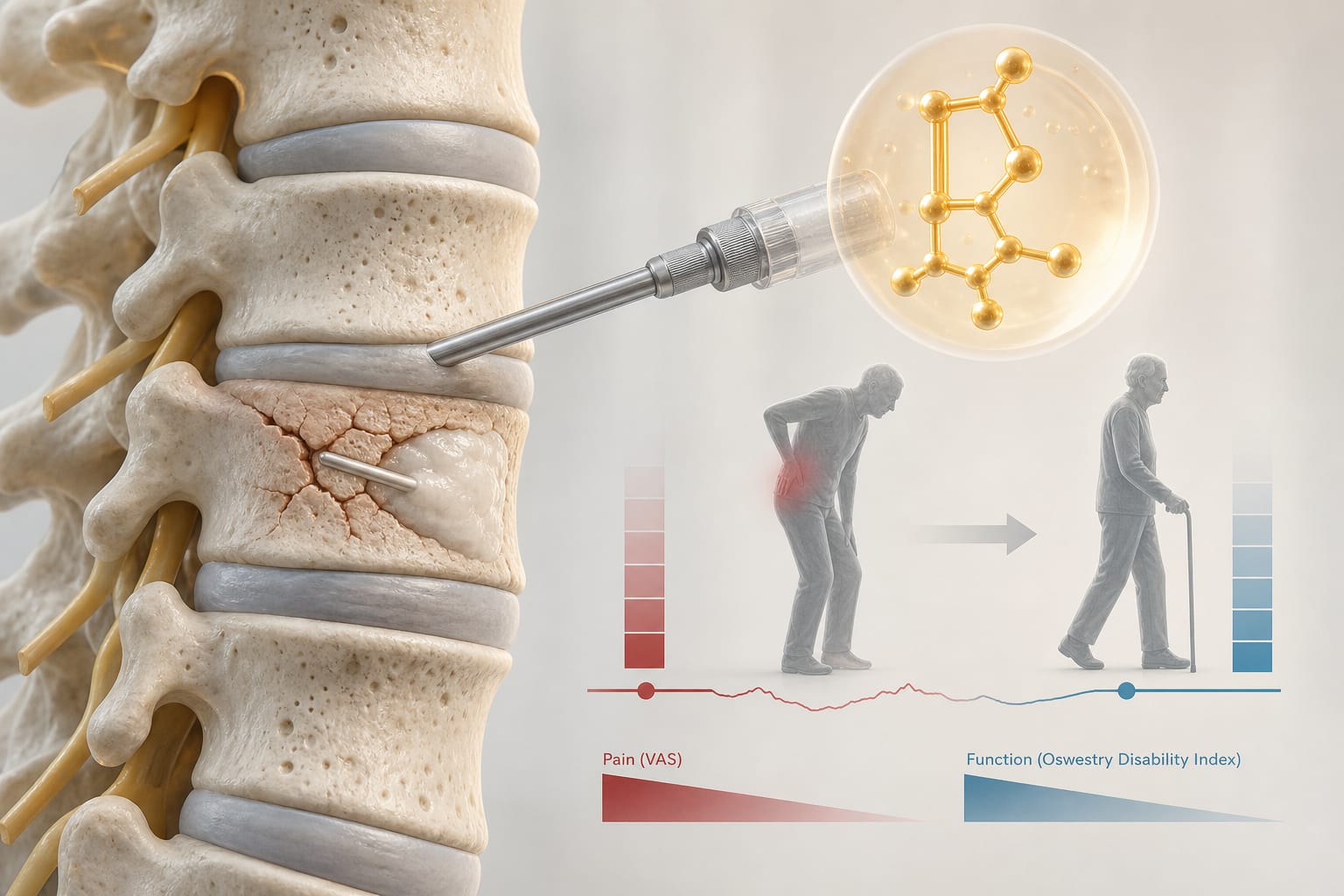
To evaluate the association between preoperative vitamin D status and postoperative pain and functional recovery following percutaneous vertebroplasty (PVP) in elderly patients with osteoporotic vertebral compression fractures (OVCFs), highlighting its prognostic significance.
Key Findings:
VAS and ODI scores improved significantly over time in all groups (p < 0.01).
Patients with lower vitamin D levels had consistently higher pain and disability scores at each follow-up.
Lower vitamin D status was independently associated with higher 1-year VAS (β = 0.293, 95% CI: 0.230, 0.356, p < 0.01) and higher ODI scores (β = 2.179, 95% CI: 1.854–2.503, p < 0.01).
Interpretation:
Lower preoperative vitamin D levels are linked to worse postoperative pain relief and functional recovery after PVP in elderly patients with OVCFs.
Limitations:
Retrospective design may introduce selection bias.
Single-center study limits generalizability.
Lack of long-term follow-up beyond one year.
Potential confounding factors not controlled for.
Conclusion:
Identifying and addressing vitamin D deficiency may optimize perioperative management and improve postoperative recovery in elderly patients undergoing PVP for OVCFs, emphasizing its clinical importance.
With an aging population, spine disorders are becoming increasingly common. Age-related spinal degeneration is nearly universal, but not all patients experience symptoms—and not all degeneration progresses the same way.