Opposing gastric and jejunal regulation of CELA2A in obesity and after Roux-en-Y gastric bypass suggests a role in gastrointestinal metabolic signaling - Summary - MDSpire
Advertisement
Differential Regulation of CELA2A in the Stomach and Jejunum During Obesity and Post-Roux-en-Y Gastric Bypass Indicates Its Involvement in Gastrointestinal Metabolic Signaling
To investigate CELA2A expression in gastrointestinal tissues and circulation in relation to obesity and Roux-en-Y gastric bypass (RYGB), highlighting its potential role in metabolic signaling.
Key Findings:
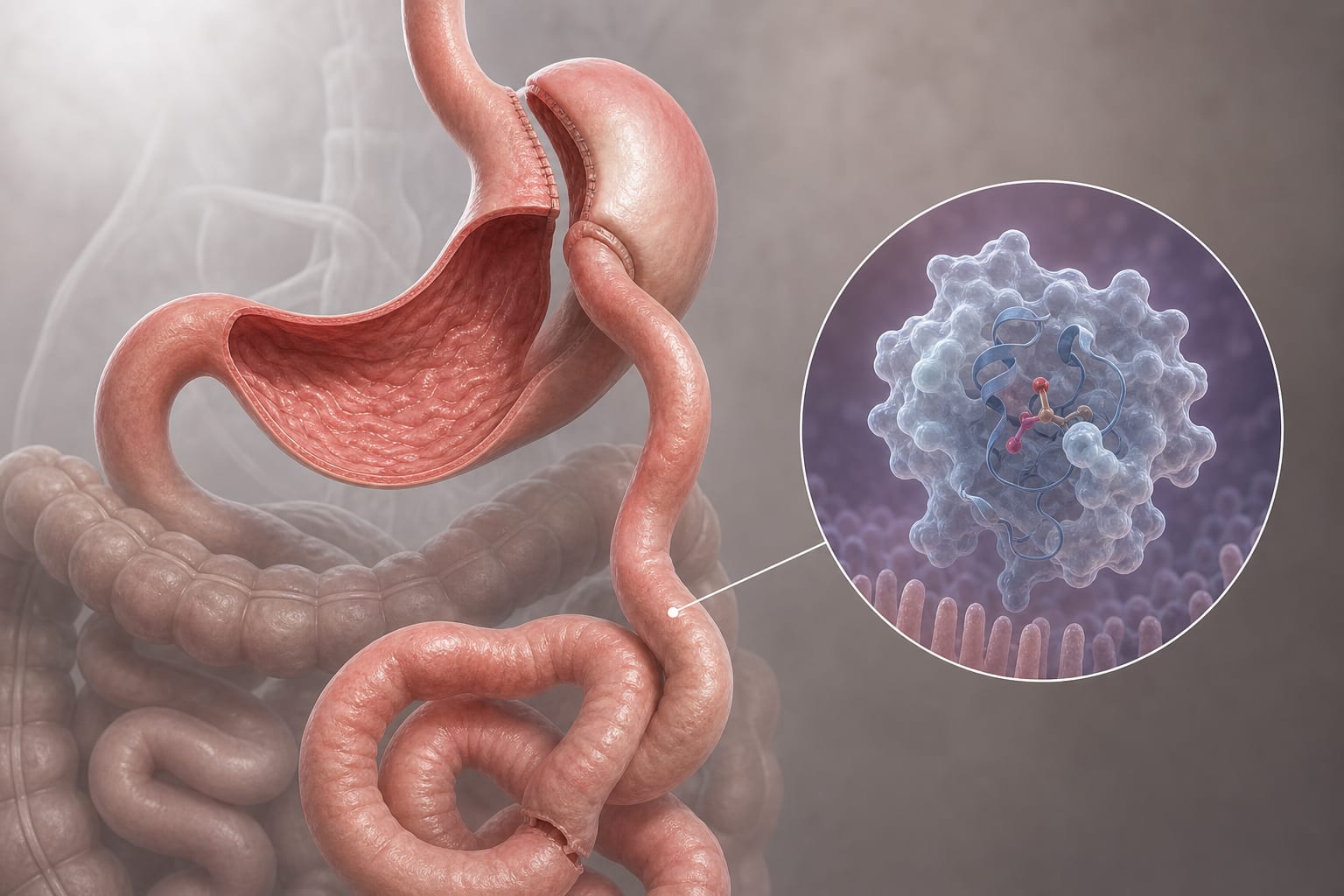
CELA2A expression increased in gastric mucosa after RYGB but decreased in the jejunum, indicating tissue-specific responses.
Before surgery, jejunal CELA2A levels were positively associated with HbA1c, indicating a potential link to glycemic control.
In high-fat diet-fed mice, jejunal CELA2A expression increased while gastric expression decreased, reflecting dietary influences.
Interpretation:
CELA2A exhibits tissue-specific regulation in obesity and following bariatric surgery, suggesting its potential role in gastrointestinal metabolic signaling, possibly through modulation of gut hormones.
Limitations:
Detailed cellular localization of CELA2A in human tissue was not established, limiting understanding of its functional role.
Circulating and tissue levels of CELA2A were not directly correlated, raising questions about their relationship.
Conclusion:
Further studies are required to define the cellular origin and functional role of CELA2A in glucose homeostasis, emphasizing its potential as a therapeutic target.